

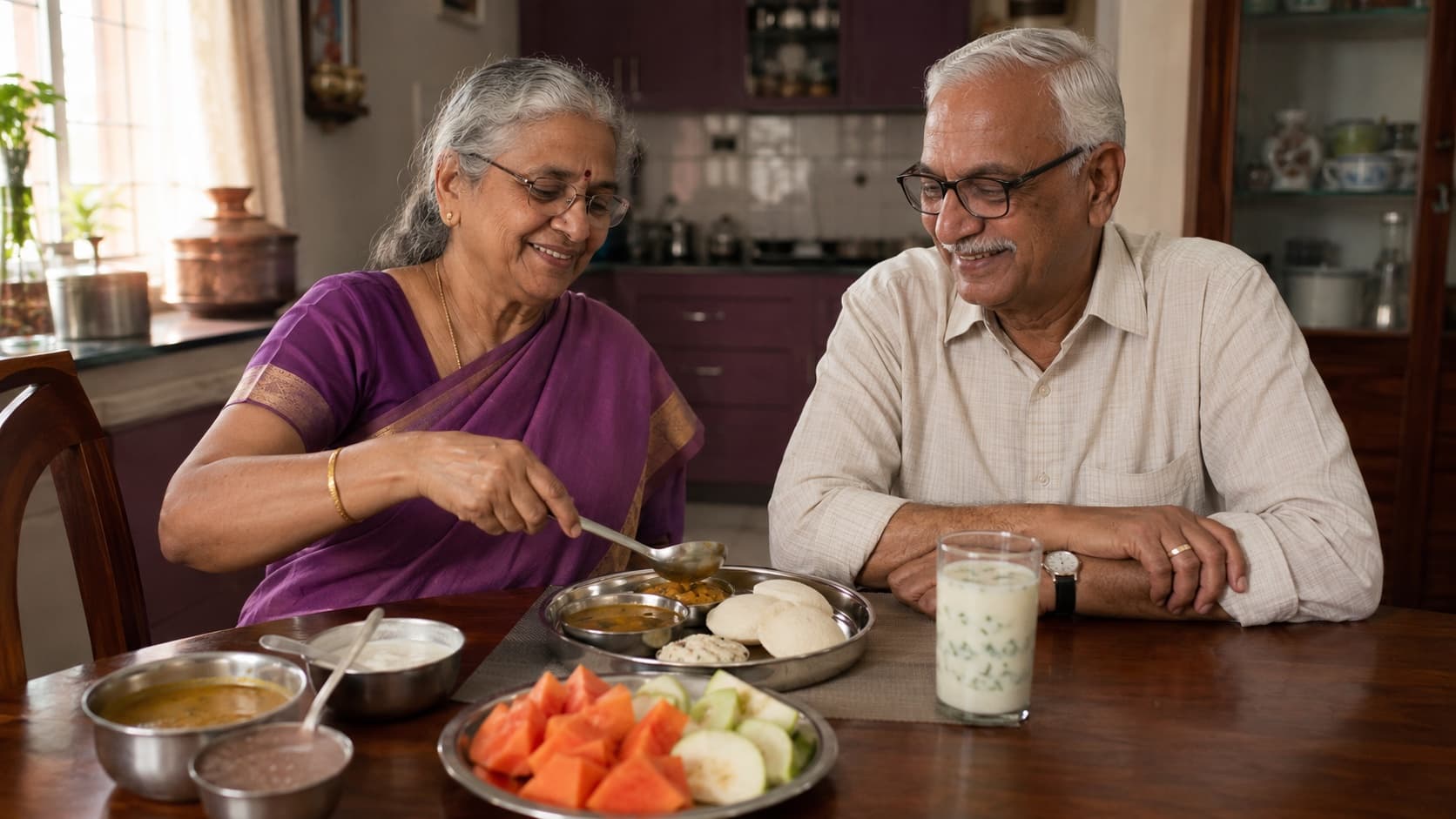
Perhaps you have eaten the same breakfast for forty years. Two idlis with coconut chutney and filter coffee, and you are not about to swap it for a quinoa bowl because someone read something online. And honestly, you should not have to.
Indian food, tweaked thoughtfully, is already one of the most balanced ways of eating in the world. The problem is rarely the food itself. It is that your body's needs change as you age, quietly, and it is easy to miss those changes until something goes wrong. A fracture from thinning bones. Dizziness from too little protein. Constipation that turns into a daily worry. The good news is you can look after all of this without giving up the dishes you love.
What actually changes after 65
Your appetite gets smaller. Your sense of taste dulls, especially for salt, which is why the salt shaker keeps creeping closer. Digestion slows. Bones gradually lose density. Muscle quietly shrinks unless you keep using it. And several common medicines, from blood pressure tablets to diabetes tablets, can affect how well you absorb certain nutrients.
Put simply, you now need a little more protein than you did in your forties, more calcium and vitamin D, more fibre, and more goodness packed into smaller portions. Here is how to get there without turning your kitchen upside down.
Protein: the one most Indian seniors miss
Look at a typical South Indian table and you will find rice, dal, sambar, rasam, vegetables, and curd. It is a lovely, balanced meal. The one gap is often protein, which tends to fall short once you are past 65.
The everyday Indian plate leans heavily on carbohydrates. After 65 your muscles need a steady supply of protein to hold their strength, and most of us simply do not eat enough of it. The fix is not a new cuisine. It is small, familiar additions:
- Dal and sambar. Make the dal thicker, with more lentils and a little less rice on the side. A spoon of ghee in the dal actually helps your body absorb certain vitamins.
- Paneer. A palm-sized piece of fresh paneer at lunch or dinner adds a good amount of protein. Scramble it with vegetables, cube it into a curry, or pan-fry it lightly with turmeric.
- Eggs. If you eat eggs, a simple masala omelette at breakfast is affordable, familiar, and does the job.
- Fish. For those who eat non-vegetarian food, mackerel, sardines, and rohu are rich in protein and good fats. Steamed with a little ginger and garlic, they need very little oil.
- Sprouts. Lightly seasoned moong or moth sprouts are something most of us grew up eating and simply forgot. A small bowl adds a meaningful amount of protein.
- Curd and buttermilk. Easy to overlook. A bowl of curd adds protein and helps digestion too.
Calcium and vitamin D: looking after your bones
In Bangalore, even with plenty of sunshine, low vitamin D is very common, especially if you spend most of the day indoors. Without enough vitamin D, your body cannot absorb calcium properly, no matter how much milk you drink.
Calcium is already sitting in the Indian kitchen if you know where to look:
- Ragi, or finger millet. The quiet hero. Ragi mudde, ragi dosa, or a warm ragi porridge is a wonderful source of calcium.
- Sesame seeds, or til. A small til laddu now and then is genuinely good for your bones, not just a Sankranti treat.
- Milk and curd. Around two cups a day, full-fat unless your doctor has advised otherwise.
- Leafy greens. Drumstick leaves, amaranth, and fenugreek are all rich in calcium.
A practical step: ask your doctor to check your vitamin D level at your next blood test. If it is low, and for many Bangalore seniors it is, a supplement as prescribed can make a real difference. Pair it with about fifteen minutes of morning sun on your arms and legs.
Fibre: keeping things moving
Constipation is not just uncomfortable. It affects your appetite, your mood, and over time it can lead to more serious trouble. Indian food has plenty of fibre built in, but refining and over-cooking strips a lot of it away. A few easy habits bring it back:
- Choose whole wheat or multigrain chapati over refined-flour versions.
- Keep the skin on where you can, on pumpkin, bottle gourd, and carrot.
- Have a small raw salad before lunch, such as grated carrot, cucumber, and beetroot with a squeeze of lemon.
- Soak a few raisins or a fig overnight and have them at bedtime. Gentle, effective, and traditional.
- Swap plain rava for oats upma a few mornings a week.
Adapting your favourite dishes: less oil, more goodness
You do not need to stop making the biryani you are known for. You only need to tweak it:
- Use a little less oil. Measure with a spoon rather than pouring freely. Most dishes taste just the same with a third less oil.
- Choose better oils such as cold-pressed groundnut or sesame oil for South Indian cooking, and lighter oils for lighter dishes.
- Bake or air-fry instead of deep-frying. Fritters and cutlets can be shallow-cooked and still taste good.
- Add more vegetables to what you already make, such as grated carrot and beans in upma, or spinach in dal.
- Cut sugar slowly. If you take two spoons in your coffee, reduce by a quarter-spoon each week. Your taste adjusts without you noticing.
Eat smaller, more often
Large meals are hard work for an ageing digestive system. Many people feel far better on three moderate meals with two small snacks in between. A few simple rules help:
- Eat breakfast within an hour of waking, especially if you take morning medicines.
- Finish dinner two to three hours before bed.
- Include a little protein at every meal, not just one big bowl of dal at lunch.
Here is what a comfortable day might look like:
| Time | Meal |
|---|---|
| 7:00 AM | Warm water with lemon, a few soaked almonds and walnuts |
| 8:00 AM | Ragi dosa or oats upma with sprouted moong, a cup of milk with turmeric |
| 10:30 AM | One seasonal fruit, such as papaya, guava, or a small banana |
| 12:30 PM | Chapati or a small portion of rice, generous dal or sambar, a vegetable, curd, and a little paneer or egg |
| 4:00 PM | A small til laddu or ragi malt, filter coffee with less sugar |
| 7:00 PM | Chapati or ragi mudde, a light vegetable curry, rasam, buttermilk |
| 8:30 PM | Warm turmeric milk to help you sleep |
When it helps to ask a professional
If you are living with diabetes, kidney trouble, or a heart condition, general advice only goes so far. What you eat needs to fit your medicines and your test results, and that is worth getting right. A qualified nutritionist can shape the Indian food you already enjoy around your specific needs.
Kareverse nutrition counselling is ₹800 per session. It is a proper one-hour consultation that ends with a practical meal plan your cook can actually follow, not a list of foods you have never heard of. If your eating has changed because of ongoing health issues, it also pairs well with our guidance on managing diabetes and a broader daily routine.
Frequently asked questions
I have diabetes. Can I still follow this?
Most of this applies, but the timing of meals and the balance of carbohydrates matters more for you, and it should be matched to your medicines. Read our guide to caring for parents with diabetes, and consider a nutrition counselling session to build a plan around your readings.
How much protein do I actually need?
More than you did in your forties, spread across the day rather than crammed into one meal. A little protein at breakfast, lunch, and dinner, from dal, paneer, eggs, curd, or fish, is the practical goal.
Is full-fat milk fine, or should I switch to low-fat?
For most seniors, full-fat milk in normal amounts is fine and helps with calcium and vitamin absorption. If your doctor has advised otherwise for a heart or weight reason, follow that.
I have lost my appetite. What can I do?
Eat smaller amounts more often, make each bite count with protein and good fats, and keep meals warm and familiar. If appetite loss is new or you are losing weight, mention it to your doctor, as it can have a treatable cause.
Do I need expensive superfoods and supplements?
No. Ragi, til, dal, curd, eggs, seasonal fruit, and leafy greens do the job. The only supplement worth checking is vitamin D, and only if a blood test shows you need it.
A gentle next step
Eating well as you get older does not need imported superfoods or strict diets. It needs a little attention, a few small changes to what is already on your plate, and consistency.
And you do not have to figure it all out alone. Join our free WhatsApp community for families caring for elderly parents in Bangalore, and get simple, practical tips on food, health, and daily care shared regularly by our care team. Join the Active Age community on WhatsApp.