

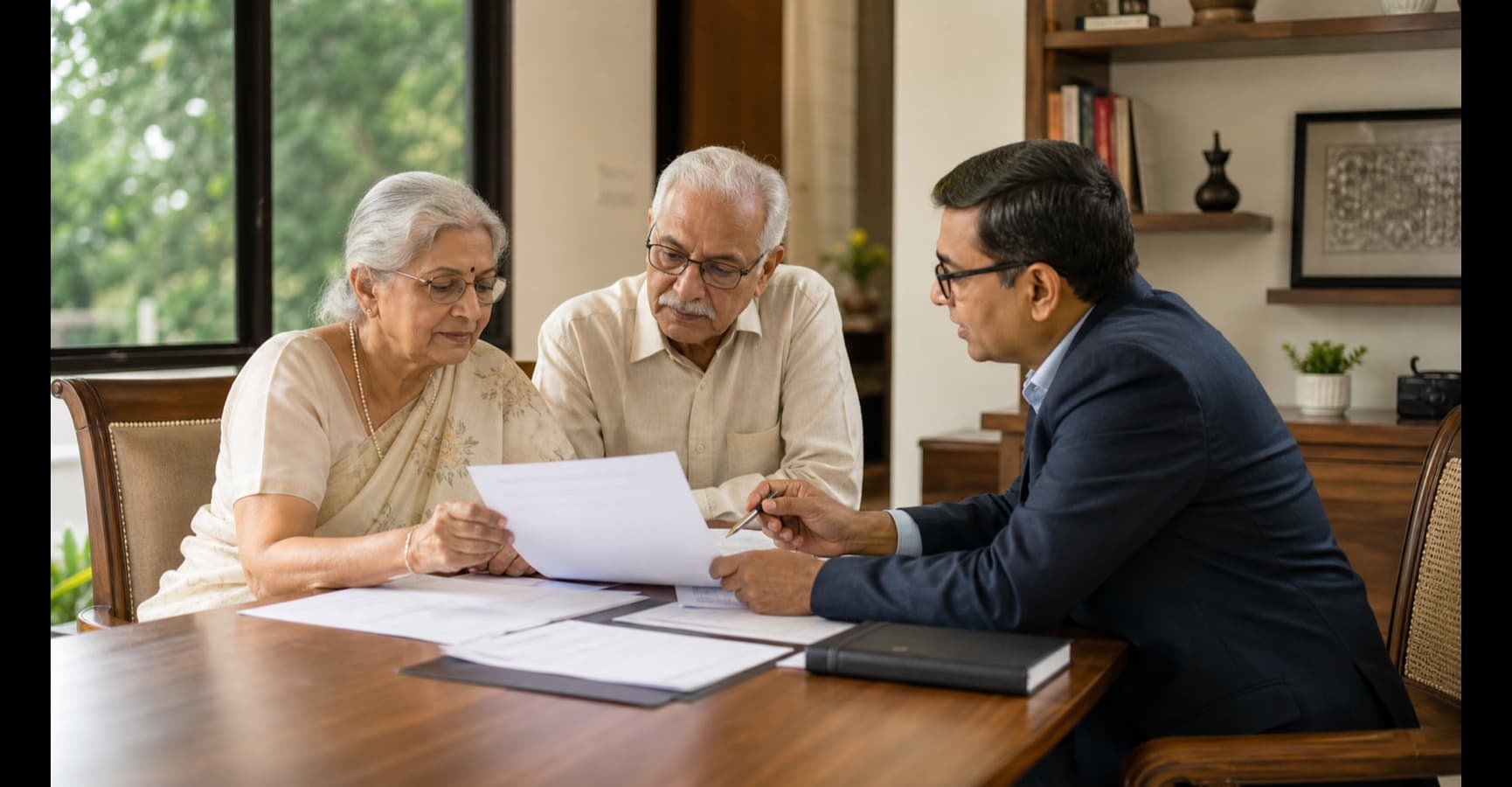
Nobody wants to talk about legal documents with their parents. It feels cold, even a little morbid, as though you are planning for their decline while they are still healthy and independent. So most families put it off, and off, until the day a parent is suddenly in hospital, unable to sign, and you are on a video call from another country discovering that you cannot access an account, authorise a treatment, or handle a single practical thing on their behalf.
That day is when families realise, painfully, that love and good intentions are not enough. Without the right paperwork in place, the people who most want to help are legally powerless to act, exactly when acting matters most.
The good news is that setting this up is not complicated, and doing it early, calmly, while your parent is well, removes an enormous source of future stress. This guide walks through what to organise and why. It is general information to help you know what to ask about, not legal advice; for anything specific, consult a qualified lawyer in India.
Why this matters more for NRIs
For a family living together in the same city, some of this can be managed informally, someone is always there to sign, to visit the bank, to speak to the doctor. For an NRI family, distance changes everything.
You cannot fly down every time a form needs a signature. You cannot walk into your parent's bank. In a medical emergency, you may be thirteen hours and a plane ride away while decisions need to be made now. The whole point of getting the documents right is to make sure that when you cannot be physically present, your parent's wishes can still be carried out and someone trusted can still act. Distance is precisely why the paperwork matters more, not less.
Our guide to caring for parents from abroad covers the wider picture; this guide focuses on the legal foundations underneath it.
Power of Attorney: the single most useful document
If you do only one thing, understand power of attorney. A power of attorney, or PoA, is a legal document in which your parent authorises a trusted person to act on their behalf in specified matters, for example managing banking, property, or other affairs, either generally or for particular tasks.
Why it matters so much for NRIs: with a properly made PoA in place, a trusted person in India can handle the practical affairs your parent cannot manage alone and you cannot do from abroad. Without it, even simple things can grind to a halt when a parent becomes unwell or unable to act.
A few important points to discuss with a lawyer:
- Scope. A PoA can be broad or narrow. Many families prefer to keep it specific and limited to what is actually needed, rather than handing over sweeping powers.
- Who holds it. It should be someone genuinely trustworthy. This is a position of real power, so choose with care.
- How it is made and used. There are formal requirements for how a PoA is created, attested, and, where relevant, registered, and special considerations when the person granting it is abroad. A lawyer will guide the correct process so the document is actually valid and accepted by banks and institutions.
Because a PoA grants real authority, it must be set up properly and given only to someone you completely trust. This is not paperwork to rush or copy off the internet.
A Will: clarity that prevents conflict
A will is your parent's clear, legal statement of how they wish their assets to be handled. It sounds like a distant concern, but its real value is preventing confusion, delay, and family conflict later.
When there is no clear will, families can face lengthy processes and, sometimes, painful disputes among relatives over who is entitled to what. A properly made will spares your parent's loved ones that, and ensures their actual wishes are followed rather than guessed at.
For NRI families especially, where assets and heirs may be spread across countries, clarity is worth a great deal. Encourage your parent to make a will with proper legal help, and to keep it safe and known to at least one trusted person. As with everything here, the specifics should be handled by a qualified lawyer.
Nominations and joint holdings: the quiet essentials
Alongside the big documents are smaller, easily overlooked steps that make a real difference.
Nominations. Bank accounts, deposits, insurance policies, and other financial holdings usually allow a nominee to be named. Making sure nominations are in place and up to date can significantly smooth things for the family later. It is a simple step that parents often forget or never got around to.
Account structures. How your parent's accounts are held affects how easily bills and expenses can be managed if they become unwell. This is worth reviewing with the bank and, where useful, a lawyer, so the family is not locked out at a difficult moment.
A clear record. One of the most useful things any family can do is simply make a list: which banks, which policies, which important documents, and where everything is kept. When a crisis hits, not knowing where things are is often as paralysing as not having the authority to act.
Health and care wishes
Beyond money and property, it helps for families to understand their parent's wishes about health and care, so that if a parent cannot speak for themselves, those close to them know what they would have wanted. How such wishes can be formally recorded is an evolving area, and a lawyer can advise on what is possible and appropriate. Even an open family conversation, held while your parent is well, is valuable, because it means decisions in a crisis are guided by their actual preferences rather than made blind.
Doing it without the dread
The reason all of this gets delayed is emotional, not practical. Raising wills and powers of attorney can feel like telling your parents you expect them to decline. The trick is in the framing.
Present it as organisation, not decline. "Let us get everything in order so nobody has to scramble later" lands far better than anything that sounds like planning for the worst. Many parents, once the subject is opened gently, are relieved to sort it out, because they too have been quietly worrying about leaving a mess behind. Our guide to talking to parents about accepting help has more on handling sensitive conversations well.
Do it while your parent is healthy and clear-minded, not in the middle of a health scare. Documents made calmly, with proper advice, are sound. Documents made in a panic, or too late, may not hold up at all.
The legwork problem, and how it gets solved
Even once you know what you need, an NRI family hits a wall: nearly all of it requires someone physically present in India. Papers must be collected, notarised, taken to a bank, submitted to an office, followed up on. A lawyer drafts the document, but someone still has to run it around the city and sit with your parent through the steps.
This is where Genie by Kareverse fits in. The idea is simple: the things you would do for your parents, if you were here. A Genie can accompany your parent to a lawyer's office, a bank, or a registration appointment and stay with them through it (Go With Them), or run the document errands the process throws up, collecting a certificate, submitting papers, following up (Get It Sorted, from ₹1,499). Crucially, a Genie never touches money, never asks for a PIN, and never transacts or signs on your parent's behalf. The legal decisions and authority stay entirely with your parent and their lawyer; the Genie simply provides the presence and legwork you would provide yourself if you lived in the city.
Frequently asked questions
Is this legal advice?
No. This is general information to help you understand what to ask about. Powers of attorney, wills, nominations, and health directives all have formal legal requirements, and NRIs face extra considerations because the parent granting authority may be dealt with while a child is abroad. Always use a qualified lawyer in India for anything specific.
What is the most important document to sort first?
For most NRI families, a properly made power of attorney is the most immediately useful, because it lets a trusted person in India act on practical matters your parent cannot manage alone and you cannot handle from abroad. A will and up-to-date nominations should follow close behind.
My parents get upset when I raise this. How do I approach it?
Frame it as getting organised so no one has to scramble later, not as planning for decline, and raise it while they are well rather than during a health scare. Many parents are quietly relieved to sort it out. Our guide to talking to parents about accepting help covers the approach.
Can Genie handle the legal work for us?
No, and that is by design. A Genie never touches money, signs, or transacts. The legal drafting and authority stay with your parent and their lawyer. What a Genie does is the presence and legwork, accompanying your parent to appointments and running documents around the city, so the process actually moves while you are abroad.
We keep putting this off. Why the urgency?
Because these documents only work if they are made while your parent is well and able to decide clearly. Once a parent is seriously unwell or unable to act, it may be too late to set them up, and the family is left legally stuck at the worst possible moment. Doing it early is the whole point.
A simple next step
Getting the paperwork in order is one of the kindest, most practical things an NRI can do for elderly parents, and one of the few that genuinely cannot be done in a hurry. The families who handle it calmly and early are the ones who, in a crisis, can act instead of scramble.
If you want a clear read of where your parent stands and what support they need, a Kare@home Assessment Visit is a good place to start. For ₹999, a Care Manager visits at home and reviews how your parent is really doing, then sends the family a Family Report within 48 hours. From there, Genie by Kareverse can handle the office visits and document legwork, without ever touching your parent's money, and if daily support would help, a caretaker can be placed.