

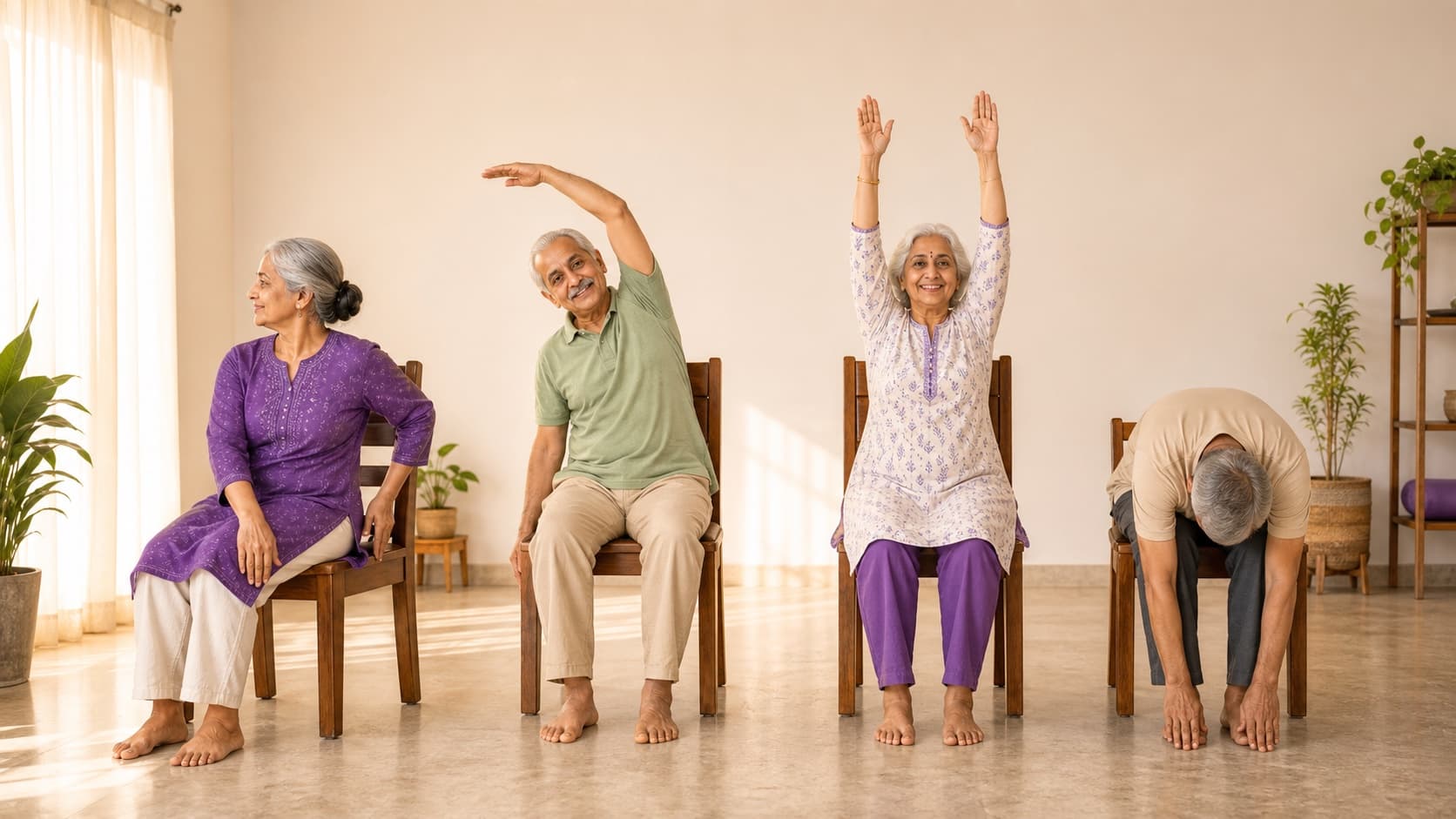
Maybe you used to do surya namaskar every morning until your knee started complaining. Maybe you have always thought yoga was for flexible young people in tight clothes. Either way, the yoga that helps you now looks nothing like that.
Yoga for an ageing body is not about touching your toes or standing on your head. It is about standing steady on one foot while you put on your trousers without wobbling. It is about turning your head to check the road before you cross. It is about breathing your way back to sleep when you wake at 3 in the morning. That kind of yoga can be done sitting on a chair, standing against a wall, or on a thin mat beside your bed. And it can be done right at home.
Why yoga suits an ageing body so well
Walking is good for you, but it does little for balance. Lifting weights builds strength, but it can feel intimidating. Swimming is wonderful, but you need a pool. Gentle yoga, done properly, quietly does several things at once. It helps you hold on to muscle, which is what keeps you from falling. It sharpens your sense of where your body is in space. It keeps your joints moving. It calms the mind, and it helps settle blood pressure and sleep.
The important words there are "done properly". You are not trying to keep up with a class of twenty-somethings. A young instructor pushing you into a difficult pose can do real harm to a shoulder or a knee. The right practice meets your body where it is today.
Chair yoga: the safest place to begin
If you have not exercised in a while, start on a chair. There is no getting down to the floor and no awkward struggle to get back up. A sturdy dining chair is all you need.
Here is a simple sequence you can do in about fifteen minutes:
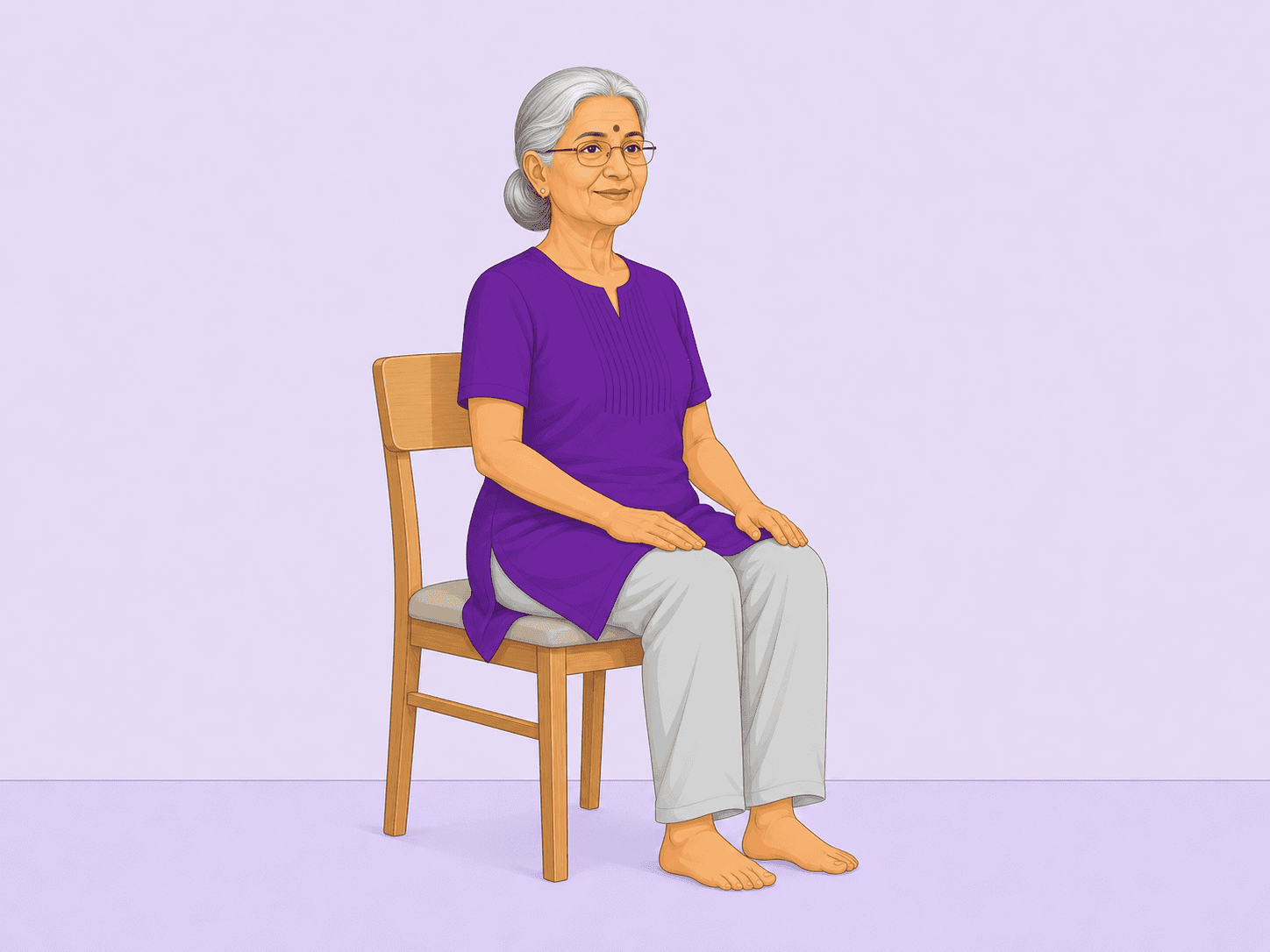
Seated Mountain
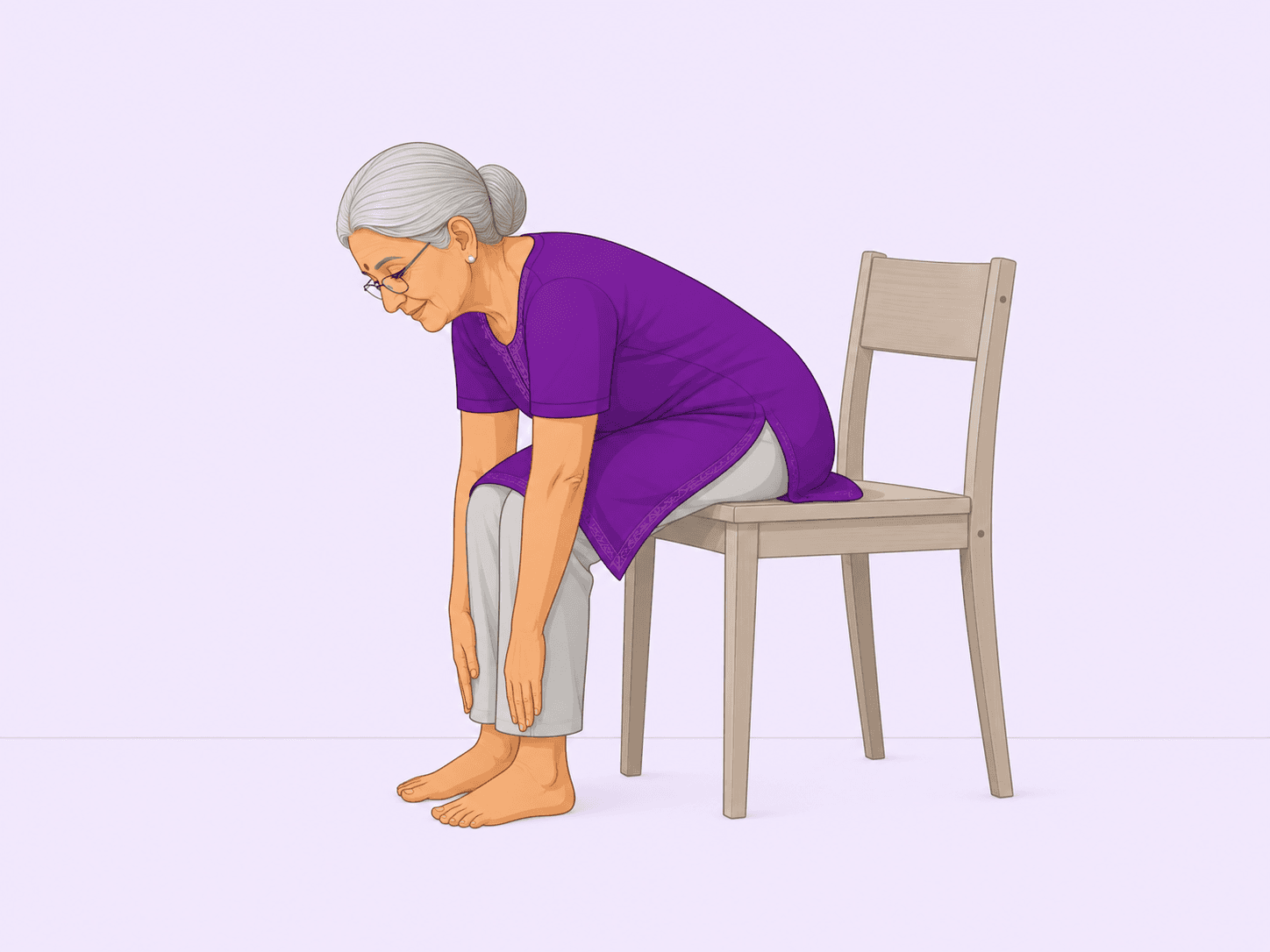
Seated Forward Fold
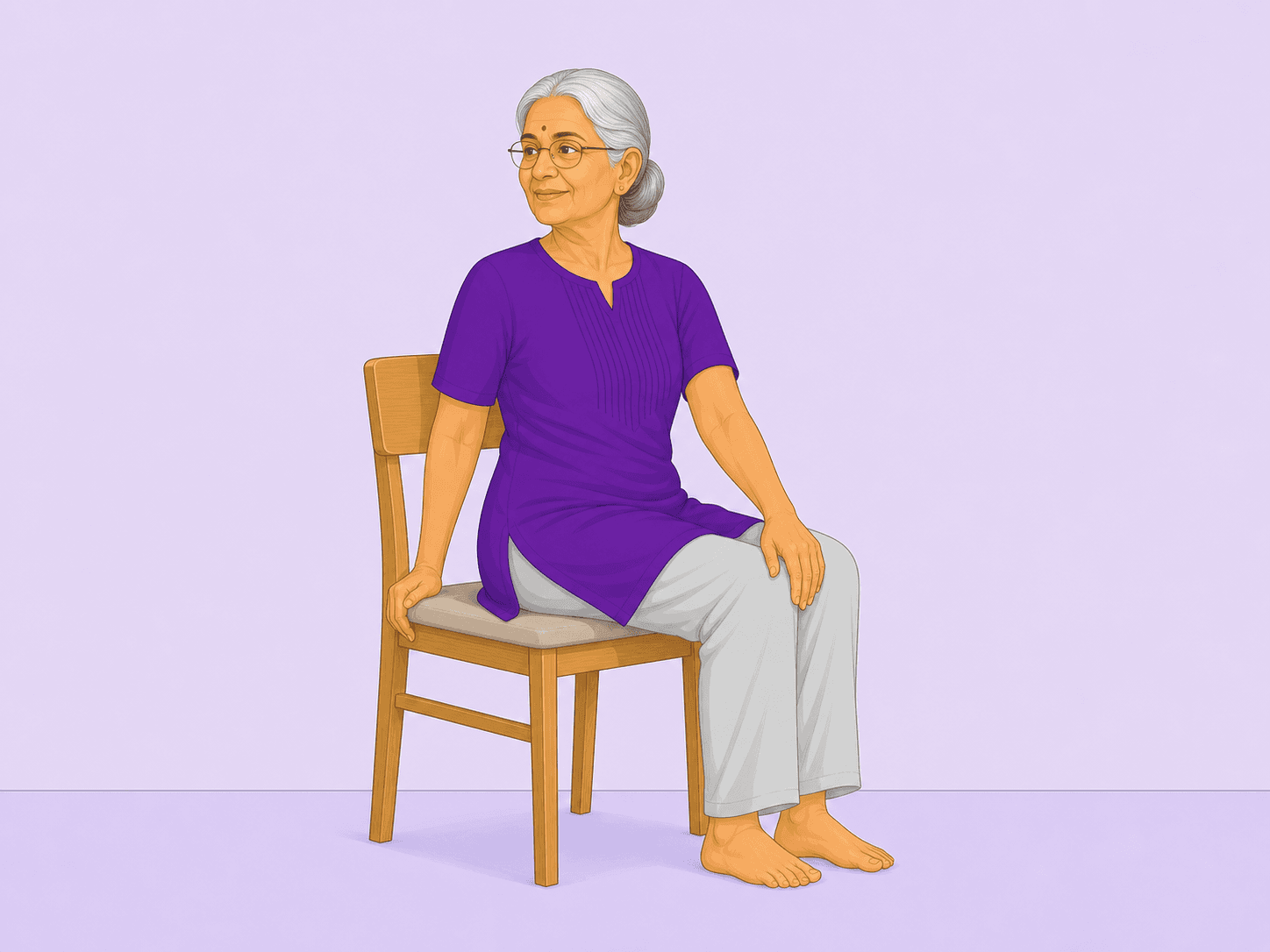
Seated Twist
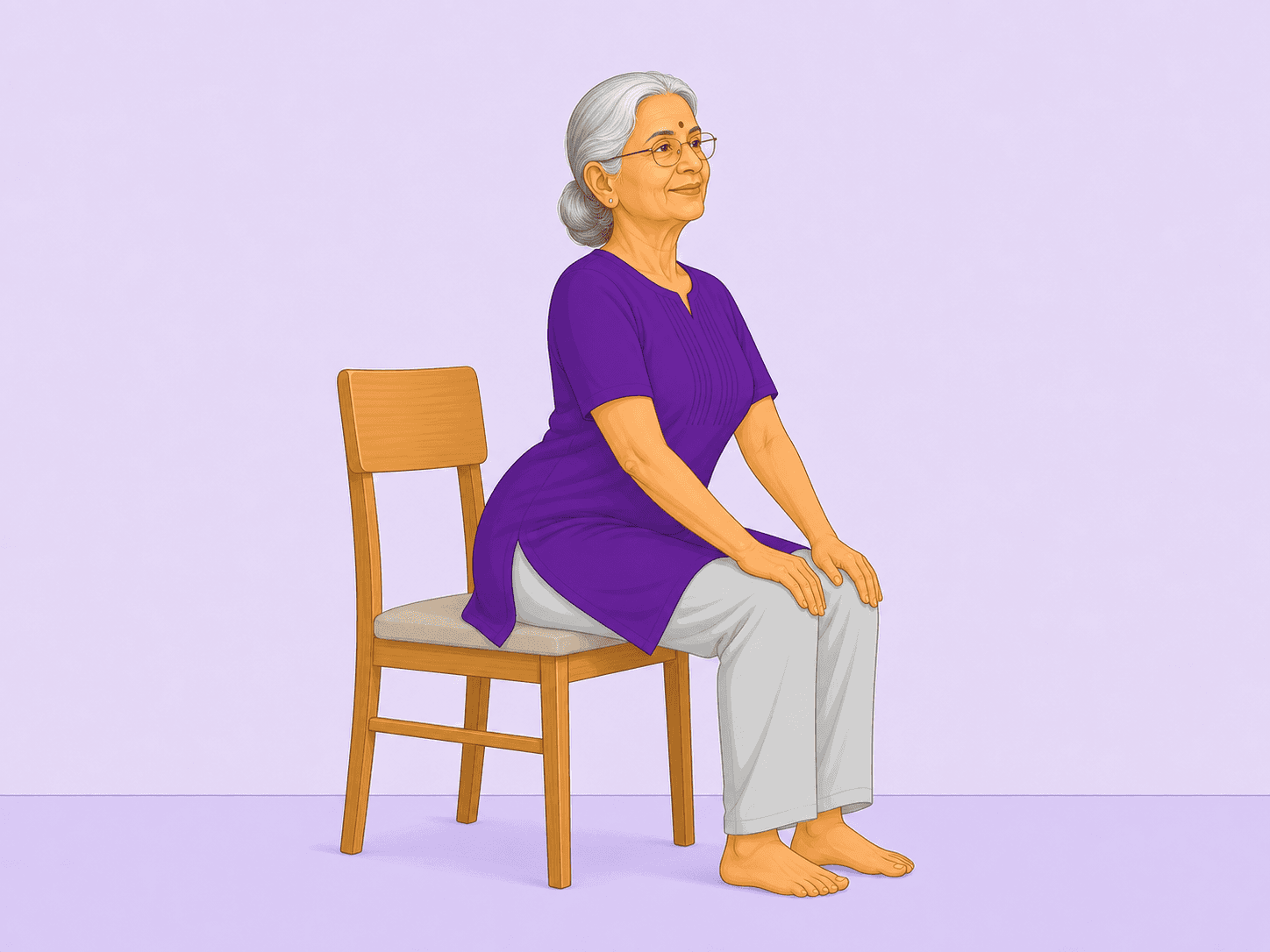
Seated Cat and Cow
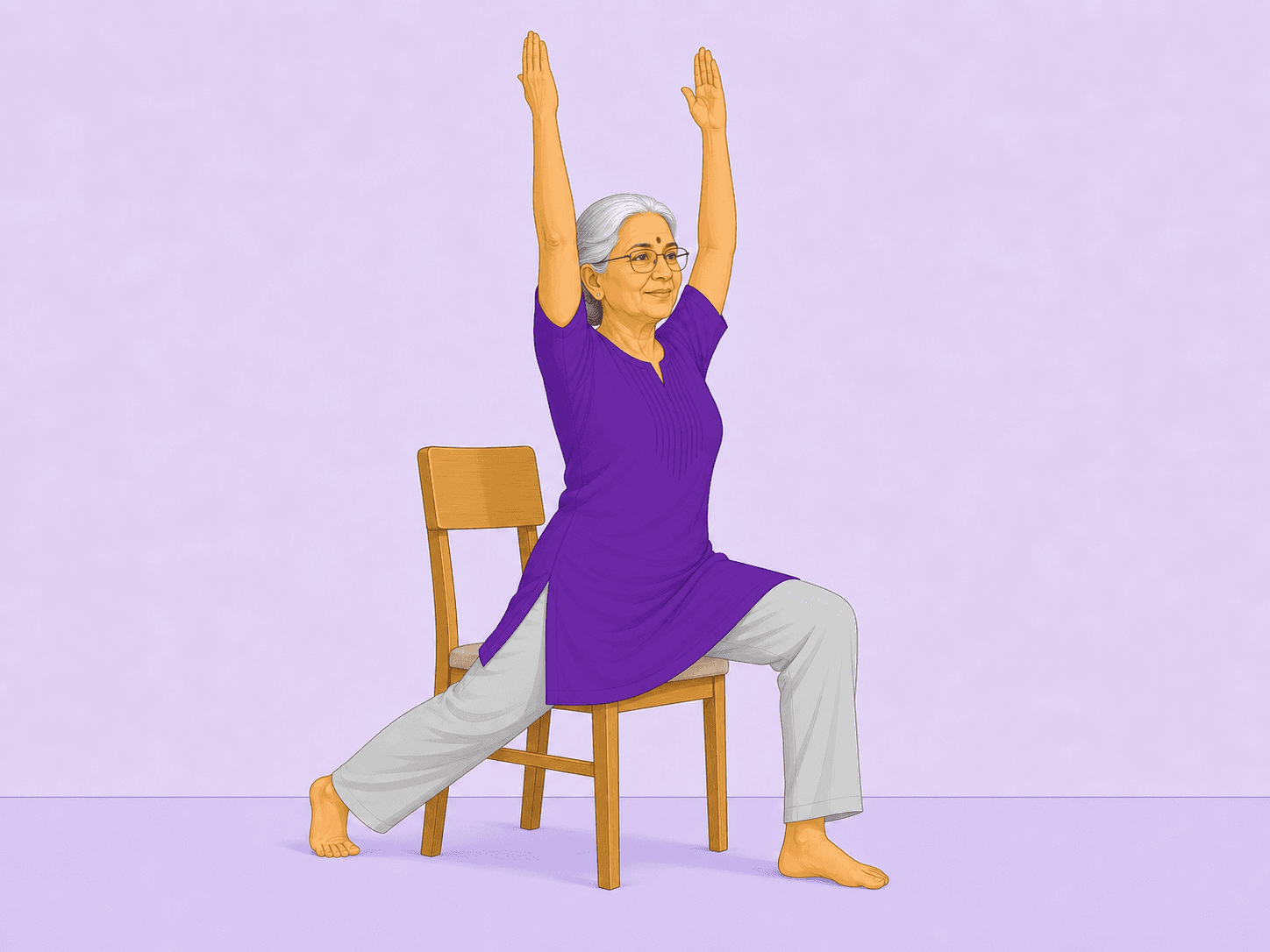
Seated Warrior
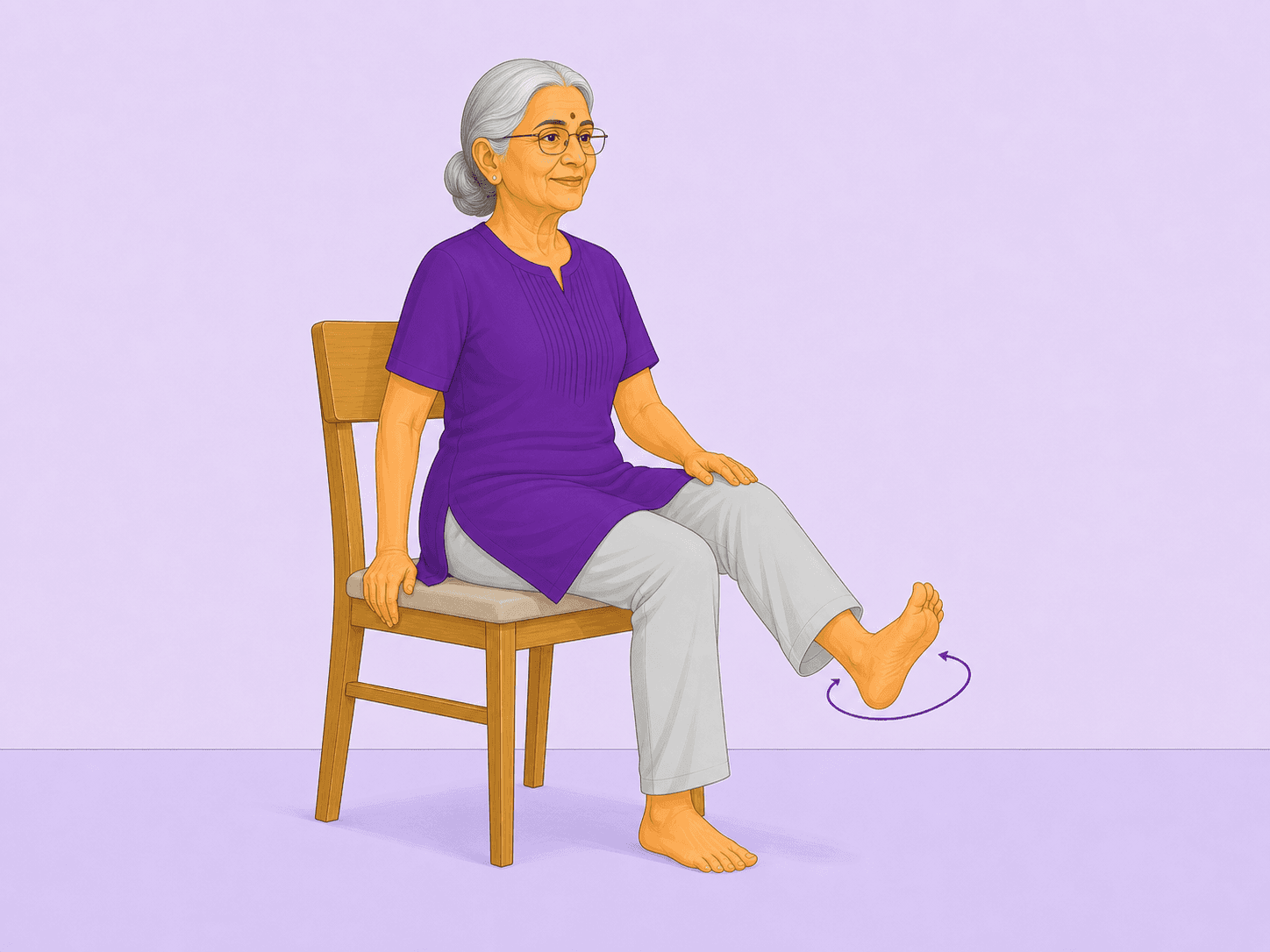
Ankle Circles and Toe Stretches
Finish with three minutes of slow belly breathing. Breathe in for a count of four, out for a count of six. The longer out-breath is what settles the nerves and eases blood pressure.
Do this at the same time each day, ideally in the morning after breakfast. Being regular matters far more than pushing hard.
Wall-supported poses: building confidence on your feet
Once the chair feels easy, standing poses with a wall for support add the balance training that genuinely prevents falls. The wall takes away the fear of falling, and that fear is half the problem.
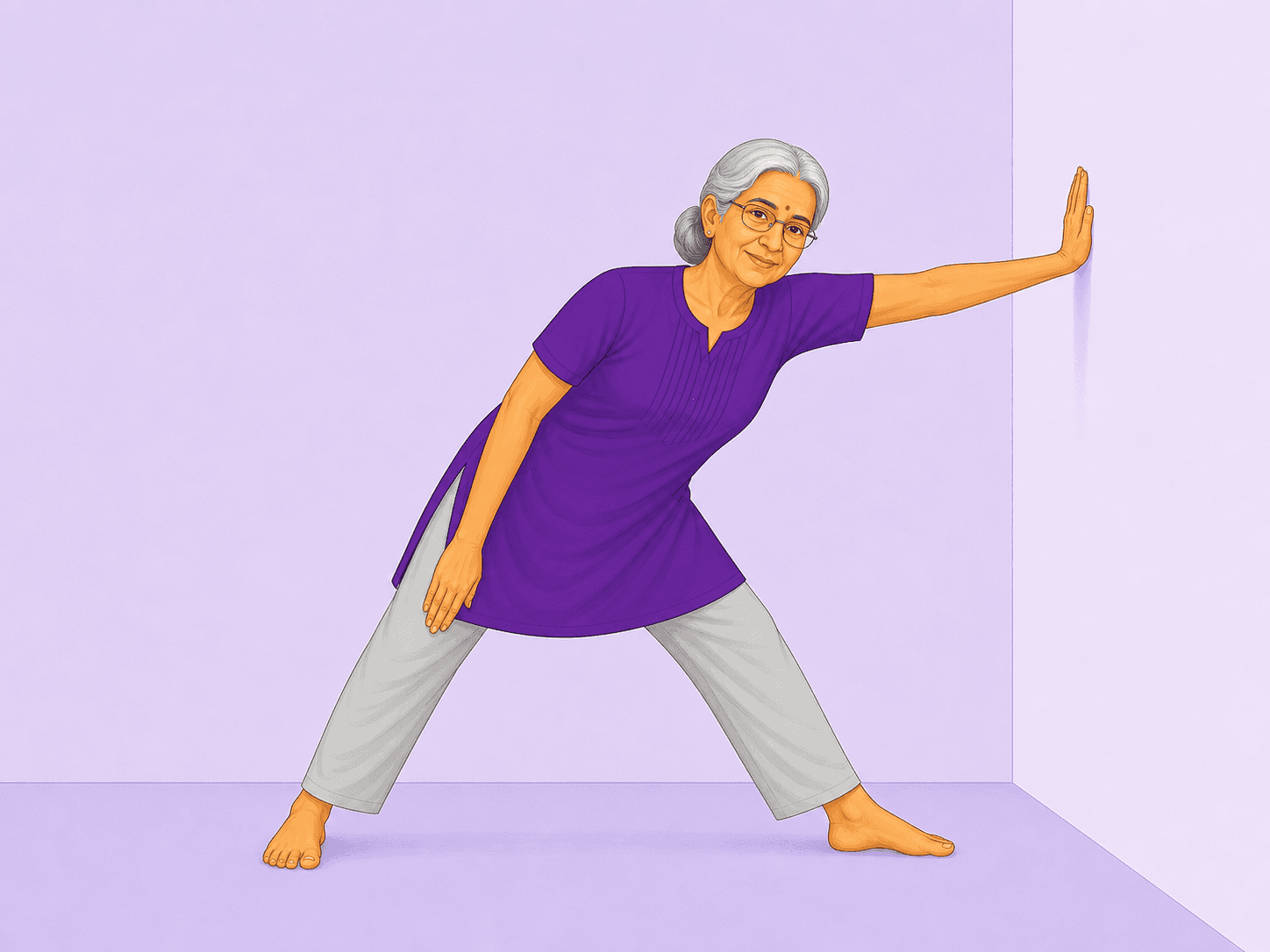
Wall-Supported Triangle
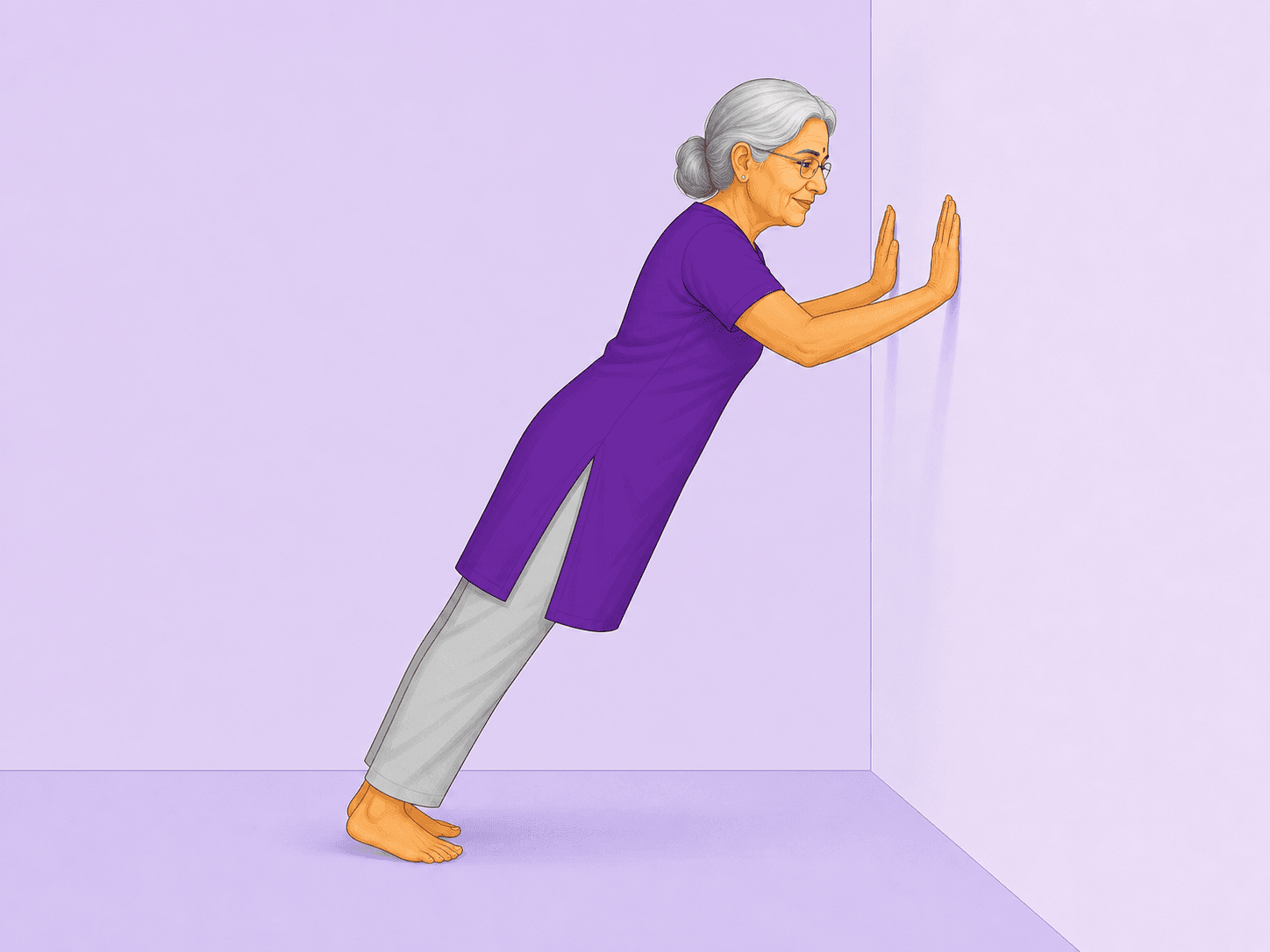
Wall Push-Ups
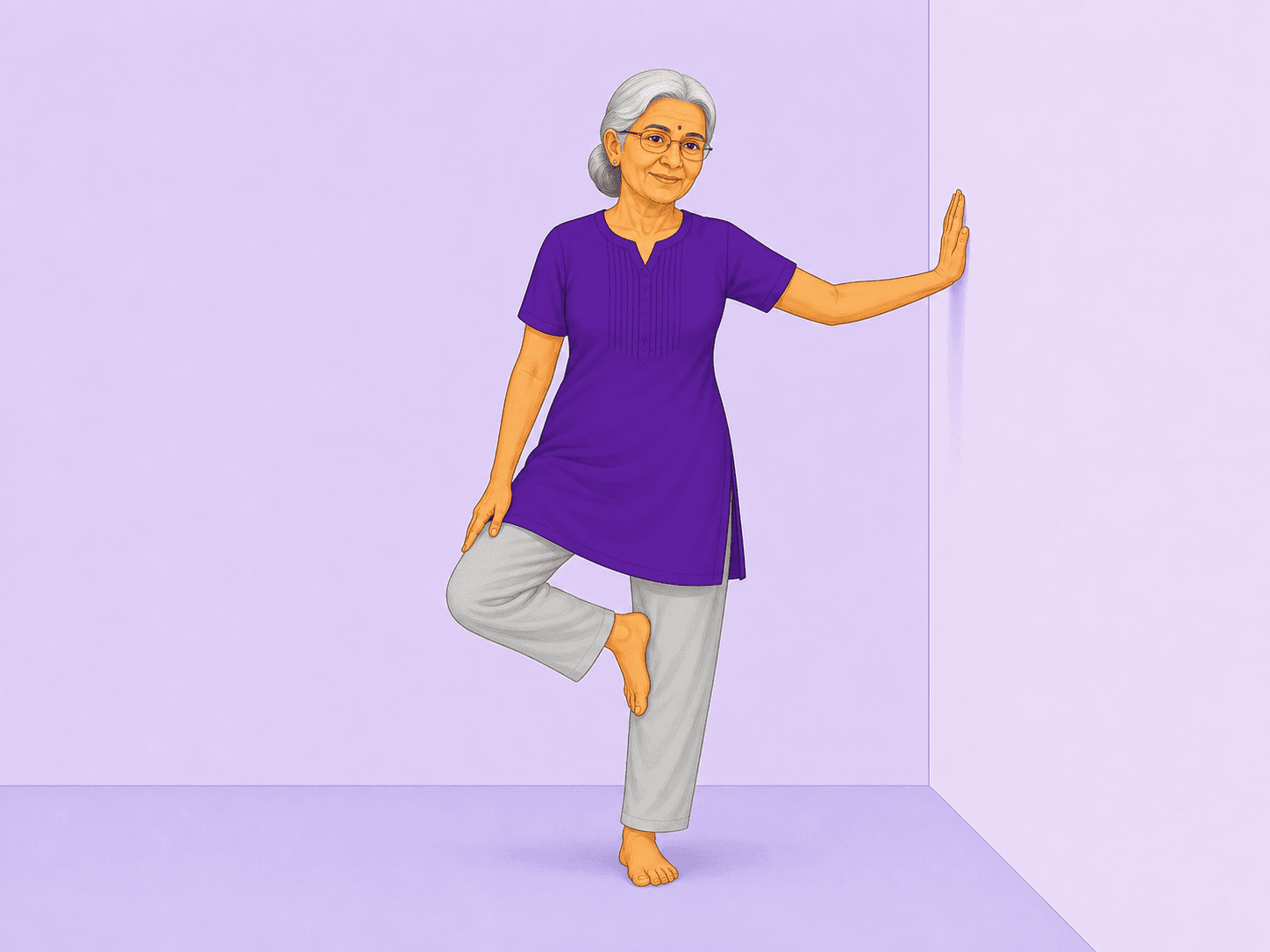
Wall Tree Pose
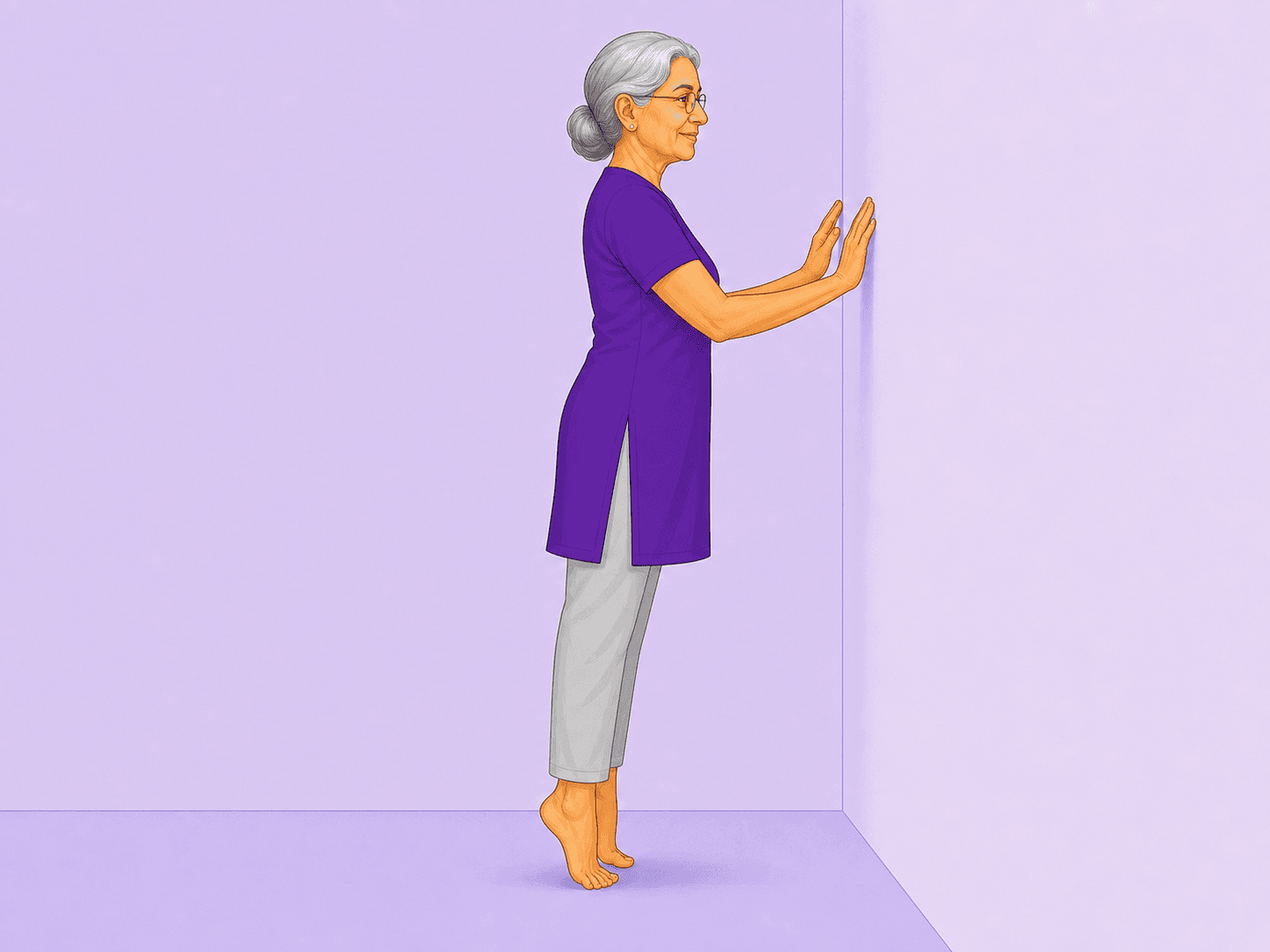
Calf Raises
Breathing practice: the part most people skip
Breathing exercises are where yoga becomes genuinely calming, not just physical upkeep. They are worth as much as any pose.
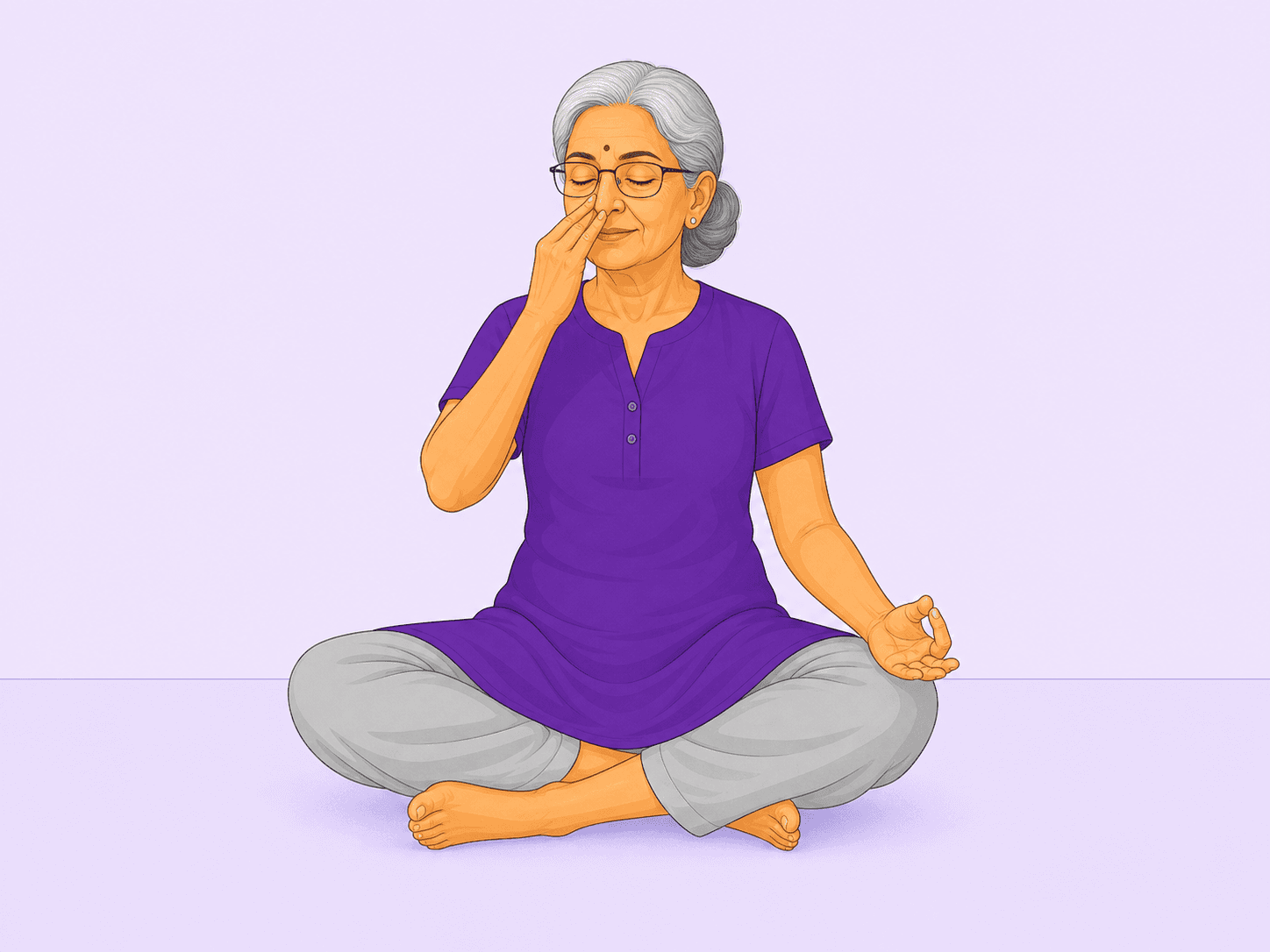
Alternate Nostril Breathing
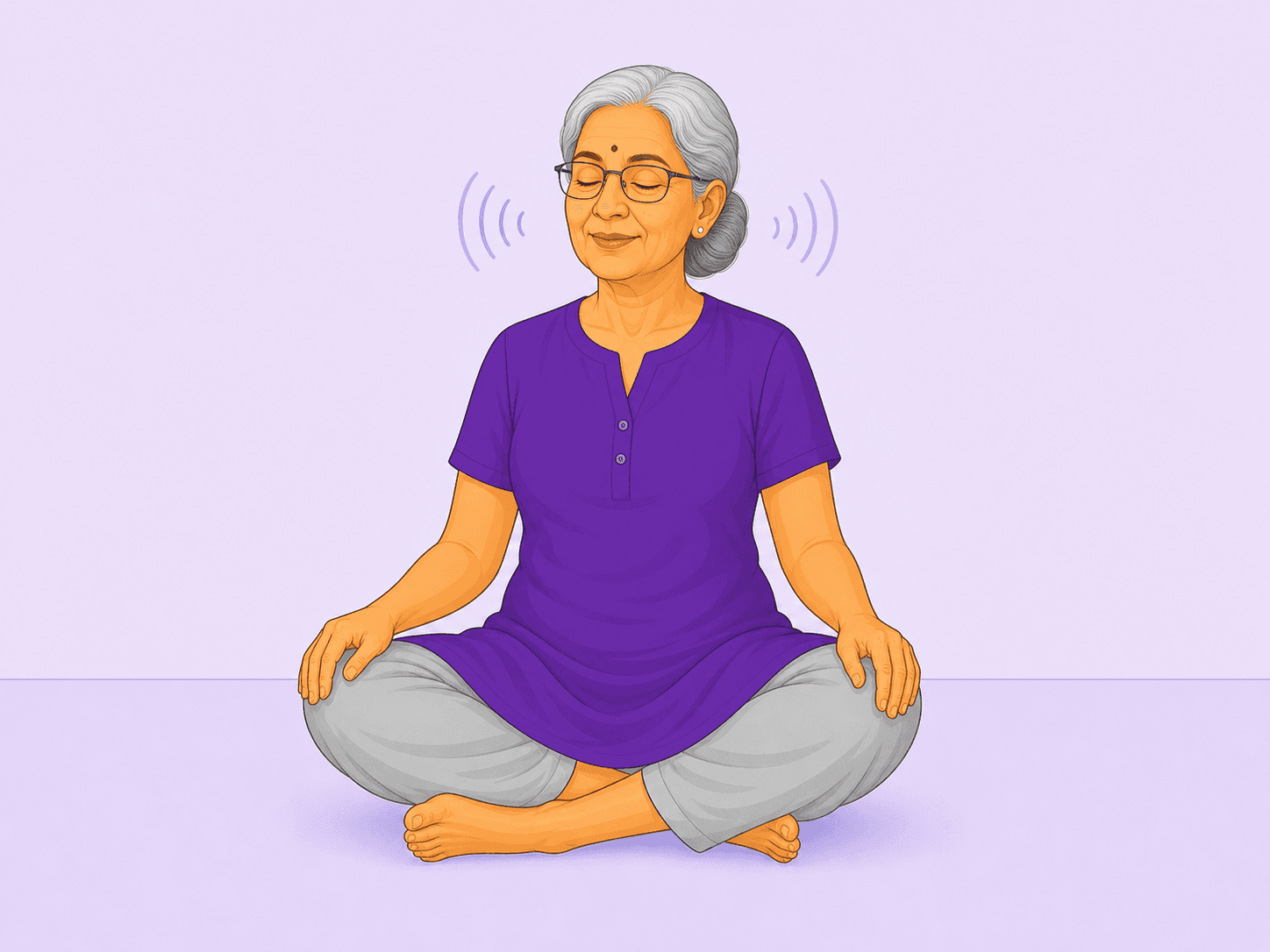
Humming Breath
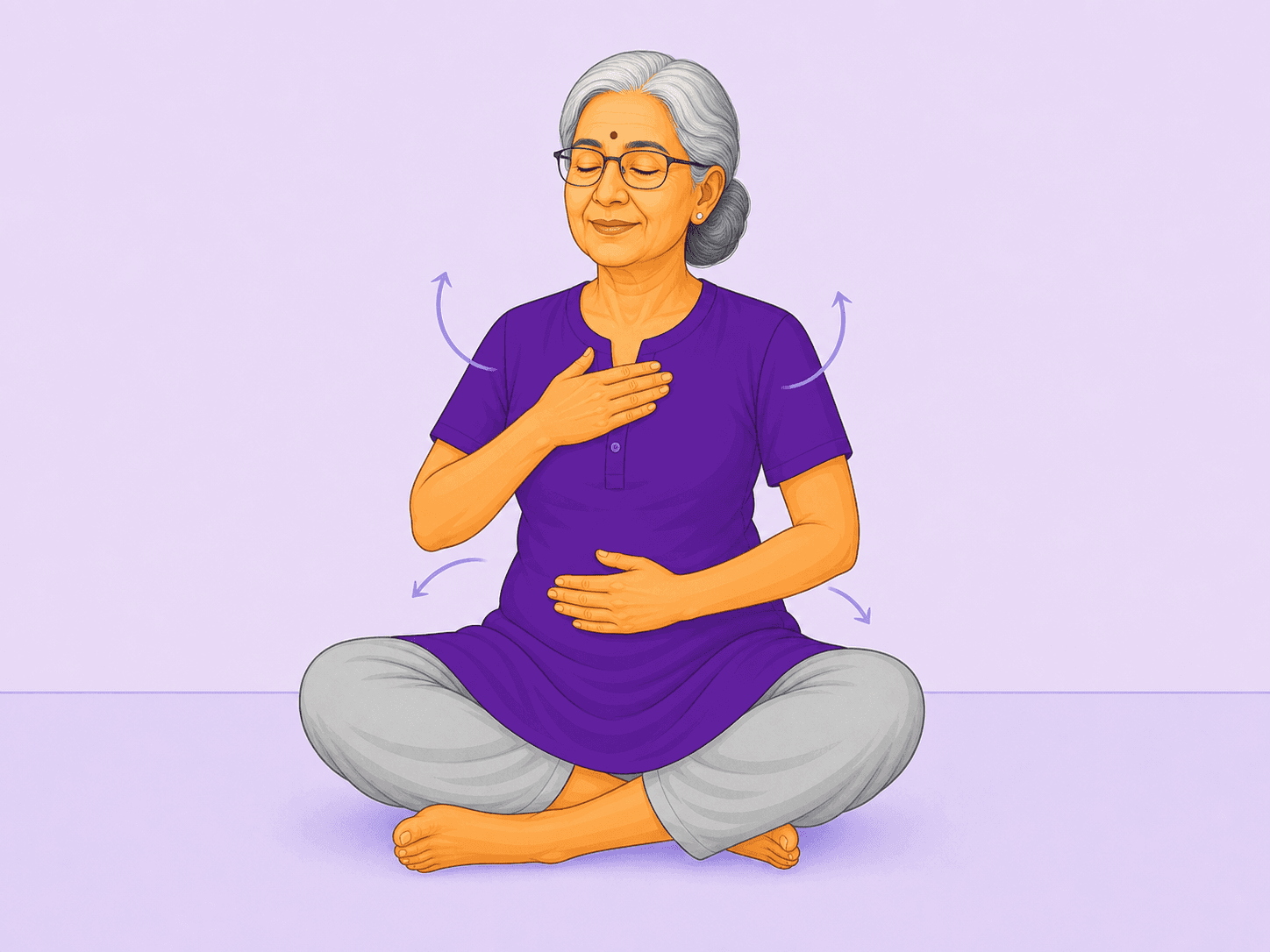
Simple Belly Breathing
Please take these precautions seriously
- If your blood pressure is not well controlled, or you have glaucoma or vertigo, avoid any pose that puts your head below your heart. Chair-based versions exist for everything.
- If you have osteoporosis or thinning bones, skip deep twists and deep forward bends. Gentle movement only.
- After a knee or hip replacement, avoid deep knee bends and extreme hip movements. Your physiotherapist's advice matters more than any yoga video.
- Discomfort is fine. Sharp pain is not. If something hurts sharply, stop at once.
- If you take medicines that can make you light-headed when you stand, such as blood pressure tablets, practise when their effect is steady rather than right after a dose.
If you are recovering from a fall, surgery, or a stroke, it is wiser to build a plan with a professional first. Physiotherapy at home can get you moving safely, and yoga can follow once you are steadier. And because staying steady is really about preventing falls, it is worth reading our guide to fall prevention at home alongside this one.
Finding the right yoga guidance in Bangalore
Not every yoga teacher knows how to work with an older body. If you are looking for a class or a home instructor in areas like Whitefield, Koramangala, JP Nagar, or Jayanagar, it helps to ask a few questions first. Do they have experience with senior citizens or with therapeutic yoga? Will they let you try one session before you commit? Are they comfortable teaching everything seated, if that is what your knees need today?
Kareverse yoga sessions are designed for seniors from the start, taught by instructors trained in the modifications an ageing body needs, either at your home or through guided online sessions. Practising at home removes the travel that makes so many people give up on a studio class.
A fifteen-minute routine to start today
- Minutes 1 to 3: Gentle warm-up. Ankle circles, wrist circles, easy neck movements, seated cat and cow.
- Minutes 4 to 8: Chair yoga. Seated mountain, forward fold, twists, warrior.
- Minutes 9 to 12: Wall-supported standing. Wall push-ups, wall tree pose on each side, calf raises.
- Minutes 13 to 15: Breathing. Alternate nostril breathing or simple belly breathing.
That is the whole thing. Fifteen minutes. No special mat, no special clothes. A chair, a wall, and the willingness to show up each day.
Frequently asked questions
I have knee pain. Can I still do yoga?
Yes. Almost everything here can be done seated, which keeps weight off the knees. Avoid deep knee bends and stop if a movement is sharply painful. If knee pain is a daily struggle, it is worth considering physiotherapy at home to strengthen the muscles that support the joint, alongside gentle Kareverse yoga sessions adapted for sore joints.
How often should I practise?
A little every day beats a long session once a week. Fifteen minutes daily, at the same time, is plenty to notice a difference in balance and sleep within a few weeks.
Is yoga safe if I have high blood pressure?
Gentle yoga and slow breathing can be very helpful, but avoid poses that put your head below your heart, and practise when your medicines are steady rather than right after a dose. If your blood pressure is not yet controlled, check with your doctor first. Getting the timing of your tablets right matters here, and our guide to managing medicines safely covers that in more detail.
Do I need to be flexible to start?
No. Flexibility is a result of practice, not a requirement to begin. You start exactly where your body is today.
Can someone teach me at home instead of a studio?
Yes. Kareverse arranges yoga at home for seniors, so there is no travel and the practice is built around what your body can do.
A gentle next step
You do not need to become a yogi. You need to stay steady on your feet, sleep through the night, and keep the freedom of moving on your own. The right practice, done at home, gives you exactly that, one breath and one pose at a time.
If you would like a fuller picture of your health before you begin, a Kare@home Assessment Visit is a good starting point. For ₹999, a Care Manager visits at home and checks health, medicines, mobility, home safety, and nutrition, then sends the family a Family Report within 48 hours. From there, whether it is regular yoga sessions, physiotherapy, or a caretaker for daily support, the plan is built around what you actually need.