


Feet are the last thing a family thinks to ask about. On a video call you notice a cough, a limp, a lost bit of weight. You almost never think to ask, are your feet alright. And yet a surprising number of older parents slowly stop walking not because of their knees or their heart, but because their feet hurt, and nobody noticed in time.
It sounds like a small thing. A corn, a thick nail, a patch of hard skin, a bit of numbness. But an older parent who cannot comfortably put weight on their feet stops going for their walk, stops going down to the garden, stops moving around the house. And once an older parent stops moving, they lose strength and balance quickly, and the risk of a fall climbs. A neglected foot is one of the quiet, avoidable ways independence slips away.
This guide looks at why ageing feet need real attention, the signs to watch for when you are far away, and the simple, dignified ways families can help.
Why older feet need more attention, not less
Several things change with age, and they add up.
The skin on the feet gets thinner and drier, so it cracks and breaks more easily, and a small break can turn into an infection. Nails grow thicker and harder to cut, so they get left, then curl, dig in, and hurt. Circulation to the feet is often poorer in later life, so small cuts and sores heal slowly. And many older parents simply cannot reach or see their own feet well any more, because of stiff hips, a bad back, or failing eyesight, so problems build up unseen and untended.
For a parent with diabetes, all of this matters far more. Diabetes can dull the feeling in the feet, so a blister, a cut, or a stone in the shoe goes unnoticed and unfelt, and it can also slow healing, so a small wound that would be nothing in a younger person can become a serious, stubborn problem. If your parent has diabetes, their feet deserve particular, regular attention, and anything unusual is worth a doctor's eye promptly. Our guide to caring for a parent with diabetes covers this alongside the wider picture.
What actually goes wrong
Most foot trouble in older parents comes down to a handful of ordinary problems that are easy to ignore until they are not.
Hard skin and corns build up and press painfully with every step. Thick or ingrown nails dig in and make shoes uncomfortable. Dry, cracked heels split and can get infected. Fungal infections between the toes or in the nails are common, itchy, and persistent. Swelling in the feet and ankles can make shoes tight and walking harder, and sometimes points to a wider health issue worth mentioning to a doctor. And a parent who has lost feeling in their feet may not realise any of this is happening at all.
None of these is dramatic on its own. Together, and left alone, they are enough to make a parent decide, quietly, that walking is just not worth the discomfort any more.
The signs to watch for, even from abroad
Because parents rarely complain about their feet, families need to read the indirect clues.
- They have stopped walking as much, or make excuses to avoid the stairs or the garden.
- They are wincing, shuffling, or walking oddly to keep weight off a sore spot.
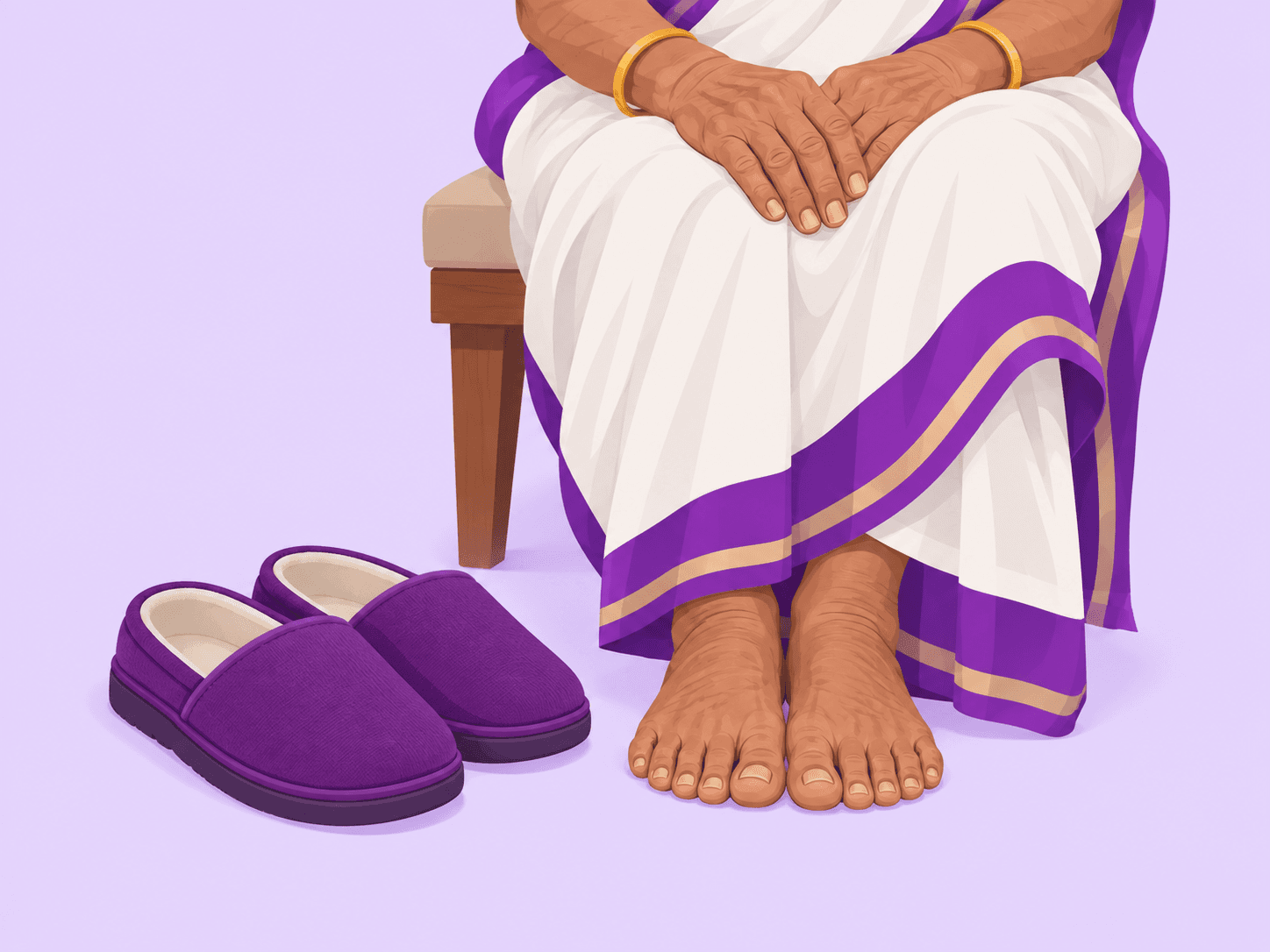
- They are wearing slippers or looser footwear all the time because normal shoes hurt.
- Nails have gone long, thick, or discoloured, visible if you ask them to show you.
- Cracked heels, redness, swelling, or any wound that is not healing.
- Any complaint of numbness, tingling, or burning, especially in a parent with diabetes.
A gentle, direct request on a call, ask them to show you their feet, or ask whoever is with them to take a proper look, is often the only way to know. It is not intrusive; it is one of the more useful things you can check.
Simple, everyday ways to help
Most foot problems in older parents are prevented by a few consistent habits. These are safe, gentle basics; anything that looks infected, or any foot problem in a parent with diabetes, needs a professional rather than home treatment.
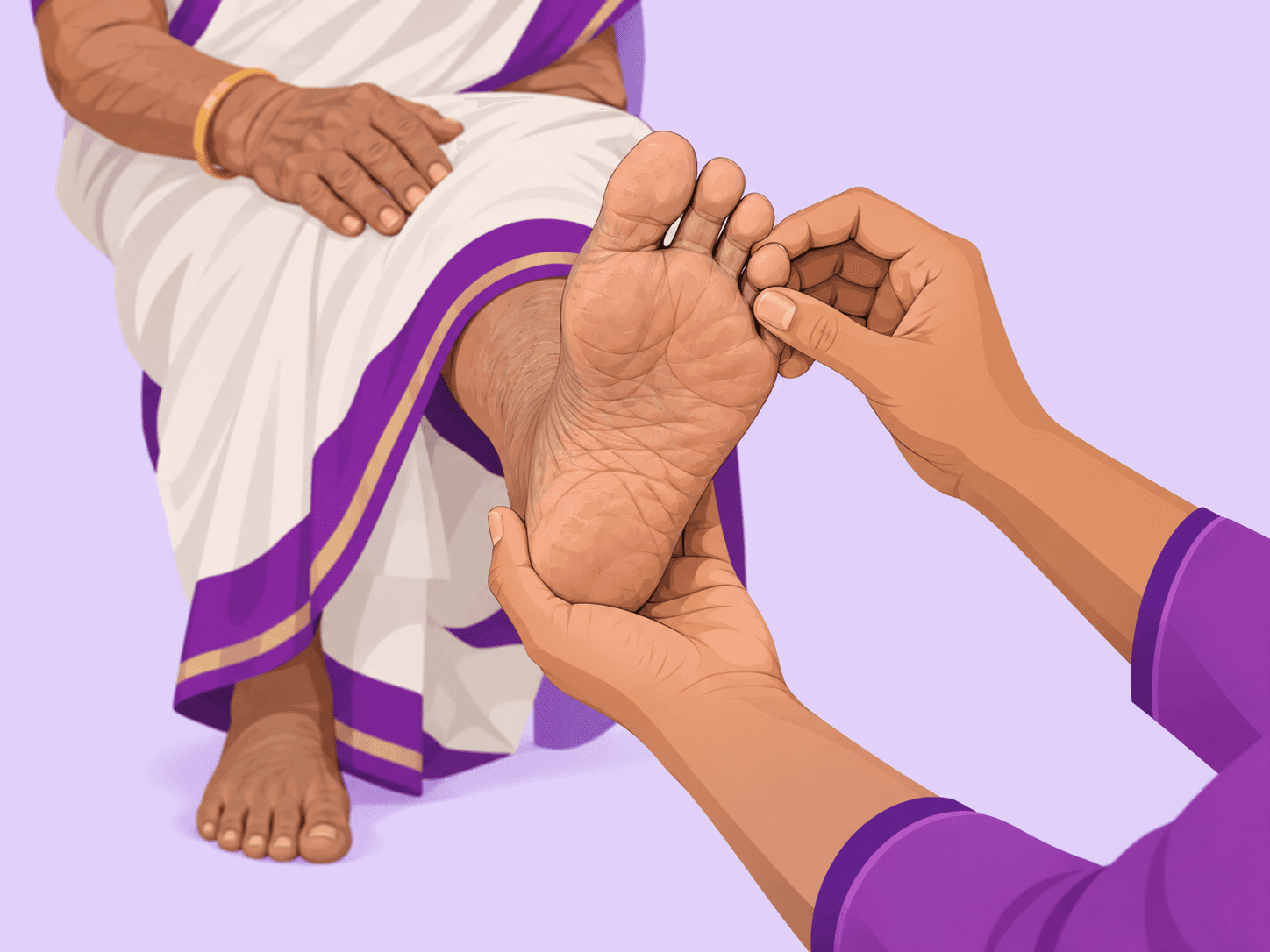
A Daily Look
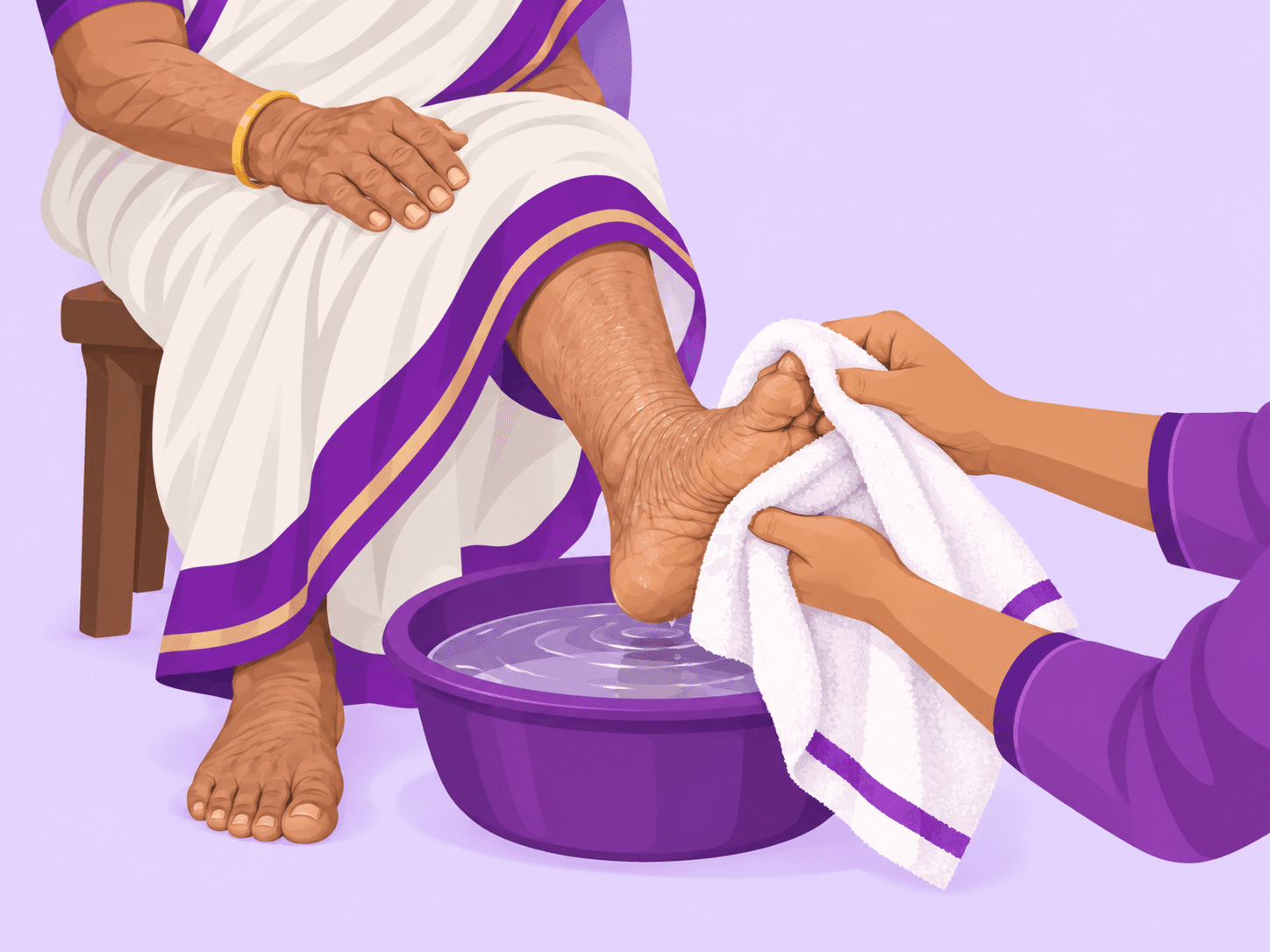
Wash and Dry Well
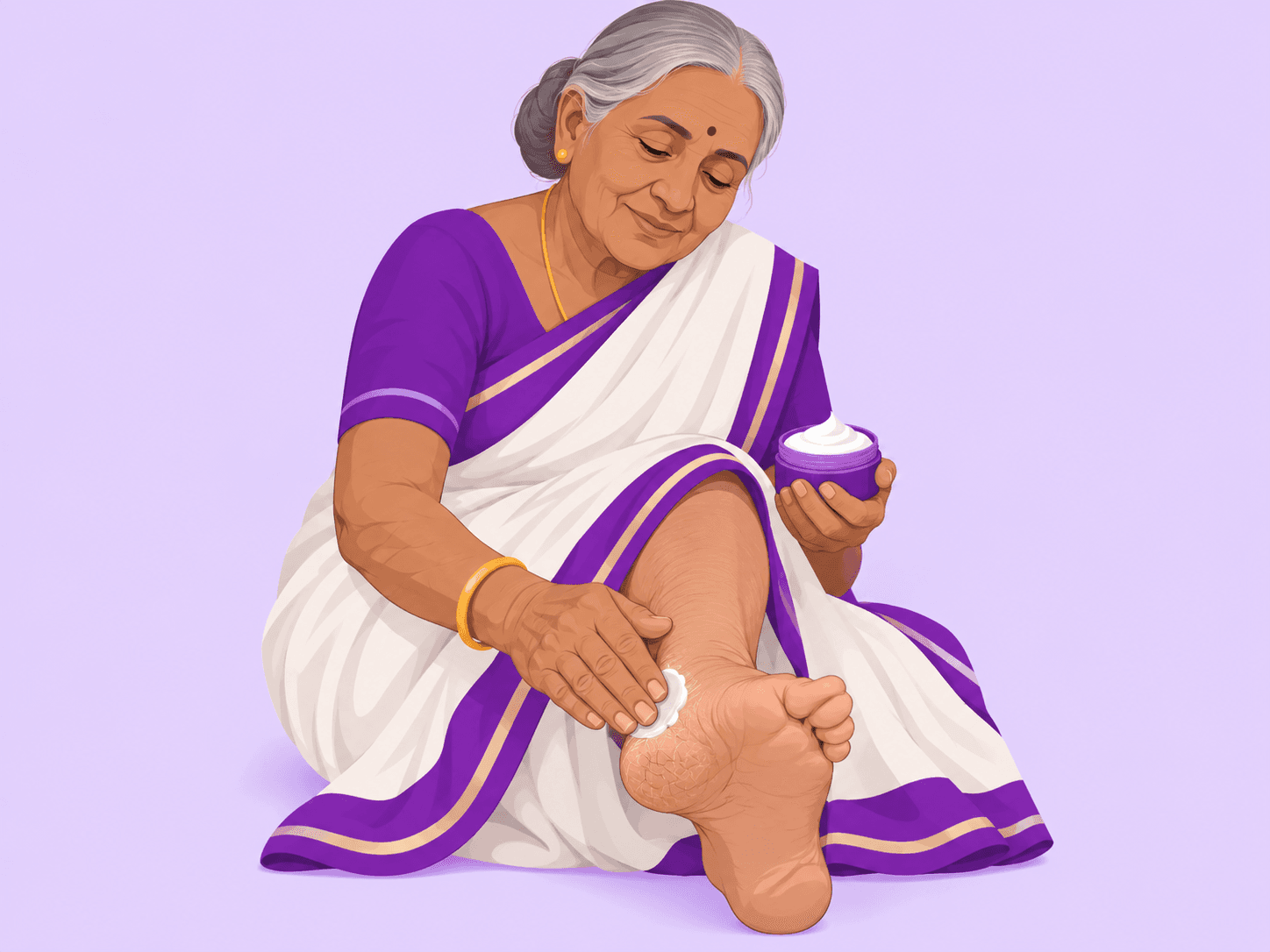
Moisturise, Not Between Toes
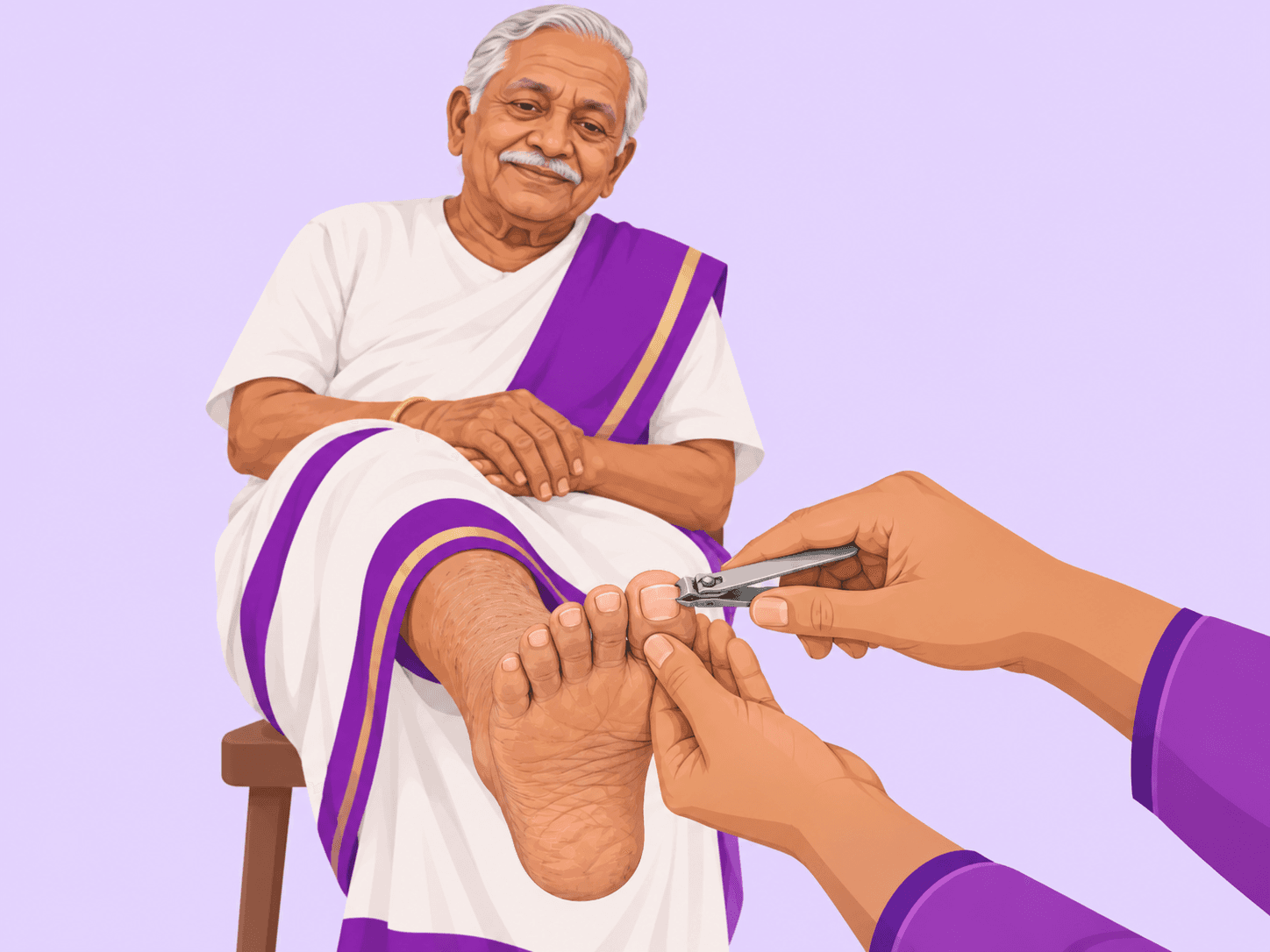
Careful Nail Care
The Right Footwear
When to Get Help
A gentle word of caution: families and parents sometimes reach for a blade or a sharp tool to cut away a corn or hard skin, or dig at an ingrown nail. On older, poorly healing feet, and especially with diabetes, this is exactly how a small problem becomes an infected wound. Softening with moisturiser and leaving the sharp work to a professional is the safe order.
Movement keeps feet and legs healthy too, and comfortable feet make movement possible, so the two feed each other. Our guide to walking for seniors has easy ways to keep an older parent gently on their feet.
How a Care Manager and caretaker help
This is one of those small, practical areas where regular presence changes everything. A caretaker who is with your parent through the day is the person who actually notices, the new limp, the sore that is not healing, the shoes left by the door because they hurt. Their role is to look, gently and without fuss, help with the daily washing and drying and checking, make sure supportive footwear is worn rather than loose slippers, and report anything unusual before it becomes a wound.
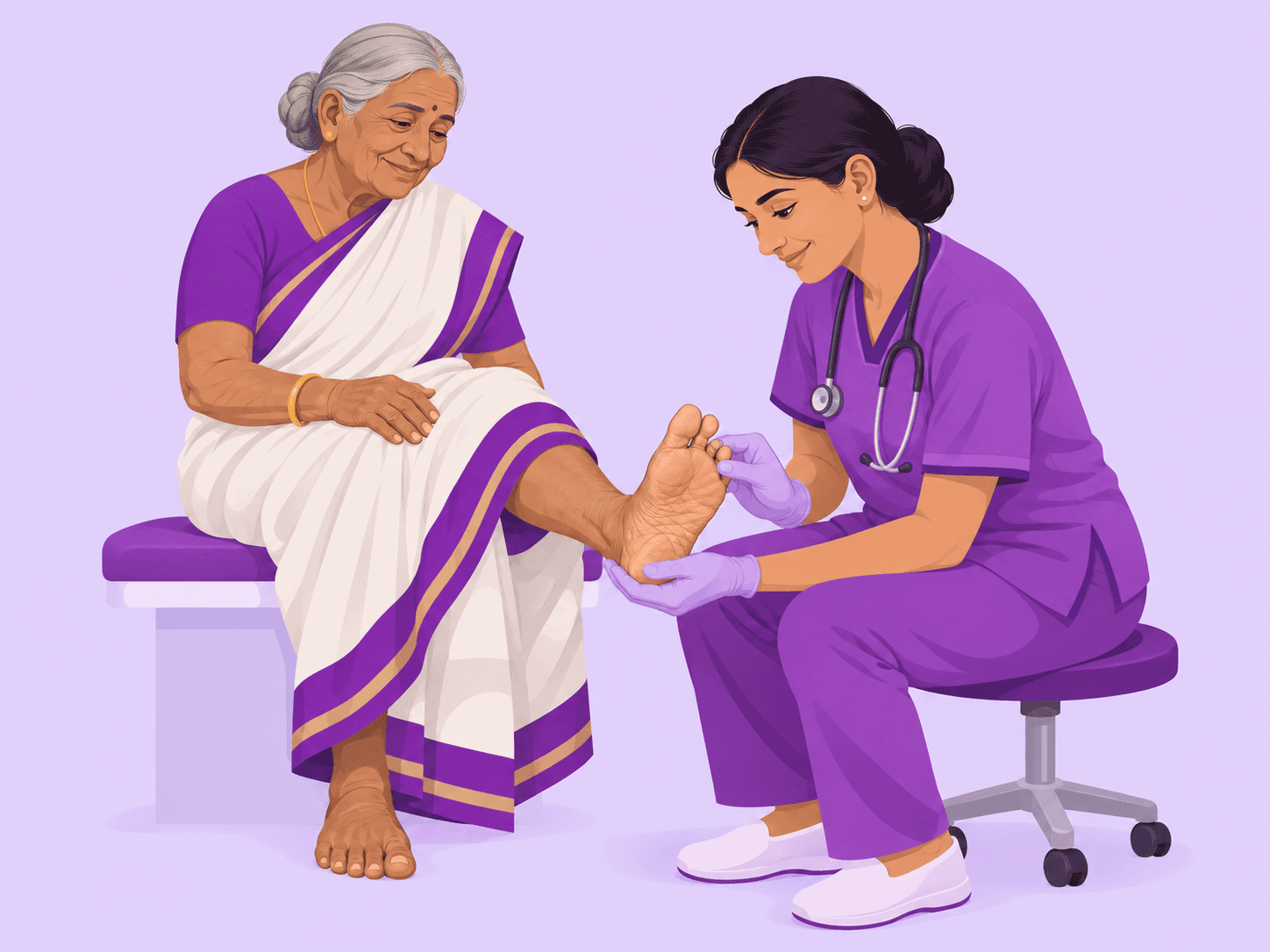
A Care Manager brings it together. Because they know your parent, they notice when a foot problem is holding them back, arrange a doctor or the right professional for nails, corns, or a wound that needs proper attention, and keep you informed without you having to quiz your parent from abroad. Where poor foot health has already started to limit how much your parent moves, physiotherapy at home can help rebuild the walking and steadiness they have lost.
Frequently asked questions
Why do feet matter so much for an elderly parent?
Because sore, neglected feet are one of the quiet reasons older parents stop walking. Once they stop moving, they lose strength and balance and the risk of a fall rises, so a small foot problem can lead, step by step, to a real loss of independence.
My parent has diabetes. Is foot care different for them?
Yes, and it matters much more. Diabetes can dull sensation in the feet, so cuts and blisters go unnoticed, and it can slow healing, so small wounds turn serious. A parent with diabetes should have their feet checked regularly, avoid any home cutting of nails or corns, and see a doctor promptly for anything unusual.
Can I cut my parent's corns or thick nails at home?
It is safer not to. Digging at corns or ingrown nails, or cutting thick nails on poorly healing older feet, can cause a wound that becomes infected, especially with diabetes. Soften dry skin with moisturiser and leave corns, ingrown nails, and thick nails to a professional.
How do I even check when I live abroad?
Ask your parent to show you their feet on a video call, or ask whoever is with them to take a proper look, tops, soles, and between the toes. A caretaker or Care Manager on the ground can do this daily and tell you if anything needs attention.
When should we see a doctor?
Promptly, for any wound that will not heal, spreading redness, swelling, pus, a painful ingrown nail, or new numbness, tingling, or burning. For a parent with diabetes, treat any foot problem as urgent rather than waiting.
A simple next step
Feet are easy to overlook and quick to cause trouble, and they are one of the more fixable things once someone is paying attention. If you are not sure how your parent's feet are doing, or they seem to be walking less, a Kare@home Assessment Visit is a good place to start. For ₹999, a Care Manager visits at home and reviews health, mobility, and daily routine, feet included, then sends the family a Family Report within 48 hours. From there, a doctor or the right professional can sort out what needs attention, and a caretaker can keep the simple daily habits going.