

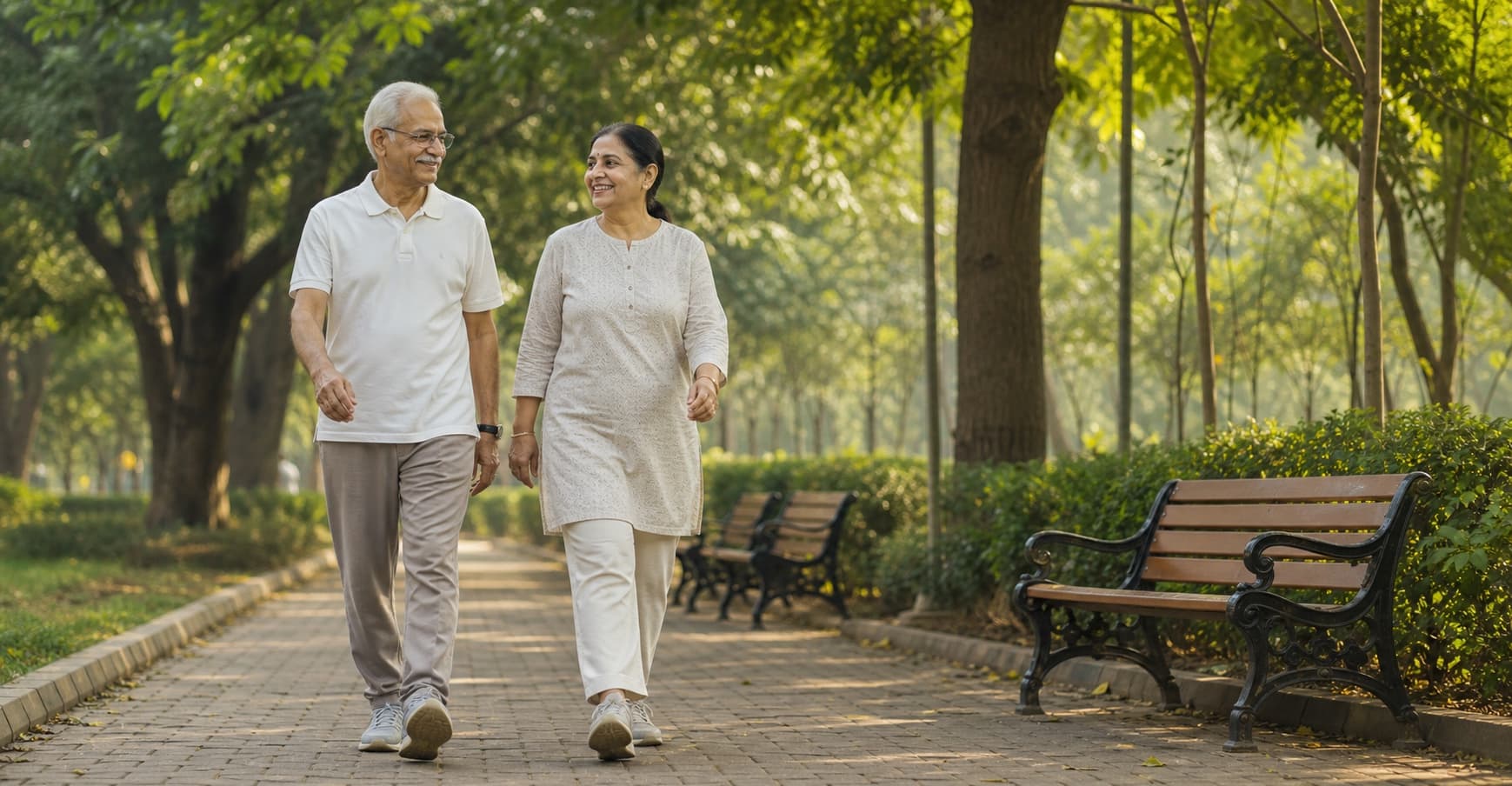
If a doctor could bottle the benefits of a daily walk and sell it as a tablet, it would be the most prescribed medicine in the world. It steadies balance, so falls become less likely. It helps control blood sugar and blood pressure. It lifts mood, sharpens the mind, and helps a restless parent sleep through the night. It costs nothing, needs no equipment, and can be done a few steps from the front door.
And yet getting an aging parent to walk every day is one of the hardest small battles a family faces. The knee complains. The footpath is broken. The weather does not cooperate. It feels like too much effort for too little reward. This guide is about making that daily walk simple, safe, and regular, so it actually happens.
Why walking matters more than almost anything else
We tend to think of exercise as something strenuous, done in a gym, by younger people. For an aging body, the most valuable movement is far gentler and far more ordinary. A steady walk does several important things at once.
It keeps the legs strong, and strong legs are what get a parent up from a chair and steady on the stairs. It trains balance, because every step is a tiny act of balancing that keeps the body's steadying reflexes sharp. It helps muscles use up sugar, which is why a short walk after meals can help a parent with diabetes. It gets the heart working gently, which is good for blood pressure. And it does something no tablet can: it gets your parent out of the house, into daylight, and often into a conversation with a neighbour.
That last part is easy to underestimate. For many older parents, the walk is as much about not being alone as it is about the exercise.
How much is enough
Forget the idea of ten thousand steps. For an older parent, the target is far kinder, and the real goal is simply to move a little every single day rather than a lot once in a while.
A reasonable aim for most parents is twenty to thirty minutes of easy walking on most days. But that does not have to be in one stretch. Three short walks of ten minutes each, perhaps after each meal, are just as good and often easier to manage. A parent who has not walked in a while should start with just five or ten minutes and build up slowly, adding a couple of minutes each week.
The right pace is a gentle one. Your parent should be able to hold a conversation while walking. If they are too breathless to talk, they are going too fast. If they can sing, they can pick it up a little. This simple talk test is more useful than any step counter.
Making the daily walk safe
Most of the reasons parents give up on walking are practical, and every one of them has a fix. Here is what turns an intimidating outing into an easy habit.

The Right Shoes
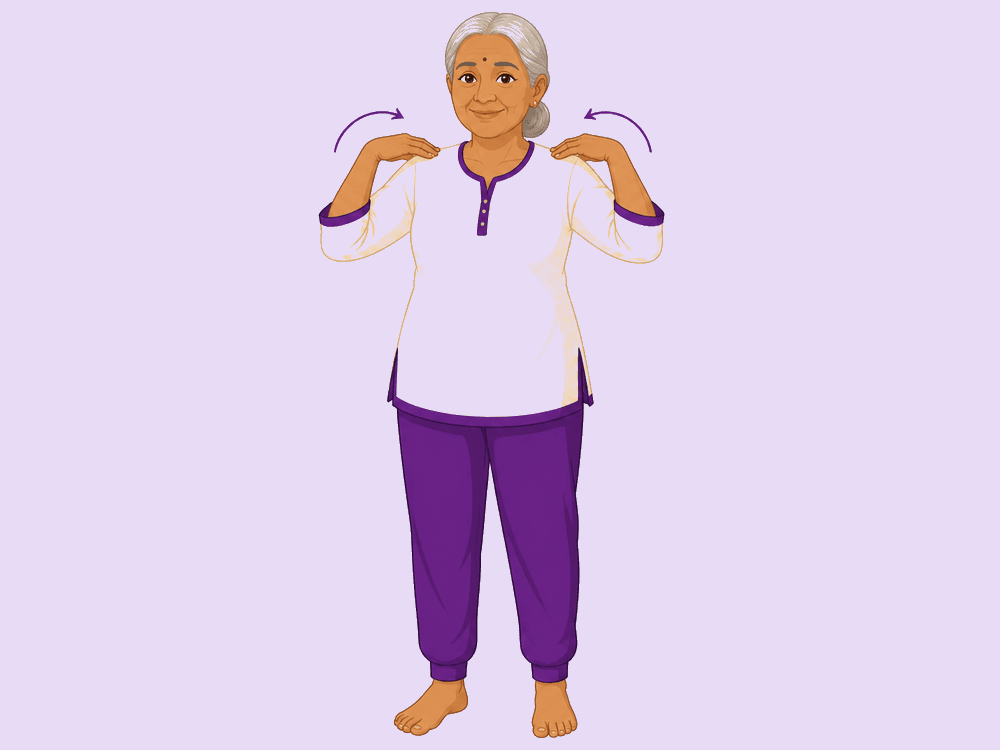
A Gentle Warm-Up
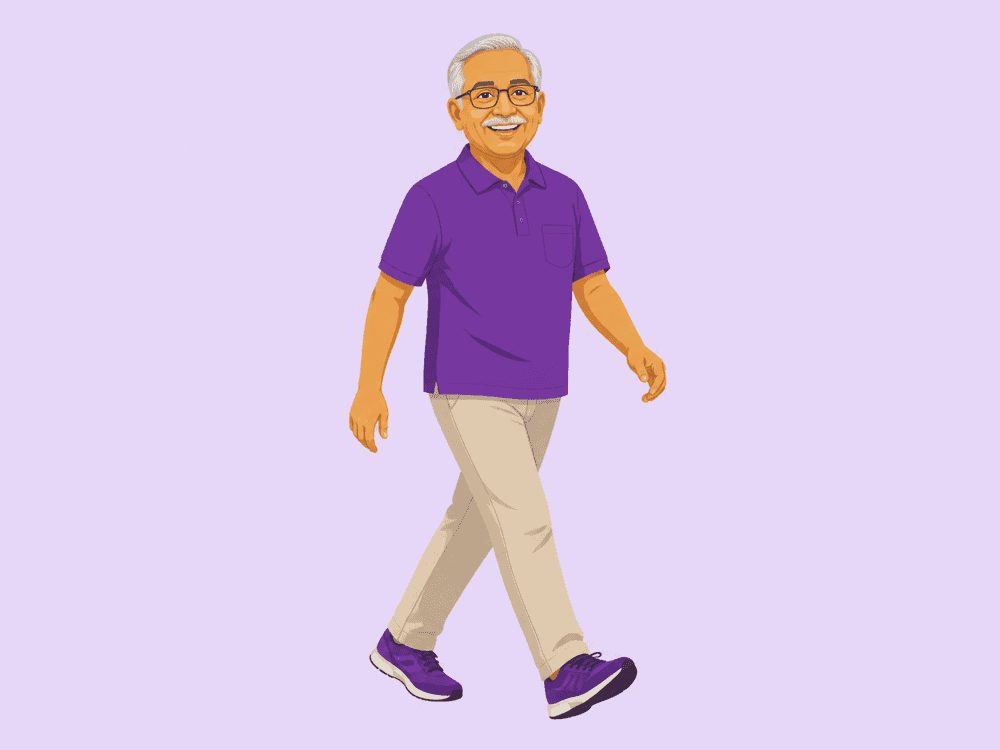
An Easy, Talkable Pace
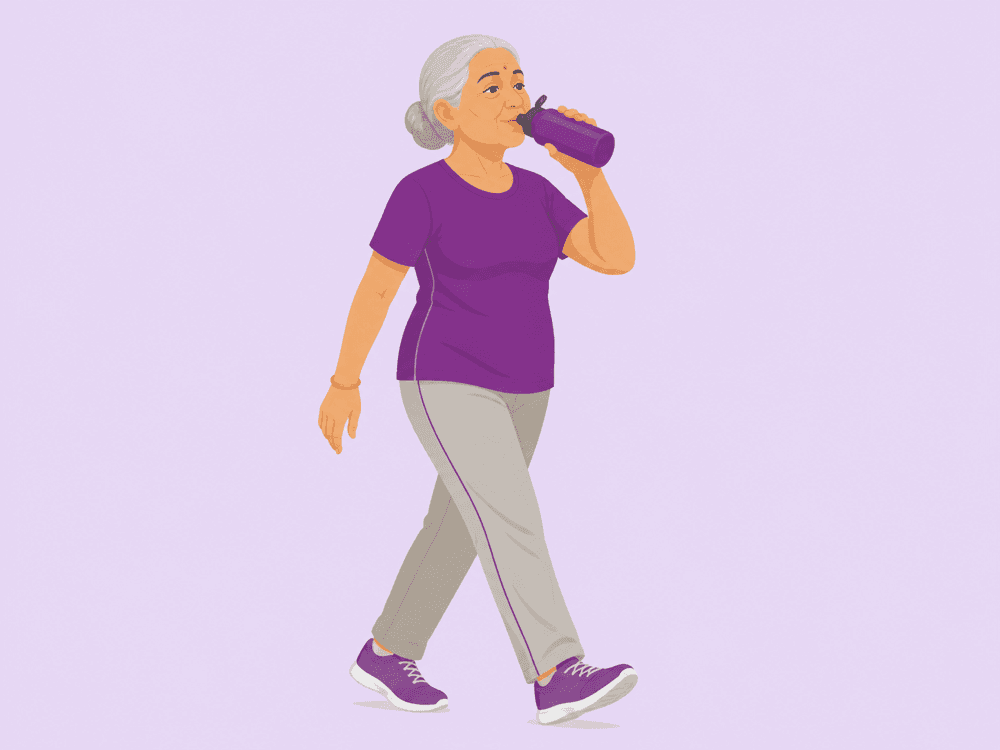
Water and Timing

Even, Familiar Ground
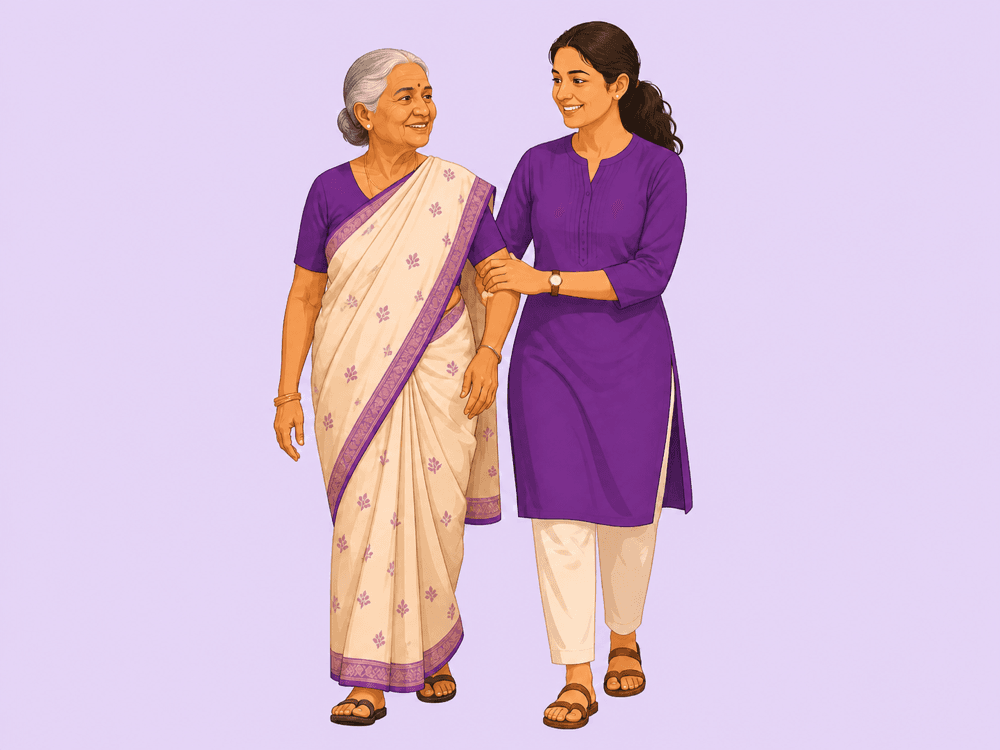
A Walking Companion
If your parent uses a walking stick or a walker, that is not a reason to stay indoors. It is a tool that makes walking possible, and the walk is worth having. What matters is that the aid is the right height and in good condition. Our guide to mobility aids for elderly parents covers how to choose and use them well.
Walking in Bangalore, realistically
Bangalore is not always kind to the older walker. Footpaths appear and vanish. Traffic is loud and fast. The monsoon turns pavements slick, and the afternoon sun can be harsh. But the city also has some genuinely good places to walk, if you plan around its quirks.
The early morning, roughly seven to nine, is the golden window. The air is cleaner, the crowd is older and slower, and the heat has not yet arrived. Parks are the safest bet: level paths, benches for resting, and other seniors for company. Cubbon Park and Lalbagh are the well-known ones, but most neighbourhoods, from Jayanagar and JP Nagar to Whitefield and Koramangala, have a local park or a quiet layout road that works well. Many apartment complexes have a walking path within the gate, which removes the footpath problem entirely and is perfect on a rainy day.
When the monsoon or a heatwave keeps your parent indoors, the walk does not have to stop. Walking gently up and down a long corridor, or around the living room a few times, keeps the legs moving until the weather clears. The habit matters more than the setting.
This regular, gentle activity is the heart of what we call Active Age at Kareverse: keeping an older parent moving, engaged, and out among people, not just safe and indoors. Walking is where it usually begins.
When to check with a doctor first
Walking is safe for almost everyone, but a little caution is wise in a few situations. Talk to your parent's doctor before starting or increasing a walking routine if they have recently had a fall, surgery, or a stroke, if they get chest pain or unusual breathlessness on effort, if their blood pressure or blood sugar swings a lot, or if they feel dizzy when they stand up.
For a parent recovering from a fall or an operation, it is safer to rebuild strength and confidence with guidance first. Physiotherapy at home can get them moving safely and steadily, and everyday walking can grow from there. And because the whole point of staying steady is avoiding a fall, it is worth reading our guide to fall prevention at home alongside this one.
Frequently asked questions
My father says his knees hurt too much to walk. What can we do?
Start very short and very gentle, on flat ground, in good shoes, and stop before the pain builds rather than pushing through it. Gentle walking can actually help many knee problems over time by strengthening the muscles around the joint. If knee pain is a daily struggle, physiotherapy at home can strengthen those muscles safely so that walking becomes comfortable again.
Is it safe for my parent to walk alone?
It depends on how steady and alert they are. A fit, confident parent walking a familiar, level route in daylight is usually fine, carrying a phone. A parent who is unsteady, forgetful, or has fainted or fallen before should have company. A caretaker or a neighbour walking with them keeps it safe and social.
When is the best time to walk in Bangalore?
Early morning, roughly seven to nine, is ideal: cooler, cleaner air and a calmer crowd. An after-dinner stroll is also excellent, especially for parents with diabetes, as gentle movement after a meal helps with blood sugar. Avoid the harsh midday sun.
How does walking help with sleep?
Daylight and gentle daytime activity help set the body's clock, so a parent who walks in the morning often sleeps more soundly at night. If poor sleep is a regular problem, our guide to sleep problems in elderly parents has more ideas.
What if the weather keeps my parent indoors for days?
Keep the habit alive indoors. Walking up and down a corridor, or a few laps of the living room, keeps the legs and balance working until they can get outside again. A regular daily routine makes it far easier to hold on to the habit through a bad-weather week.
A gentle next step
The daily walk is the closest thing to a wonder drug that elder care has, and the whole art of it is making it easy enough that your parent actually does it. The right shoes, a safe path, a good time of day, and a bit of company are usually all it takes.
If you would like a clear picture of how your parent is really doing before building a routine, a Kare@home Assessment Visit is a good starting point. For ₹999, a Care Manager visits at home and checks health, medicines, mobility, home safety, and nutrition, then sends the family a Family Report within 48 hours. From there, whether it is a companion for daily walks, physiotherapy to rebuild strength, or a caretaker for everyday support, the plan is built around what your parent actually needs.