

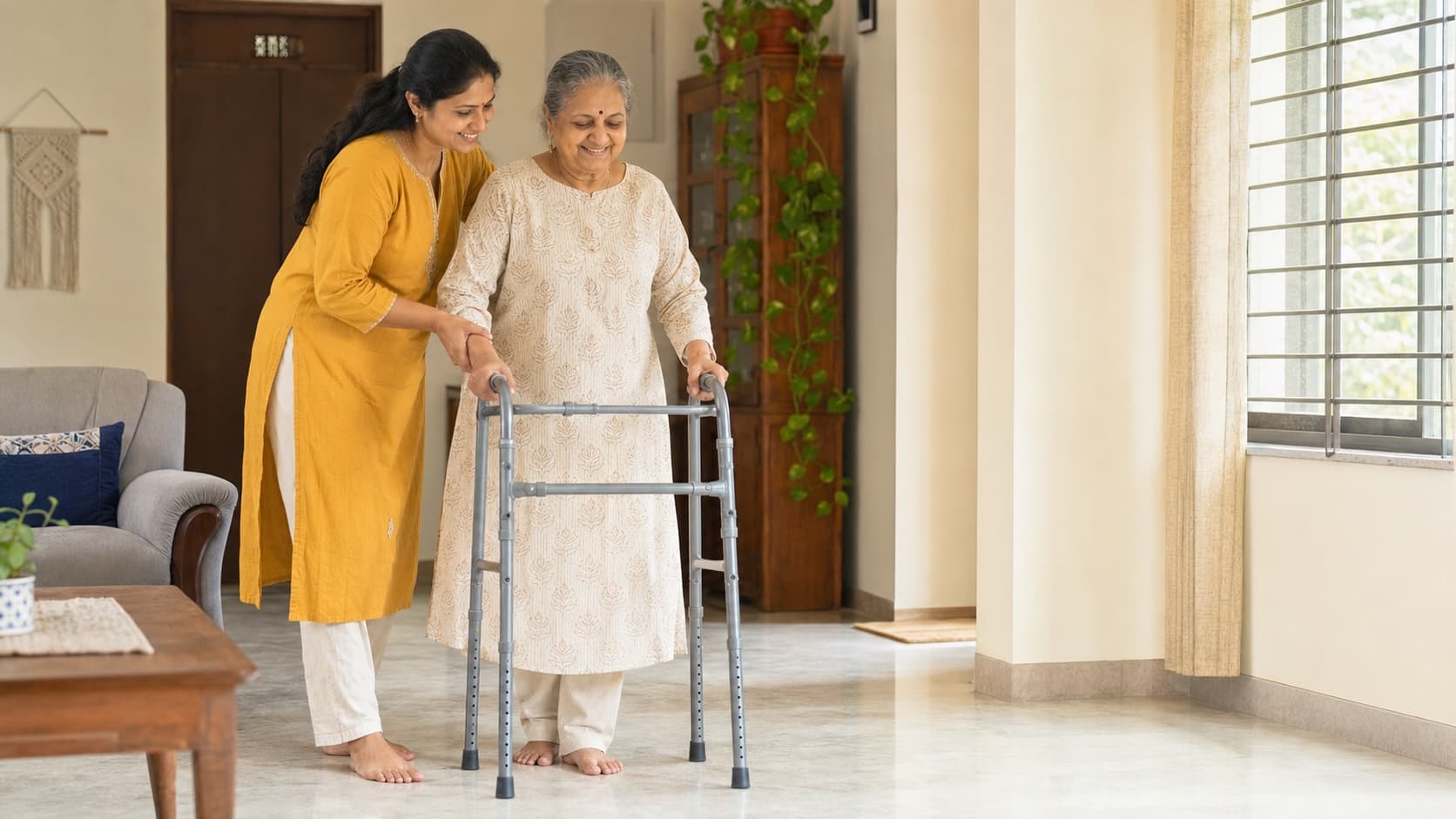
The decision almost always arrives after a crisis. A fall. A hip surgery. A stroke. Suddenly your father cannot cross the twenty steps to the bathroom without support, and you are trying to work out what he needs, where to get it tonight, and what it should cost. The mobility equipment market in Bangalore is scattered and its pricing is far from clear, and a shop will often sell you whatever is in stock rather than what your parent actually needs. This guide lays out the options, the logic for choosing between them, and the practical side of buying or renting in Bangalore, so you can decide well even under pressure.
Match the aid to the need, not to the fear
Not every walking difficulty calls for a wheelchair, and not every wheelchair user needs a motorised one. The right choice depends on how much weight your parent can bear, their balance, their arm strength, their memory and judgement, and the home they live in. Too little support invites a fall. Too much support quietly speeds up the very decline you are trying to prevent, because legs that stop working weaken fast.
The usual order runs from a walking stick to a quad cane, then a walker, a rollator, a manual wheelchair, and finally a powered one. But it is a menu, not a staircase. Plenty of seniors use a stick happily for years. The aim is always the least amount of support that keeps them safe and moving.
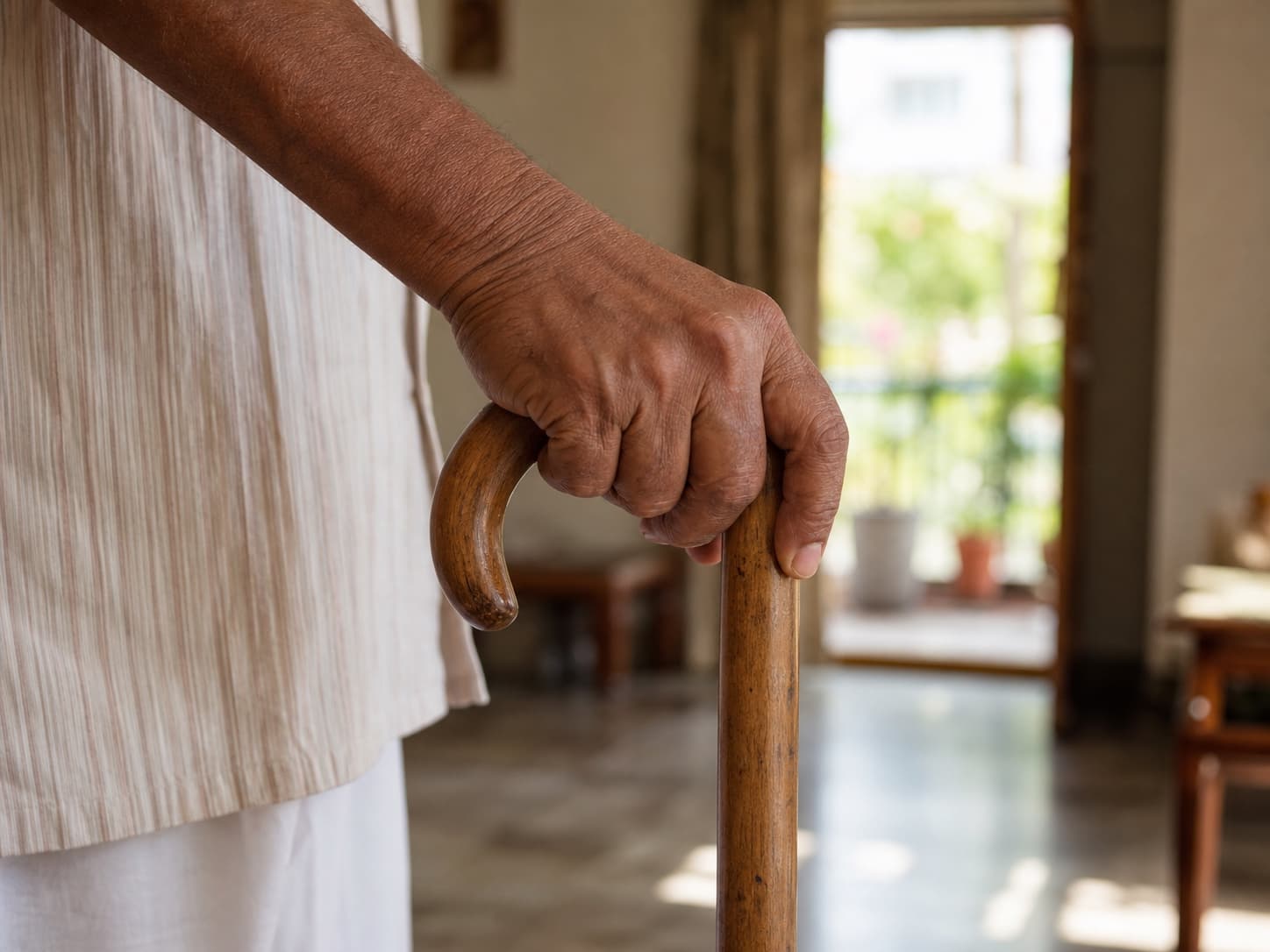
Walking Stick
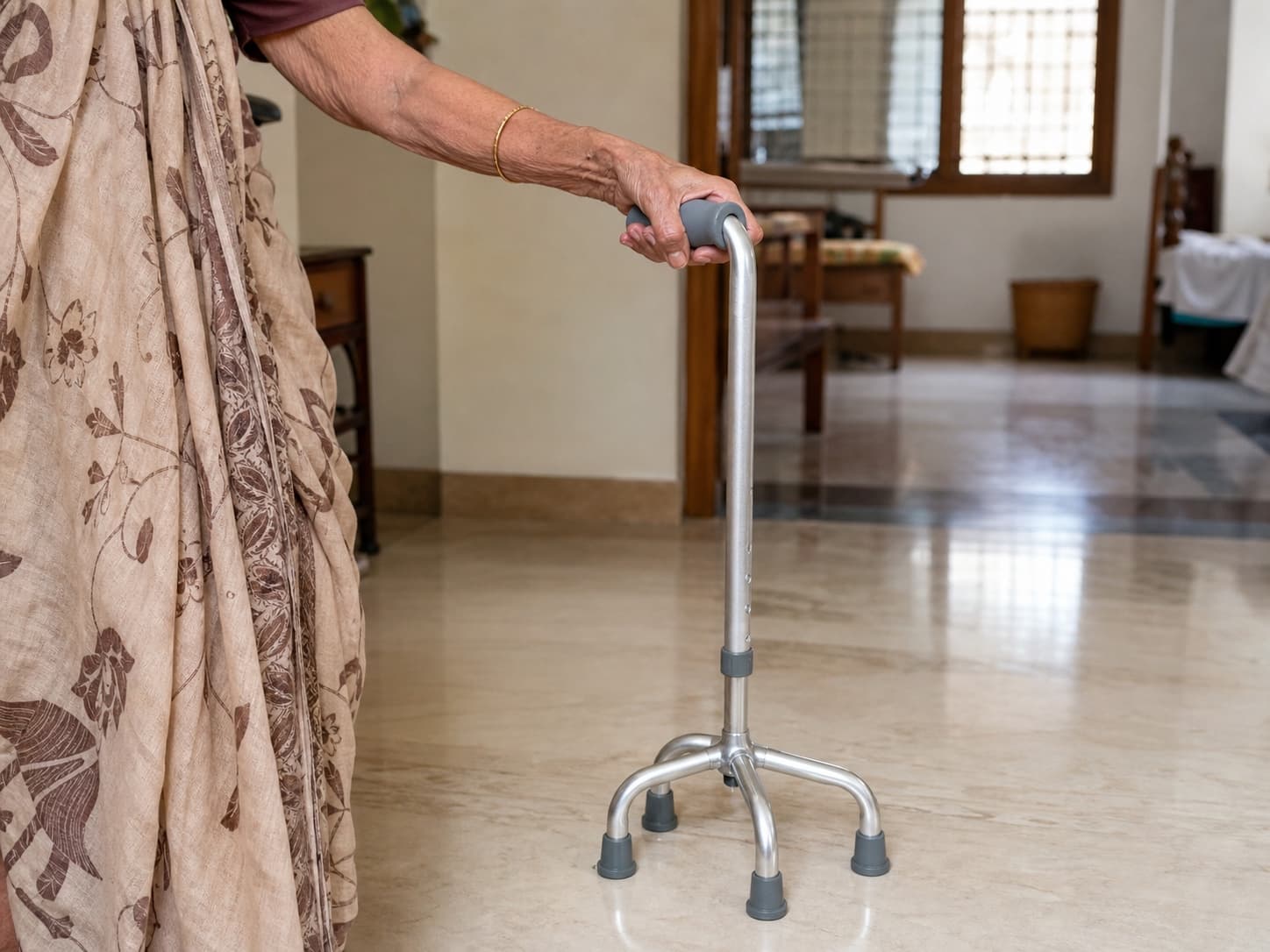
Quad Cane
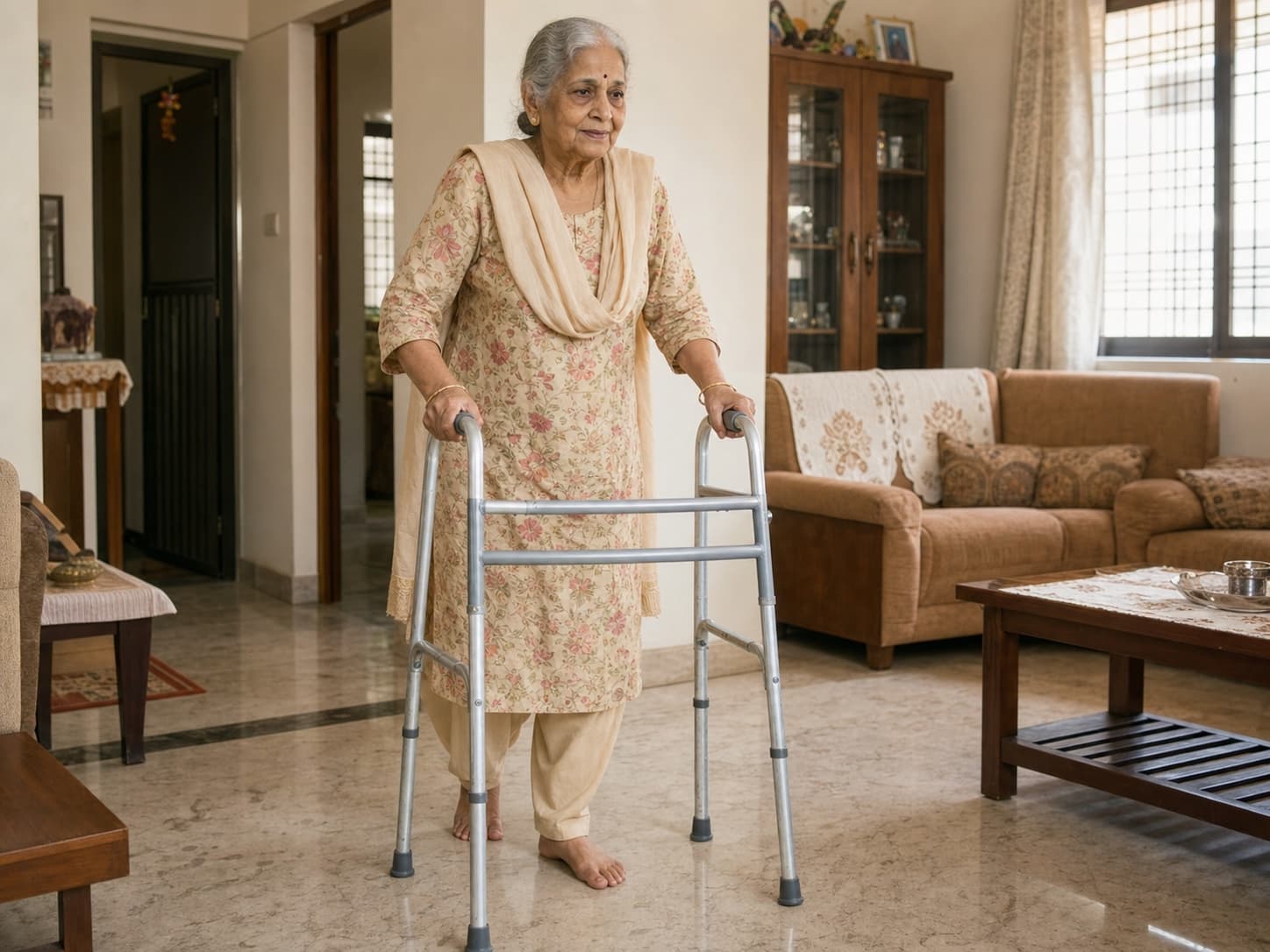
Walker
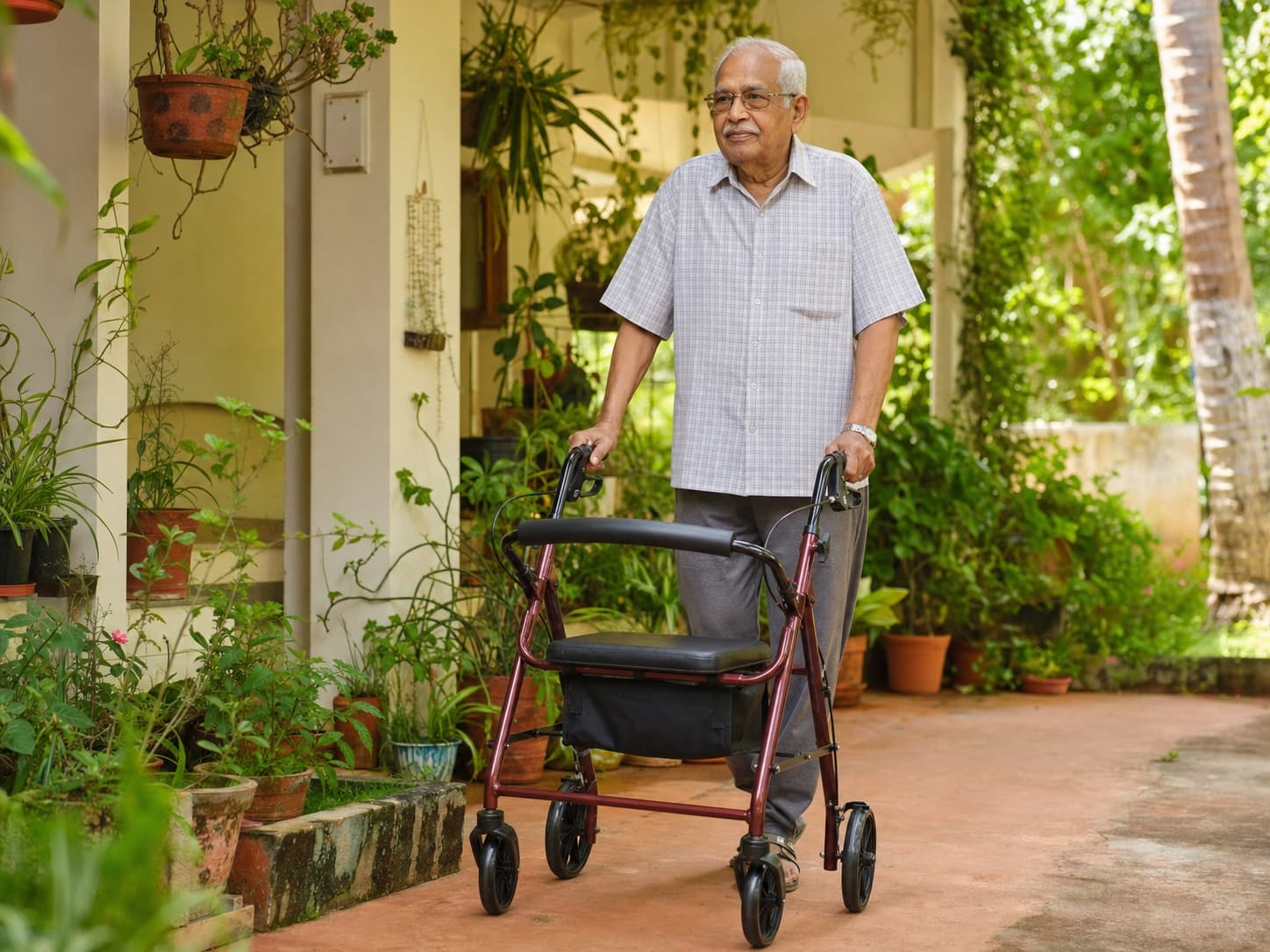
Rollator
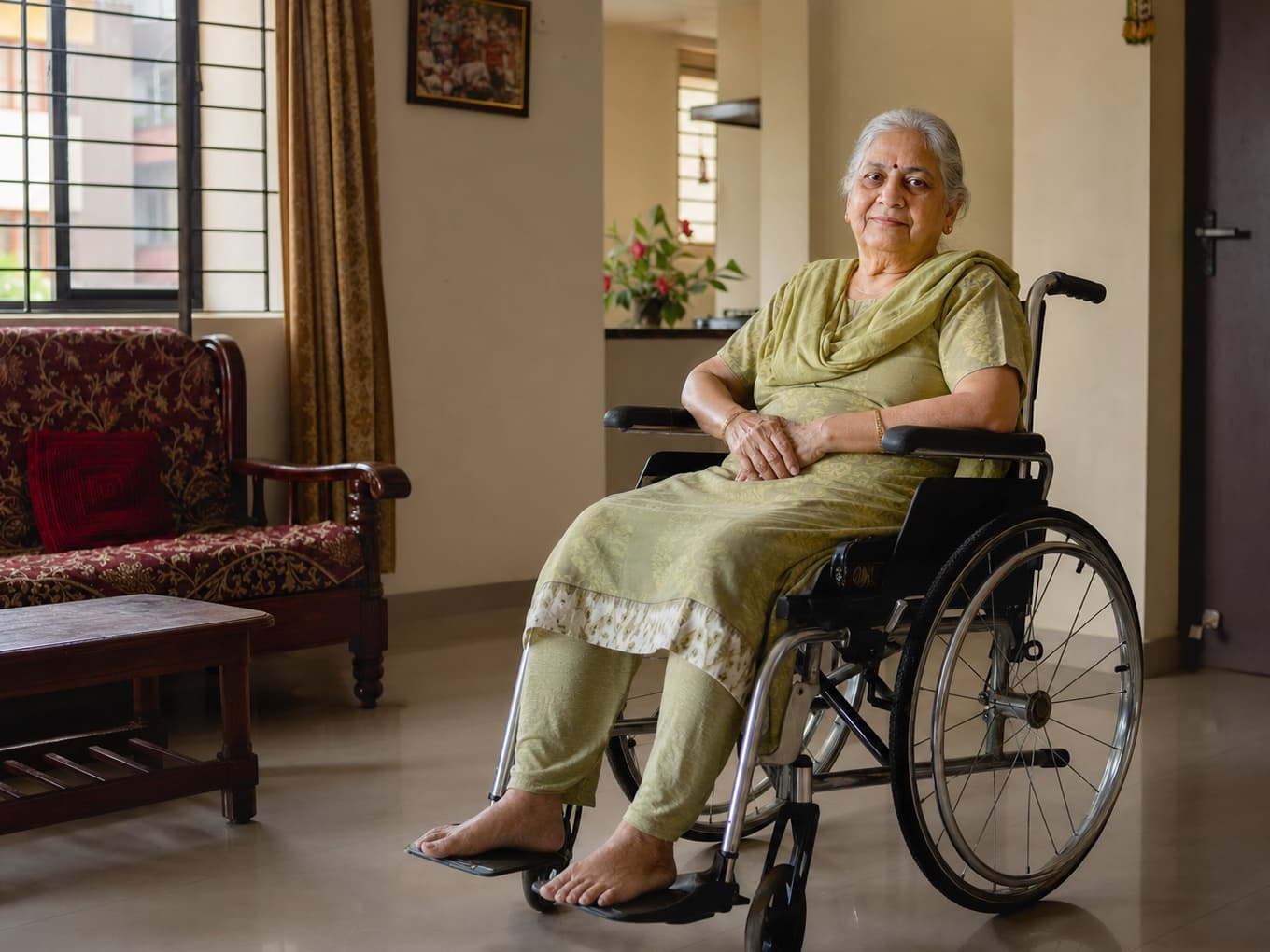
Manual Wheelchair
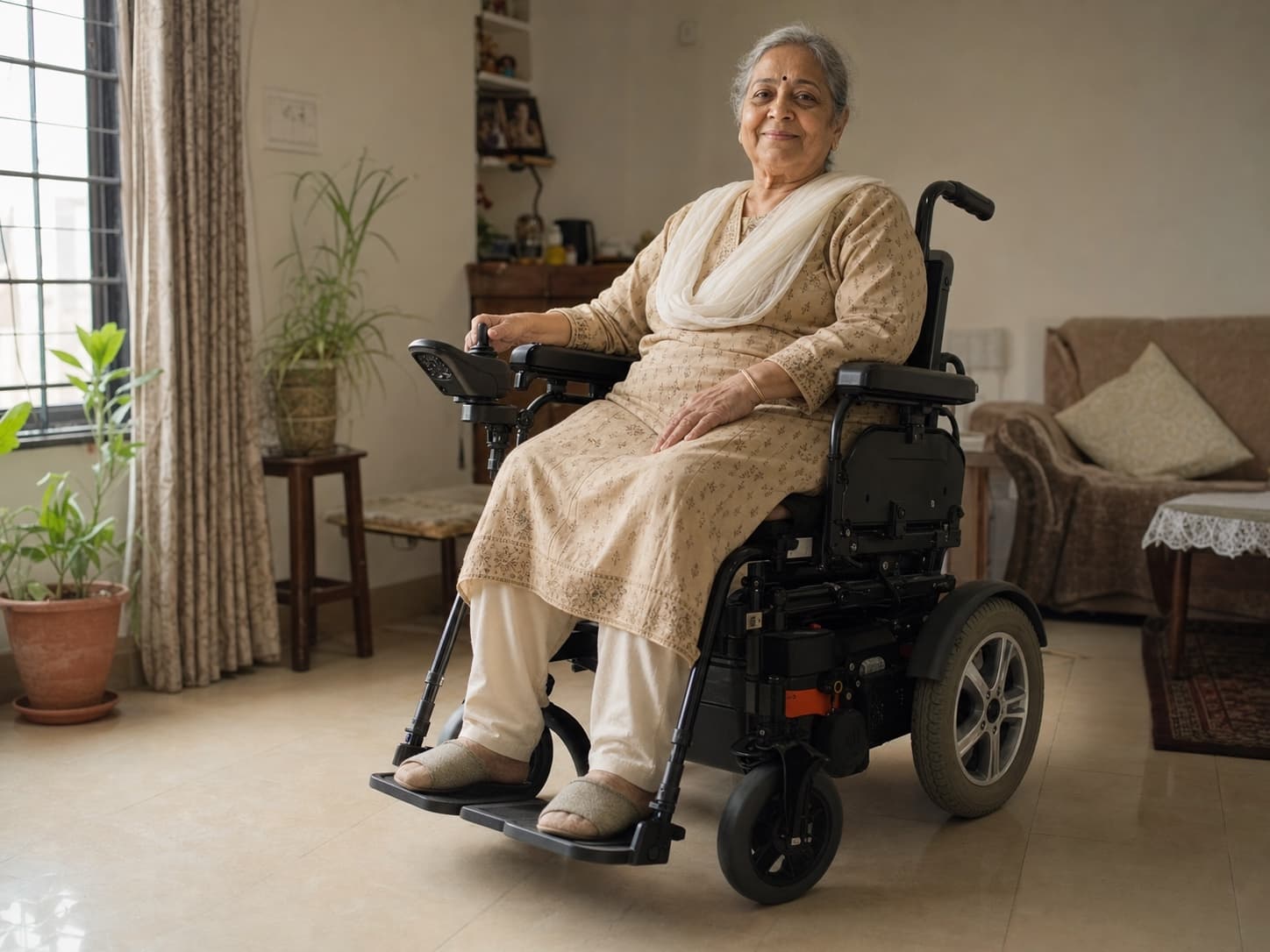
Electric Wheelchair
Walking sticks and canes
These suit a parent with mild balance trouble or weakness in one leg who can still bear full weight and just needs a little steadying.
A standard single-point stick offers light support and works on stairs, which is a real advantage in Bangalore homes. It asks for a reasonable grip and a steady wrist, and it does less well on wet or uneven ground. A quad cane, with its four-point base, stands up on its own and steadies more of your parent's weight, which helps after one-sided weakness. The trade-off is that it is heavier and its wide foot tends to snag on doorframes and narrow corridors in older apartments.
Sticks and canes are sold at nearly every medical store and pharmacy, with a good spread of adjustable aluminium models on SP Road near City Market, and in Jayanagar and Commercial Street. Quality varies, so test the height-adjustment lock before you buy, since a cheap catch can slip under weight.
Walkers
A walker suits a parent who cannot fully trust both legs, has real balance trouble, or is recovering from surgery and needs solid support.
A plain non-wheeled walker gives the most stability of any walking aid and will not roll away, but it has to be lifted with each step, which needs arm strength and slows things down. A front-wheeled version is pushed rather than lifted, which is easier on the arms and quicker, though it can run ahead on a slope if your parent leans into it. A rollator, the four-wheeled kind with hand brakes and a built-in seat, is the most versatile of all for someone who can walk but needs to rest often. It carries a basket, controls speed through its brakes, and manages parks and temple visits well. The catch is that it is heavier and depends on your parent remembering to put the brakes on before sitting, so it is a poor fit where memory is slipping.
Walkers are stocked by the surgical equipment shops on SP Road and in HSR Layout and Whitefield, with Karma and Vissco among the dependable Indian brands. For a temporary need such as recovery after surgery, renting makes far more sense than buying, and rentals are widely available through medical stores in Jayanagar and JP Nagar and through home-care suppliers.
Wheelchairs
A wheelchair is for a parent who can manage only a few steps, is recovering from major surgery, or has a condition that makes walking unsafe.
A standard manual chair is propelled by the user through the large rear wheels and suits someone with the arm strength to push themselves and value their independence. A transport chair has smaller wheels and is pushed by a caregiver, which makes it lighter, more compact, and easier through the tight doorways of a Bangalore flat, as long as someone is always on hand to push. If your parent has clear judgement but not the arm strength to self-propel, a powered wheelchair with joystick control opens up far more distance, at the cost of weight, the need for ramp rather than stair access, and a charge that takes several hours.
A few specifications are worth checking before any purchase. Seat width matters, because a slimmer 16-inch seat clears the narrow 28 to 30 inch doorframes of older apartments far better than the standard 18 inches. Confirm the weight capacity suits your parent, and insist on foldability for the car and for storage, testing the fold yourself since some need more finger strength than a senior has. Removable armrests and swing-away footrests cost a little more but make the daily transfer from bed to chair genuinely safer, and they are worth it.
SP Road remains the heart of medical equipment in Bangalore, with a cluster of shops offering the widest choice and room to bargain, since quoted prices usually carry margin. Authorised dealers for brands like Karma and Vissco give better warranty support than a generic shop, and rentals for both manual and powered chairs are available through home-care suppliers across the city. For a first purchase, take your parent to a store to try a few models rather than ordering unseen online.
The home has to fit the aid too
Buying the device is only half the job. The home has to accommodate it, or it will sit unused in a corner.
For sticks and walkers, clear the walking route. Take out door thresholds and saddles, since even a small rise trips people, keep pathways generously wide by moving side tables and spare furniture, fix down or remove loose rugs, and add grab bars near the bed and bathroom. Our guides on fall prevention at home and bathroom safety for seniors cover this in detail.
For wheelchairs, the numbers get stricter. Doorways need to be wide enough for the chair, which is why a narrow transport chair is often the only workable option in older flats, and a wheelchair needs roughly a five-foot circle to turn, which usually means rearranging or removing furniture in bedrooms and bathrooms. An independent house with steps needs a ramp, portable aluminium for flexibility or a built ramp for permanence. A bathroom that a wheelchair can actually use is a significant modification, and a Kare@home Assessment can measure your specific home and set out a realistic plan. One hard truth worth facing early: if your parent lives above the ground floor in a building without a lift and needs more than a transport chair, daily movement becomes very difficult, and a ground-floor shift or full-time support on the same floor may be the only practical answer.
Buying well under pressure
A few principles save money and regret. Never buy without your parent trying the device, because a walker set too tall strains the shoulders and a wheelchair with the wrong seat causes pressure sores, so have them use it for a good ten minutes first. Choose lightweight aluminium over steel where you can, since those few kilograms often decide whether your parent manages the aid alone or always needs help. Check that the shop stocks spare wheels, brakes, and rubber tips, which wear out. And for anything temporary, such as recovery after surgery, rent before you buy, so you can see whether it truly works in your parent's own home before committing.
If the aid is part of recovery after a stroke or an operation, it works best alongside guided exercise. Our guide on stroke recovery at home and a course of physiotherapy at home help your parent regain strength rather than lean on the device more than they need to.
Frequently asked questions
How do I know whether my parent needs a walker or a wheelchair?
Look at weight-bearing. If your parent can bear weight and walk short distances but is unsteady, a walker or rollator is usually right. If they can manage only a few steps or walking is unsafe, a wheelchair makes sense. When in doubt, a physiotherapist or a home assessment can judge it properly, since over-aiding weakens the legs.
Should I buy or rent?
Rent for temporary needs like recovery after surgery, and test it in your parent's actual home first. Buy for a lasting need, choosing a lightweight model from an authorised dealer with spare parts and warranty support.
Will a standard wheelchair fit through the doors of an older Bangalore flat?
Often not. Many older doorframes are narrower than a standard chair needs, so a narrow transport chair is frequently the practical choice. Measure your doorways before buying anything.
Where is the best place to buy mobility aids in Bangalore?
SP Road near City Market has the widest selection and the most competitive pricing, with room to bargain. For better warranty and after-sales support, use an authorised dealer for brands like Karma or Vissco.
My parent refuses to use a walking aid. What can I do?
Resistance is usually about dignity, not the device. Choosing the least conspicuous aid that still keeps them safe, letting them pick the model, and framing it as a way to stay independent rather than a sign of decline all help. Our guide on talking to parents about accepting help offers wording that eases this.
A gentle next step
The right mobility aid keeps a parent safe and moving without doing the walking for them. The wrong one, or the right one in a home that cannot fit it, gathers dust while the risk of a fall stays high.
If you are choosing an aid after a fall or a hospital stay, it helps to start with a clear read of both your parent and their home. A Kare@home Assessment Visit is ₹999. A Care Manager visits at home and reviews mobility, home safety, doorways and pathways, and daily routine, then sends the family a Family Report within 48 hours with a practical plan for the right aid and the changes the home needs. From there, if your parent needs steady help getting about safely each day, a caretaker from ₹1,100 a day can provide it.