


When a parent becomes less mobile, after a fall, a stroke, a long illness, or simply as they grow frailer, a quiet risk arrives that most families have never thought about. Skin that stays pressed against a bed or a chair for hours, in the same spot, day after day, starts to break down. What begins as a patch of redness can, in a matter of days, become an open wound that is painful, slow to heal, and prone to infection.
These are pressure sores, sometimes called bedsores or pressure ulcers. They are one of the more distressing complications of reduced mobility, and the hard part is that a bad one can develop faster than families expect, often while everyone's attention is on the illness that caused the immobility in the first place. The good news is that they are very largely preventable, and prevention is far easier than treatment. Once a wound has formed, it becomes a nursing-level problem that can take weeks or months to heal.
This guide explains how pressure sores start, where they appear, the early signs to catch, and how families can protect a less-mobile parent, even from abroad.
Why pressure sores happen
The cause is simple, which is what makes them so preventable. When a parent sits or lies in one position for a long time, the weight of the body presses the skin and the tissue beneath it against the bone. That constant pressure squeezes the tiny blood vessels and cuts off the blood supply to that patch of skin. Starved of blood, the tissue begins to die, and a sore forms.
Several things make an older, less-mobile parent especially vulnerable. Thin, fragile skin tears and breaks more easily. Poor nutrition and too little fluid leave the skin less able to withstand pressure and slower to repair, our guide to dehydration in seniors explains how easily an older parent slips into drinking too little. A parent who cannot shift their own position, because of weakness, paralysis after a stroke, or pain, cannot relieve the pressure themselves. Moisture from sweat or incontinence softens and damages the skin. And reduced sensation, common after a stroke or with diabetes, means a parent may not feel the discomfort that would normally make them move.
A parent recovering at home after a hospital stay is in exactly this window of risk. Our guide to post-hospital care for elderly parents covers the wider recovery picture that sits around this.
Where they appear, and what to look for
Pressure sores form over the bony parts of the body, where there is little padding between skin and bone. Knowing where to look is half of catching them early.
For a parent who spends a lot of time lying down, the common sites are the lower back and tailbone, the hips, the heels, the shoulder blades, the elbows, and the back of the head. For a parent who sits for long stretches in a chair or wheelchair, the tailbone, the buttocks, the shoulder blades, and the backs of the arms and legs are the places to watch.
The earliest warning is not a wound at all. It is a patch of skin that looks different, redder or darker than the skin around it, and on darker skin the change may show as a purplish or bluish area rather than red. A key early test: press the patch gently: healthy skin goes pale and then flushes back, but an early pressure sore stays the same colour and does not blanch. The skin may feel warmer or cooler than the surrounding area, firmer or softer, and your parent may say it feels sore or itchy. This stage, before the skin has broken, is the moment to act, because relieving the pressure now can reverse it before it ever becomes an open wound.
Preventing them, day to day
Almost all pressure sores are prevented by a few consistent habits. The single most important one is simple: do not let any part of the body stay under pressure for too long.
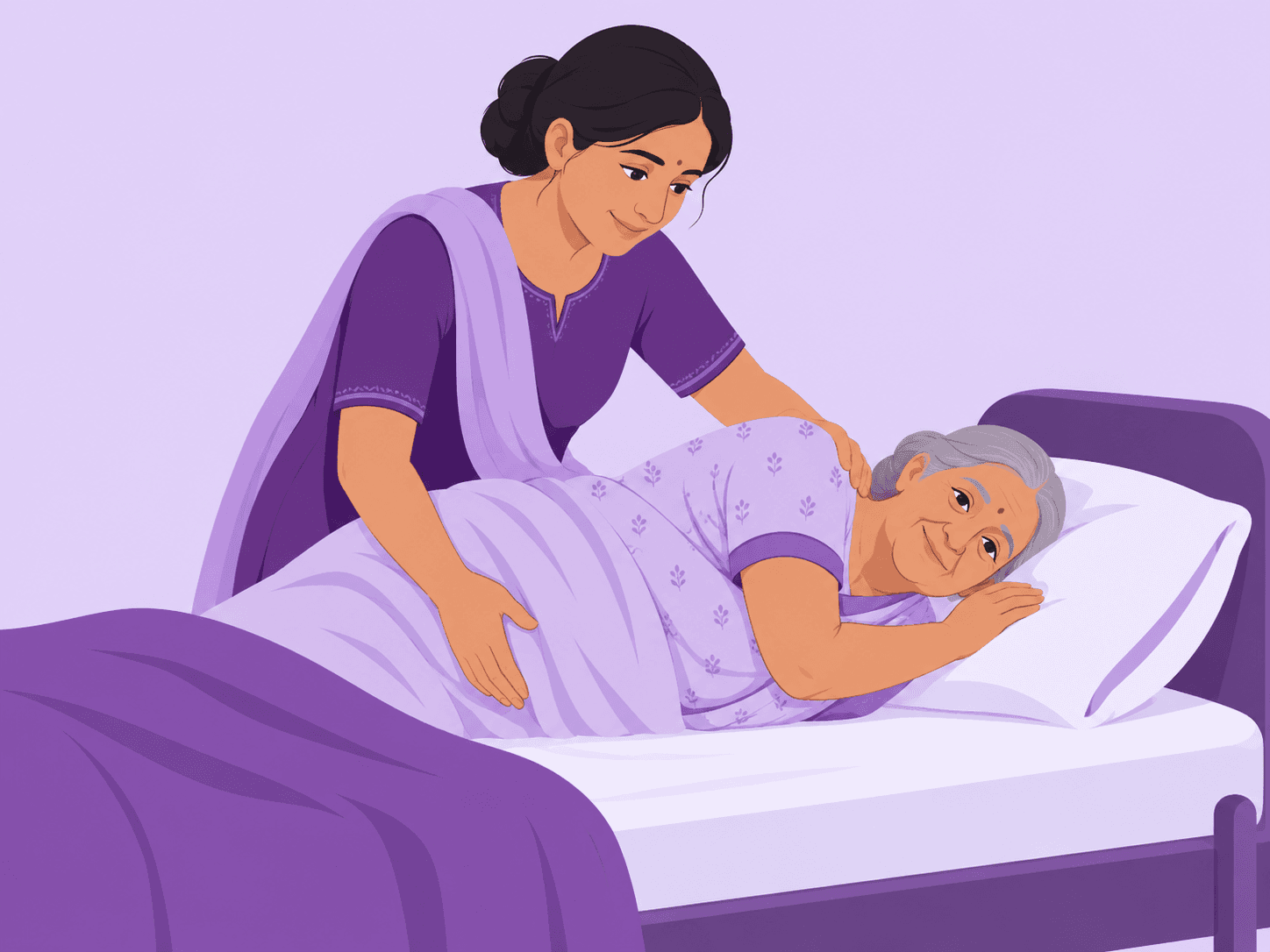
Change Position Often
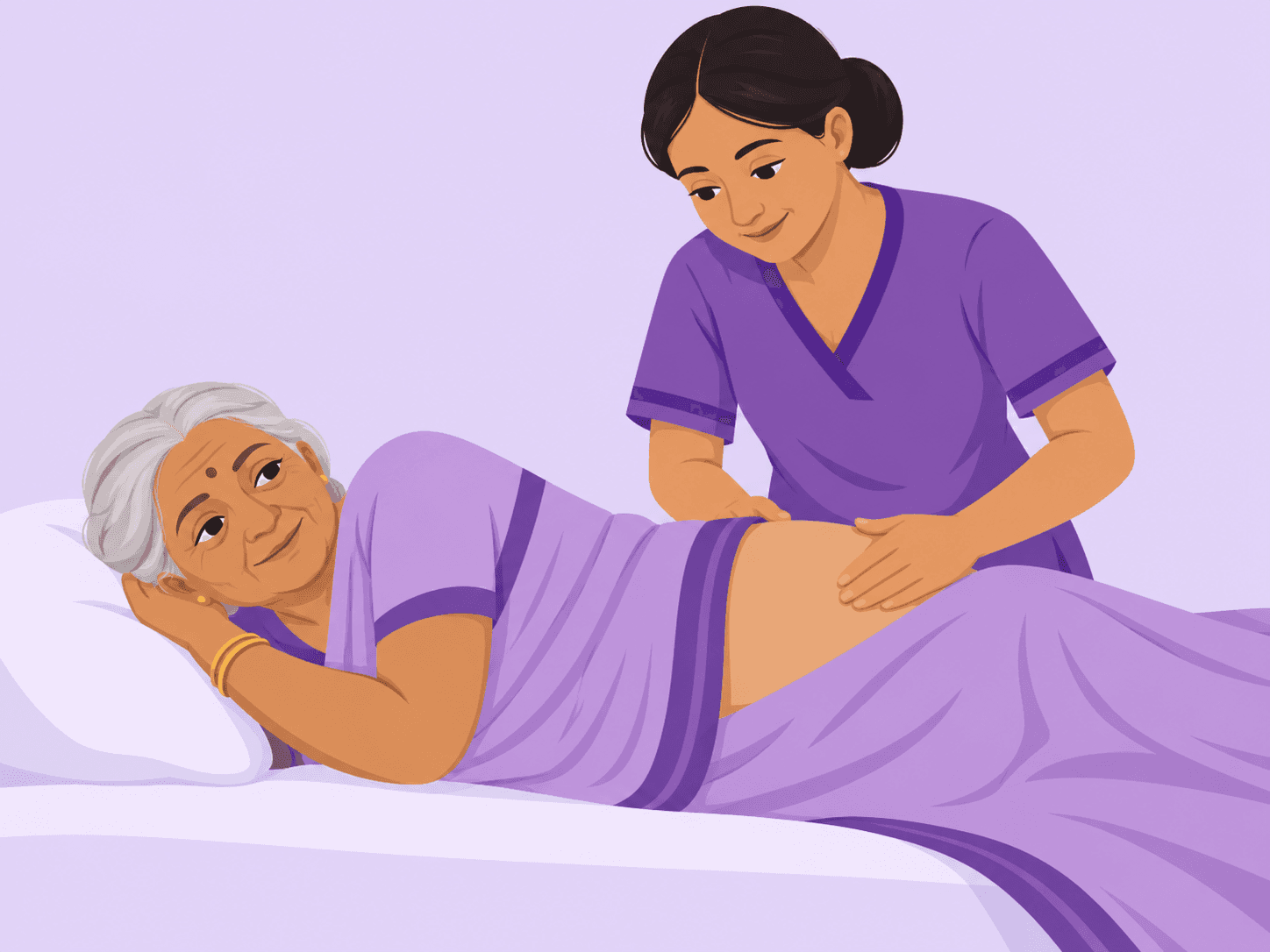
Check the Skin Daily
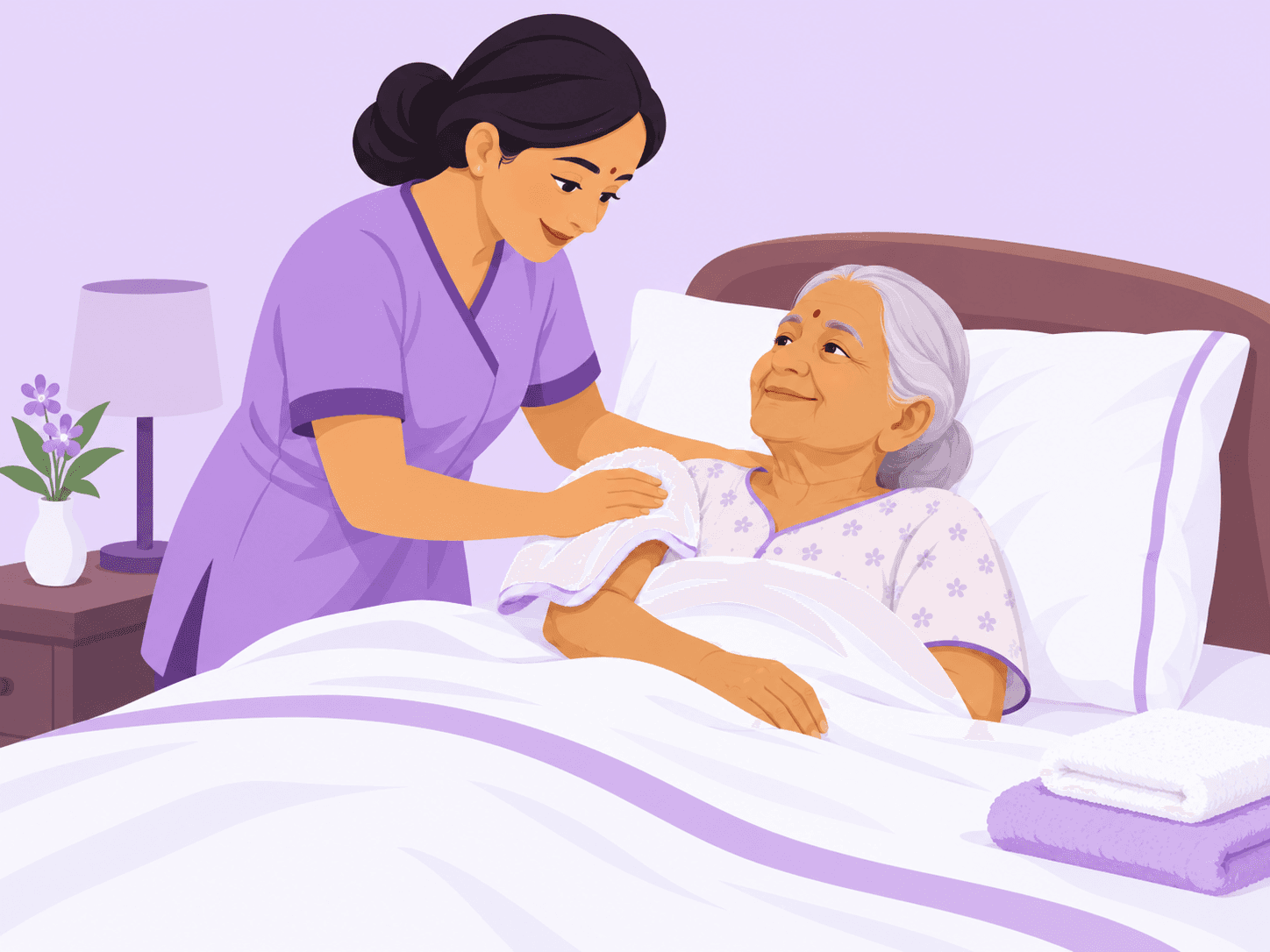
Keep Skin Clean and Dry
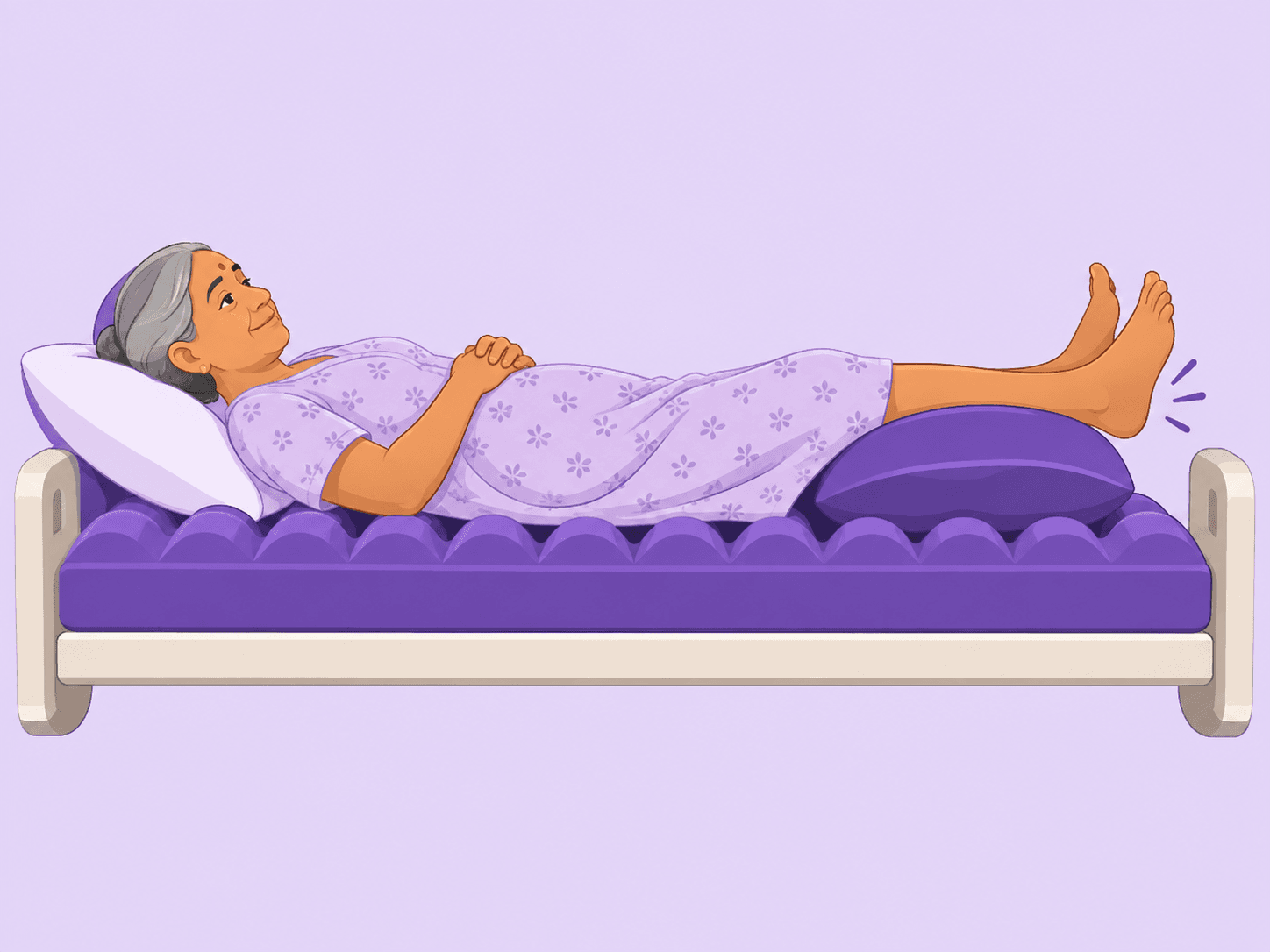
Cushion the Pressure
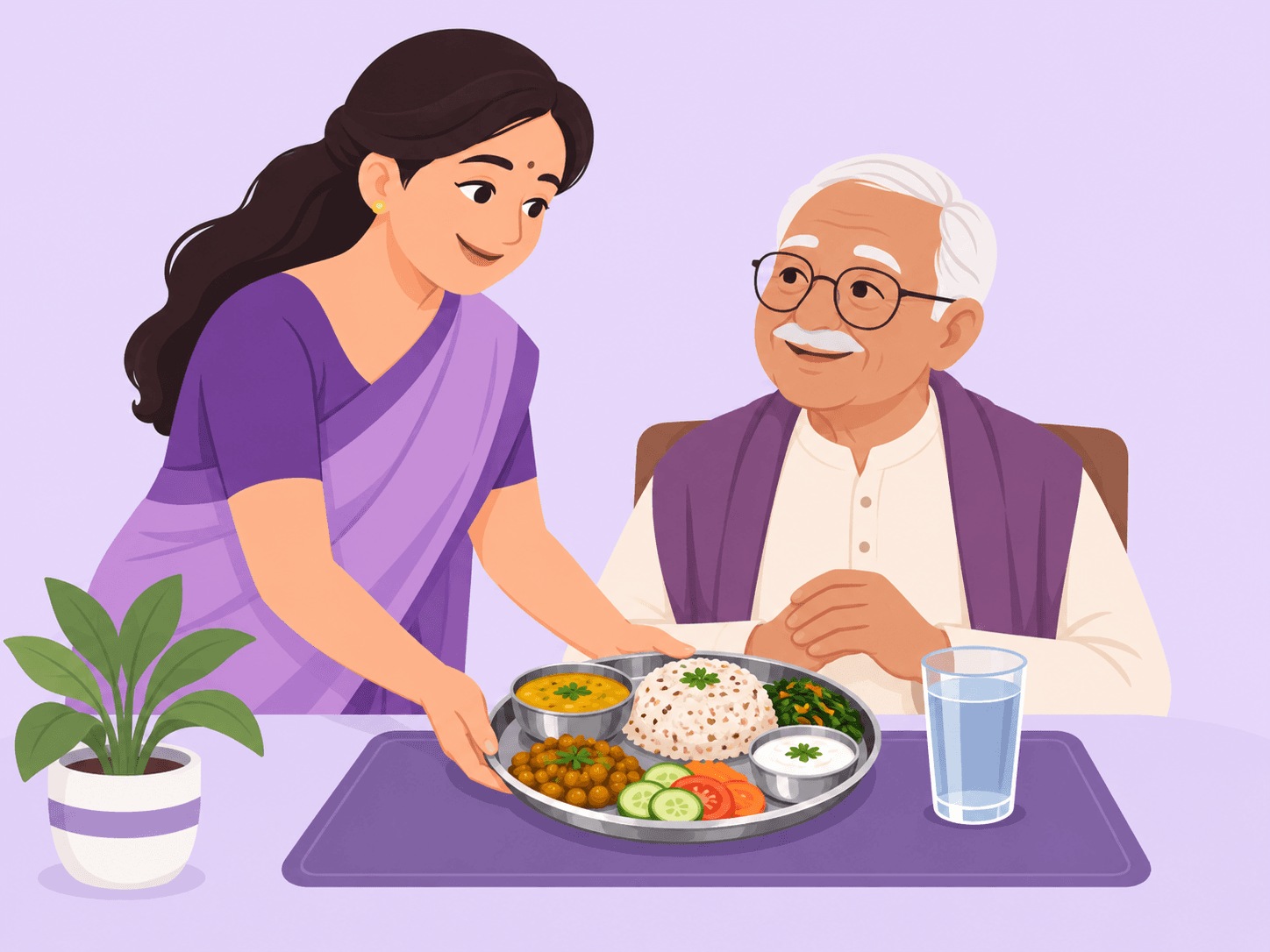
Feed the Skin
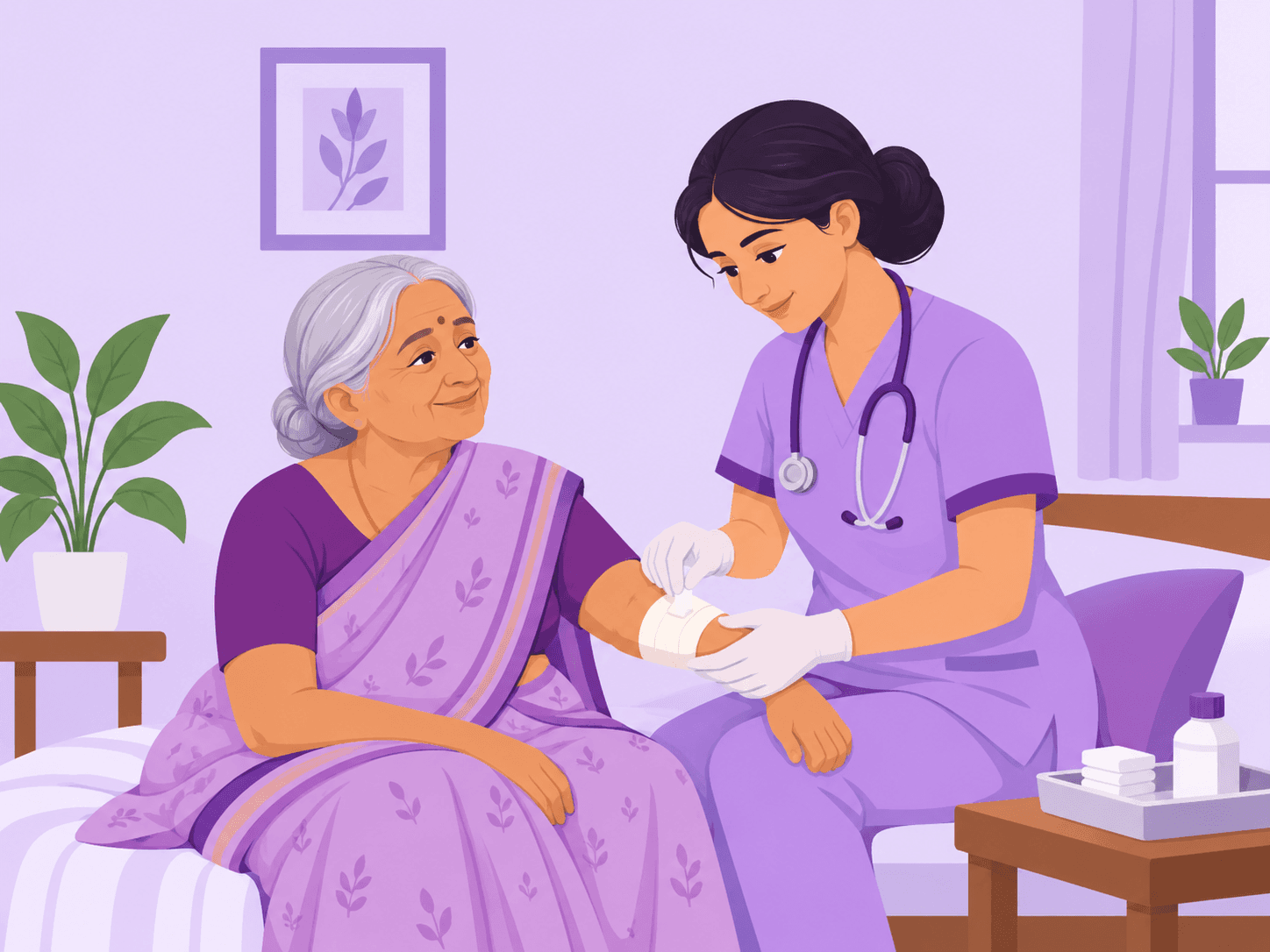
Get Skilled Help Early
A word of caution on home remedies: families sometimes reach for powders, oils, or massage directly over a reddened area. Vigorous massage of a pressure point can actually damage the fragile tissue further, and the wrong home treatment on a broken sore can hide infection or make it worse. Once the skin is red and not blanching, or broken in any way, the safe path is to relieve the pressure and get skilled advice, not to improvise.
When it needs a nurse or doctor
Prevention is something a family or caretaker can do. A sore that has actually formed is different, it is a wound, and it needs proper clinical care. Get skilled help promptly if you see broken skin or an open sore, a blister over a pressure point, a red or darker patch that does not fade after the pressure is relieved, or any sign of infection, spreading redness, warmth, swelling, pus, a bad smell, or your parent developing a fever or seeming unwell.
Left untreated, a pressure sore can deepen through the layers of tissue, become seriously infected, and turn into a genuine medical emergency. This is why early nursing involvement matters so much: proper wound assessment, the right dressings, and a clear repositioning and skin-care plan can heal an early sore and stop a worse one from ever forming.
For families far away, this is precisely the kind of thing that is hard to judge over a video call, and it moves quickly. Having trained eyes on your parent's skin, and someone who knows when to escalate, is the real protection.
How a caretaker, nurse, and Care Manager help
This is an area where skilled, consistent presence is genuinely protective. A caretaker with your parent through the day does the daily work that prevents sores in the first place: helping them change position regularly, keeping the skin clean and dry, managing incontinence promptly, encouraging fluids and meals, and checking the pressure points every day so a reddened patch is caught before it breaks.
Where a parent is at real risk or a sore has begun, home nursing brings the clinical layer: proper assessment of the skin and any wound, the right dressings and wound care, a structured repositioning and pressure-relief plan, and the judgement to know when a doctor or hospital is needed. A Care Manager ties it together, making sure the right equipment is in place, the caretaker's routine is sound, nursing is arranged when the skin needs it, and you are kept informed, so a distant family is not relying on guesswork about something that can escalate fast.
Frequently asked questions
What exactly is a pressure sore?
It is damage to the skin and the tissue beneath it caused by constant pressure, usually where a bone is close to the surface, in a parent who cannot move or shift position enough on their own. It starts as a discoloured patch and, if the pressure continues, can become an open wound.
How quickly can one develop?
Faster than most families expect. In a vulnerable, less-mobile parent, a sore can begin within hours of unrelieved pressure and progress over a few days. This is why regular repositioning and a daily skin check matter so much, and why catching the early, non-blanching red patch is the goal.
Where should I be checking?
The bony pressure points. For a parent who lies down a lot: the tailbone and lower back, hips, heels, shoulder blades, elbows, and back of the head. For a parent who sits a lot: the tailbone, buttocks, shoulder blades, and the backs of the arms and legs.
Can we manage this at home from abroad?
Prevention can very much be managed at home with the right daily care, a caretaker who repositions and checks the skin, good nutrition and fluids, and pressure-relieving equipment. But once skin is broken, it needs skilled nursing. A Care Manager and home nursing let you keep your parent at home safely while making sure clinical care is there when it is needed.
When is it an emergency?
Get medical help urgently if a sore is deep or open, or if there are signs of infection, spreading redness, warmth, swelling, pus, a bad smell, or your parent develops a fever or becomes unwell. An infected pressure sore can become serious quickly and should not wait.
A simple next step
Pressure sores are one of the most preventable serious problems a less-mobile parent faces, and prevention comes down to attention, someone changing their position, checking their skin, and keeping them clean, fed, and comfortable, every single day. If your parent is recovering from a fall or stroke, or simply spending most of the day in bed or a chair, a Kare@home Assessment Visit is a good place to start. For ₹999, a Care Manager visits at home and reviews health, skin and mobility risk, and daily care, then sends the family a Family Report within 48 hours. Where the risk is real, a caretaker can keep the protective routine going and home nursing can provide the skilled skin and wound care that keeps a small problem from becoming a serious one.