

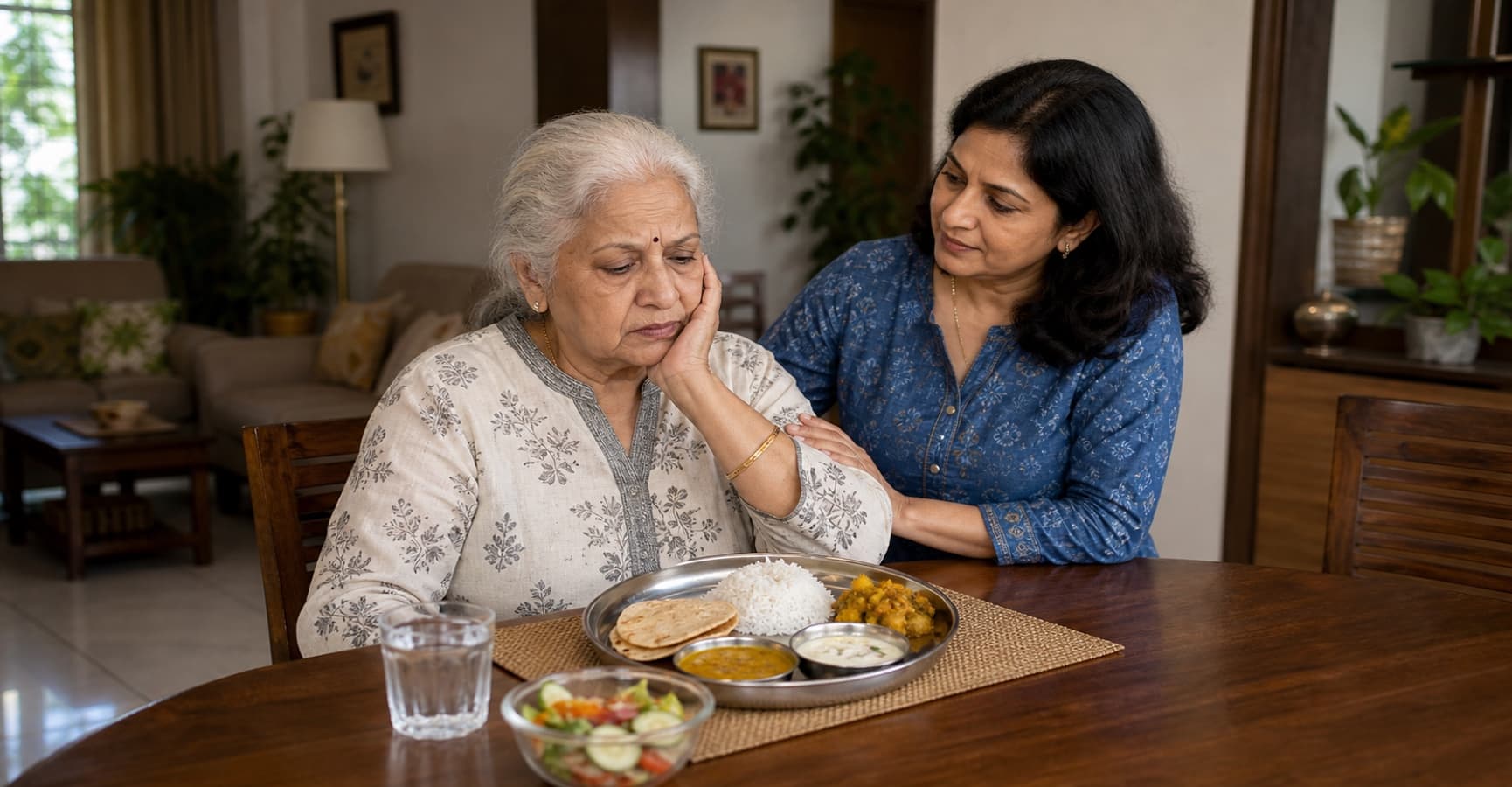
It is not the kind of thing families discuss over a video call. Your parent will happily tell you about their knee, their blood pressure, the neighbour's dog. But the state of their digestion, whether they are going regularly, whether they are uncomfortable, is a private matter most older parents keep firmly to themselves. And so one of the most common problems of later life goes quietly unspoken, and untreated.
Constipation is far more than an inconvenience in an older parent. When it is bad or ongoing, it can steal appetite, disturb sleep, cause real pain, and even trigger confusion and distress. It can lead to complications that land a parent in hospital. And because nobody talks about it, it often gets ignored until it becomes a crisis.
This guide treats it as the genuine health issue it is: why it becomes so common with age, how to spot it when your parent will not mention it, and the simple, dignified ways families can help.
Why constipation is so common in older parents
Several things change with age, and they stack up.
The digestive system naturally slows down, so food moves through the gut more slowly. Older parents tend to move around less, and physical activity is one of the things that keeps the bowels working. They often drink too little, and without enough fluid, the body cannot keep things moving comfortably; our guide to dehydration in seniors explains how easily older parents slip into drinking too little. Appetite shrinks with age, so they eat less overall, and often less of the fibre-rich foods that help.
On top of all this, many older parents take several medicines for various conditions, and some medicines have constipation as a side effect. This is never a reason to stop a medicine on your own, but it is a reason to mention the problem to the doctor, who can consider whether anything is contributing.
Put together, a slower gut, less movement, too little fluid, less fibre, and medicine effects, and it is easy to see why constipation becomes such a familiar companion of old age.
Why it matters more than it seems
Families sometimes brush constipation aside as a minor complaint. In an older parent, it is not minor. When it becomes bad or persistent, the effects reach far beyond the bathroom.
It kills appetite, so a parent eats even less, which worsens nutrition and the constipation itself, a vicious circle. It causes genuine discomfort and pain that can make a parent withdrawn, irritable, or low. It disturbs sleep. In some older adults, a severe episode can even bring on confusion and agitation, so a parent who suddenly seems muddled may, surprisingly, be badly constipated. And if it is left too long, it can lead to serious complications that require medical care.
The point is not to alarm, but to take it seriously. This is a health matter worth attention, not an embarrassing footnote.
The signs, when your parent will not say
Because parents rarely raise the subject, families need to read the indirect clues.
- Reduced appetite or complaining of feeling full, bloated, or heavy.
- Discomfort or a swollen, hard belly.
- Straining, spending a long time in the bathroom, or discomfort passing stool.
- Irritability, low mood, or restlessness that has no obvious cause.
- Reduced going, if you know their normal pattern and it has changed.
- New confusion in a frail parent, which can accompany a severe episode.
A gentle, matter-of-fact question, framed as care rather than intrusion, is often the only way to know. Making it a normal health topic, the same as asking about their sugar or their sleep, helps a parent open up.
Simple, everyday ways to help
Most constipation in older parents responds well to a few consistent daily habits. These are safe, gentle first steps; anything persistent or severe needs a doctor.

Steady Fluids

Fibre in Familiar Foods

Gentle Movement
A Regular Routine

Natural Helpers

When to See a Doctor
A word of caution on remedies: older parents, and families, sometimes reach for strong laxatives or old home purgatives repeatedly. Using these regularly without medical guidance can do harm and can make the gut lazier over time. Gentle diet, fluids, and movement first, and a doctor for anything stubborn, is the safe order.
Good nutrition sits at the centre of all of this, and getting it right for an older parent with a small appetite and specific health conditions is not always obvious. Our guide to nutrition and Indian meals for elderly parents is a useful companion here.
When to see a doctor
Some situations need medical attention rather than home measures. See a doctor promptly if there is severe or ongoing constipation that home steps do not shift, significant pain or a hard, swollen belly, any bleeding, unexplained weight loss, a sudden change in bowel habit, or new confusion in a frail parent. These can point to problems that need proper assessment, and they are not for guesswork.
For families far away, the difficulty is that this is precisely the kind of problem that goes unmentioned on calls and only surfaces when it has become serious. Having someone who sees your parent regularly, and who your parent trusts, changes that.
How a Care Manager and caretaker help
This is a delicate area, and it is one where steady, respectful presence matters more than anything. A caretaker who is with your parent through the day notices what a distant family cannot: the skipped meals, the discomfort, the change in routine, the low mood. Their role is to observe and report, gently and without embarrassment, so a small problem is raised before it becomes a painful crisis. They also help with the practical basics that prevent constipation in the first place, encouraging fluids, supporting a short walk, making sure meals actually happen.
A Care Manager brings it together. Because they know your parent, they can raise a sensitive subject kindly, notice when something is genuinely wrong, and get a doctor involved if home measures are not enough, then keep you informed without you having to ask your parent uncomfortable questions from abroad. And where nutrition is at the heart of the problem, they can arrange proper nutrition counselling so your parent's meals are actually working for their gut, not against it.
Frequently asked questions
Is constipation really a serious problem in older people?
It can be. Beyond discomfort, ongoing constipation in older parents can reduce appetite, disturb sleep, cause real pain, and in some cases contribute to confusion or serious complications. It deserves attention rather than being brushed aside as minor.
My parent will not talk about it. How do I even know?
Watch for indirect signs: reduced appetite, bloating or a hard belly, straining, spending long periods in the bathroom, irritability, and any change from their normal pattern. A gentle, matter-of-fact question, framed as ordinary health care, is often the only way to open the subject.
Are laxatives safe to give?
Do not reach for strong laxatives on your own or use them regularly without medical guidance, as this can do harm and make the gut lazier over time. Start with gentle diet, fluids, and movement, and see a doctor for anything severe or persistent.
What foods help most?
Fibre from whole grains, vegetables, dal, and fruit, along with soft, gentle options like papaya, banana, ragi, and soaked prunes or figs, plus plenty of fluids. Our guide to nutrition and Indian meals has practical, familiar ideas.
When should we definitely see a doctor?
Promptly, if constipation is severe or ongoing, very painful, or comes with bleeding, unexplained weight loss, a sudden change in bowel habit, or new confusion. These need proper medical assessment.
A simple next step
Constipation is one of those quietly common problems that families never quite get to on a phone call, and that older parents will almost never raise themselves. Taking it seriously, gently, is a real kindness, because so much of it responds to simple daily habits once someone is paying attention.
If your parent has seemed off their food, uncomfortable, or not quite themselves, a Kare@home Assessment Visit is a good place to start. For ₹999, a Care Manager visits at home and reviews health, medicines, nutrition, and daily routine, then sends the family a Family Report within 48 hours. If diet is at the root of it, nutrition counselling from ₹800 can set the meals right, and if daily support would help, a caretaker can be placed to keep the small, steadying habits going.