


Over the past year, your mother has slowed down. She naps in the afternoon, which she never used to do. She wears a shawl when everyone else is comfortable. She has become a little forgetful, a little flat, less interested in the things she used to enjoy. Her skin is dry, she complains about constipation, and she has put on a bit of weight even though she says she is hardly eating.
Put together, it sounds like getting old. Everyone around her thinks so. She thinks so too.
But every one of those changes can also be a sign of an underactive thyroid, a common and treatable condition in older adults. In a parent of seventy-five, it may not look like the textbook version. It can look like ageing, low mood or memory trouble, which is why it can sometimes go unnoticed.
This guide explains how thyroid problems in elderly parents can show up, how they are tested, and how to keep treatment on track over time.
Thyroid problems in elderly parents: why age matters
The thyroid is a small gland at the front of the neck. Its hormones help regulate many of the body's functions, including heart rate, body temperature, digestion and energy levels.
When the thyroid makes too little hormone, it is called hypothyroidism. When it makes too much, it is called hyperthyroidism. Both become more common with age, and their symptoms can be less obvious in older adults.
They are also common close to home. A study of 1,201 adults aged 45 and above in Bangalore, part of the Tata Longitudinal Study of Aging, found hypothyroidism in about 18% of participants, with a higher prevalence among women. Most cases were subclinical, meaning TSH was elevated while thyroid hormone levels remained within the normal range. The study also found an association between hypothyroidism and mild cognitive impairment, while inadequately treated participants performed worse on some cognitive tests.
How an underactive thyroid hides in older parents
In an older parent, the signs of an underactive thyroid can be subtle and easy to explain away. Look for a combination of:
- Tiredness and slowing down that seems out of proportion, with more naps or less energy for ordinary things
- Feeling cold when others are comfortable
- Constipation that is new or getting worse
- Dry skin or thinning hair, sometimes with puffiness around the face or eyes
- Low mood, apathy or withdrawal, including losing interest in hobbies and people
- Slower thinking, forgetfulness or difficulty concentrating
- Weight gain without an obvious reason, or swelling
- Aching or weak muscles, a slower walk or a hoarser voice
No single sign proves that your parent has a thyroid problem. Many of these symptoms can have other causes. It is the combination of symptoms, especially when they represent a change from how your parent used to be, that is worth discussing with a doctor.
Memory and mood deserve special mention. A significantly underactive thyroid can cause low mood, slower thinking, poor concentration and memory problems that can sometimes resemble depression or cognitive decline. This is one reason thyroid function may be checked when an older adult develops new cognitive symptoms.
Our guide on cognitive decline in elderly parents explains why looking for treatable causes is an important part of an assessment.
Constipation is another symptom that is easy to overlook because it is so common. An underactive thyroid can slow the digestive system too. Our guide on constipation and gut health in elderly parents covers other common causes.
The overactive thyroid that looks like the opposite
An overactive thyroid can be just as confusing.
Instead of the nervousness, tremors and sweating often associated with hyperthyroidism, some older adults may mainly become tired, weak or withdrawn, and lose weight without trying. Sometimes the main sign is a fast or irregular heartbeat or new breathlessness.
This less typical presentation is sometimes called apathetic hyperthyroidism because the person may appear more exhausted or withdrawn than overactive.
Too much thyroid hormone can contribute to heart rhythm problems and bone loss. Unexplained weight loss, a racing or irregular pulse, new breathlessness or muscle weakness are therefore worth discussing with a doctor.
Our guide on signs your elderly parents need more help covers other changes worth taking seriously.
Thyroid blood tests: what families should know
Thyroid problems are relatively straightforward to investigate. Testing usually starts with a blood test for thyroid-stimulating hormone, or TSH. Depending on the result and the clinical situation, the doctor may also check free T4 and sometimes other thyroid tests.
A few things are worth knowing:
Normal ranges can change with age. TSH levels tend to rise somewhat with age. A mildly elevated result in an older adult therefore needs to be interpreted in the context of age, symptoms, other health conditions and laboratory reference ranges.
Mild cases do not always need treatment. Some older adults have a mildly raised TSH while their free T4 remains normal. This is called subclinical hypothyroidism. Research has found that treating mild subclinical hypothyroidism in older adults does not always improve symptoms, so a doctor may choose to monitor and repeat the test rather than start treatment immediately.
An abnormal result may need to be repeated. A single abnormal result does not always mean there is a lasting thyroid problem. Illness, medicines and other factors can temporarily affect thyroid test results. The doctor may therefore repeat the test before deciding on treatment.
Ask about thyroid testing when things change. New memory problems, persistent low mood, unexplained weight changes, unusual tiredness or an irregular heartbeat are all reasons to ask the doctor whether thyroid function should be checked.
When treatment starts: getting the dose right over time
When hypothyroidism needs treatment, the usual medicine is levothyroxine, a replacement for the thyroid hormone the body is not producing in sufficient amounts.
In older adults, doctors may start with a lower dose and increase it gradually, particularly when the person has heart disease or other health conditions.
The aim is to get the thyroid hormone level into the right range without giving too little or too much.
Too little thyroid hormone may leave symptoms such as tiredness, feeling cold and constipation unresolved. Too much thyroid hormone can contribute to a fast or irregular heartbeat and bone loss.
That is why follow-up blood tests are important.
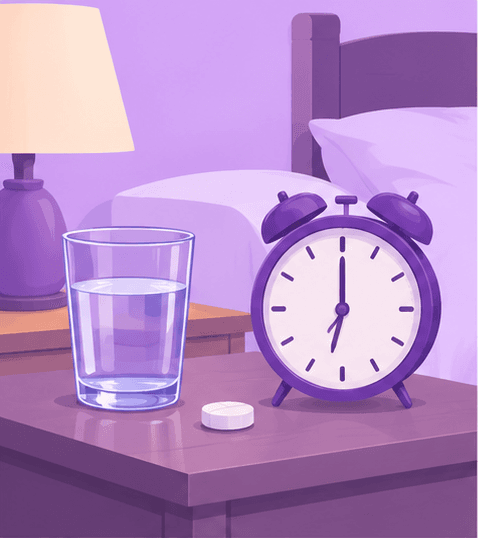
Same Time, Every Day
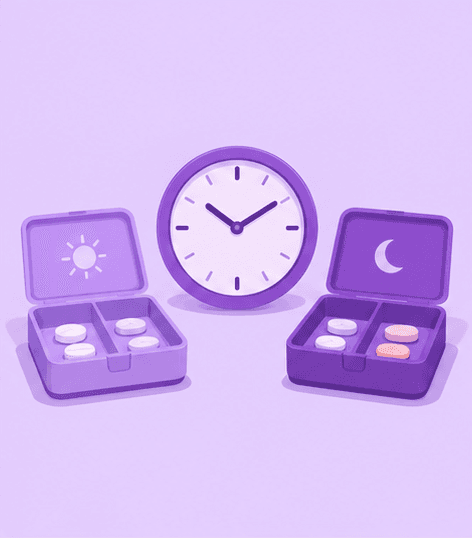
Mind the Other Medicines
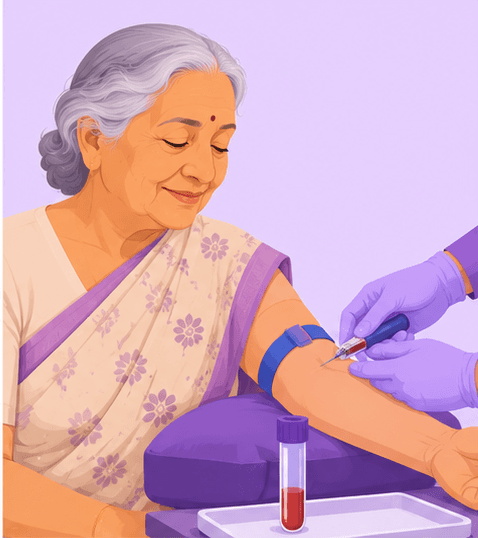
Keep Up the Blood Tests

Don't Change the Dose on Your Own

Watch the Heart
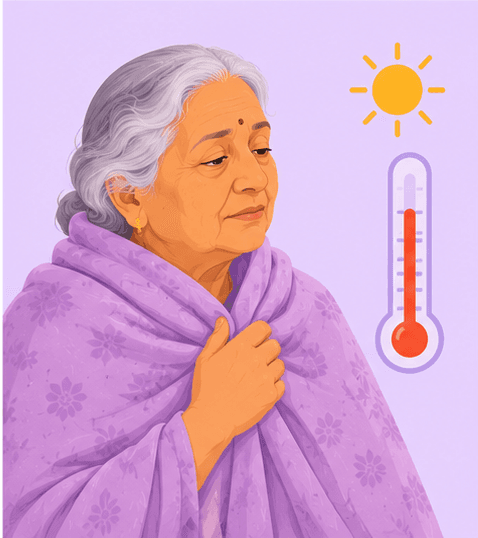
Notice Old Signs Returning
As with any prescription medicine, the doctor decides the dose and how it should be taken. The family's role is to help ensure that medicines are taken as prescribed, follow-up tests are not forgotten, and important changes are noticed and reported.
How a Care Manager and caretaker help
Thyroid problems are often manageable once identified, but subtle changes can be easy to miss when nobody is observing the person's day-to-day health.
A caretaker who spends time with your parent may notice patterns such as increased sleeping, unusual tiredness, feeling cold more often or changes in mood and routine.
Their role is to observe, remind and report. They can remind your parent to take medicines as prescribed, notice when doses are being missed, and report changes in energy, mood, weight or general health to the family and Care Manager. They should not change medicine doses themselves.
Our guide on medication management for elderly parents explains how this works in practice.
A Care Manager keeps the bigger picture in view. They can help coordinate a doctor consultation, arrange prescribed blood tests, keep track of follow-ups and help ensure that relevant reports and results are available when your parent sees a doctor.
Frequently asked questions
Are thyroid problems common in elderly parents?
Yes. Thyroid problems become more common with age, particularly hypothyroidism and particularly among women.
A Bangalore study of adults aged 45 and above found hypothyroidism in about 18% of participants. Most of the cases identified in the study were subclinical.
Can a thyroid problem be mistaken for dementia?
An underactive thyroid can cause slower thinking, forgetfulness, difficulty concentrating and low mood. These symptoms can sometimes resemble depression or cognitive decline.
This is one reason thyroid function may be checked when an older adult develops new cognitive symptoms. If thyroid dysfunction is contributing to the symptoms, treating it may help.
My parent's TSH is slightly high but the doctor did not start a tablet. Is that right?
It can be.
TSH levels can rise somewhat with age, and some older adults have mildly elevated TSH while their free T4 remains normal. This is called subclinical hypothyroidism.
Research has found that treating mild subclinical hypothyroidism does not always improve symptoms in older adults. A doctor may therefore recommend monitoring and repeating the test rather than immediately starting treatment.
If you are unsure, ask the doctor what the result means for your parent and when it should be checked again.
How often should the thyroid be checked in someone already on treatment?
After levothyroxine is started or the dose is changed, thyroid levels are commonly checked after about six to eight weeks.
Once treatment is stable, testing may be needed periodically, often at least once a year, or sooner if symptoms change. Your parent's doctor will decide the appropriate schedule.
Can the thyroid affect the heart?
Yes.
Too much thyroid hormone, whether from hyperthyroidism or excessive thyroid replacement, can cause a fast or irregular heartbeat. Some thyroid-related rhythm problems, particularly atrial fibrillation, can increase stroke risk.
An underactive thyroid can also affect cardiovascular health, including cholesterol levels.
If your parent develops a new racing or irregular heartbeat, chest discomfort or breathlessness, seek medical advice rather than assuming it is simply a thyroid symptom.
A simple next step
If your parent has been slowing down, feeling unusually cold or becoming more forgetful, and everyone has put it down to age, it is worth asking one simple question:
Has their thyroid been checked recently?
A simple thyroid blood test, usually starting with TSH, can help determine whether thyroid function needs a closer look.
A doctor consultation is the natural place to start.
If you would like a fuller picture of your parent's health and day-to-day routine first, a Kare@home Assessment Visit costs ₹999. A Kareverse Care Manager visits your parent at home and reviews their health, medicines, energy, mood and daily routine.
From there, Kareverse can help coordinate the doctor consultation and prescribed tests, keep track of follow-ups, and arrange additional support when needed.