

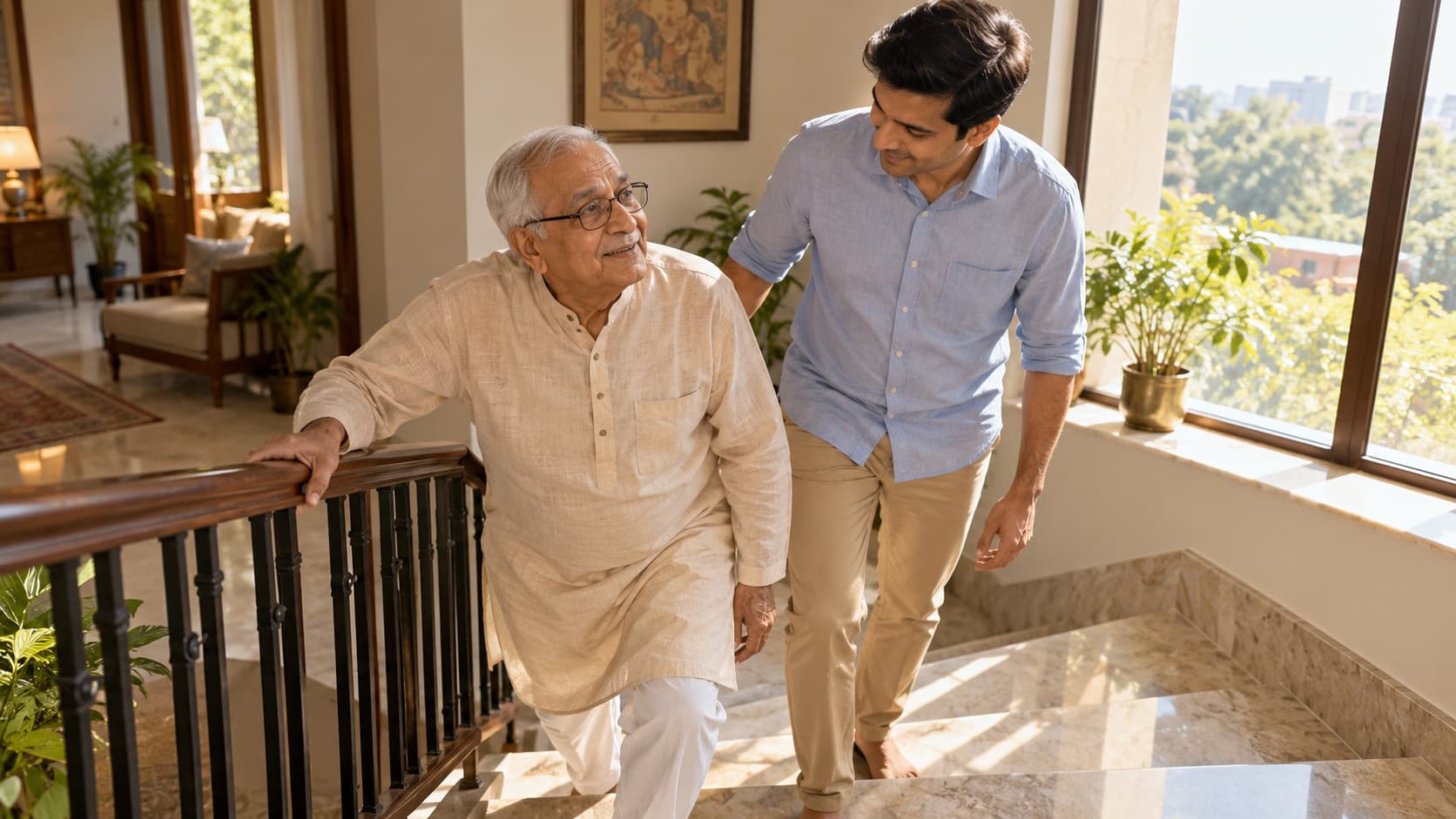
It usually starts with the stairs. Your father pauses on the landing before the second flight. Your mother stops halfway through the walk around the park and says she will sit on the bench and wait. Nobody thinks much of it. They are in their seventies, after all. Everyone gets a little puffed with age.
And then, slowly, life gets smaller. The evening walk becomes a walk to the gate. When you ask on the phone, the answer is always the same: "I am fine, just a little tired."
Breathlessness in elderly parents is common, and commonly dismissed. A systematic review found that about one in three older people experienced breathlessness that limited ordinary activity, although estimates varied considerably between studies. Some of that is simply being less fit. But a great deal of it has a name, a cause, and a treatment: a struggling heart, quietly damaged lungs, or blood that carries too little oxygen. It creeps in so gradually that families adjust to it rather than question it.
This guide explains what breathlessness can mean, the signs to watch for, when it is an emergency, and how to get it properly looked at.
Why "just age" is the wrong answer
Healthy ageing does make the heart and lungs a little less efficient. But it should not make a parent stop mid-conversation to catch their breath, avoid a single flight of stairs, or sleep propped up on three pillows.
The problem with calling it "age" is what happens next. A breathless parent does less, because doing less feels better. That weakens the legs and heart further, so the next effort feels harder still. Within a season or two, a parent who walked to the market struggles to walk to the bathroom. That is why doctors treat new or worsening breathlessness in an older person as a symptom to investigate, not a feature of getting old.
What breathlessness in elderly parents can mean
In older adults, breathlessness rarely has just one cause, and it often has more than one at the same time. The common ones are:
The heart. When the heart pumps less effectively, fluid backs up into the lungs and legs. This is heart failure, which sounds frightening but simply means the heart is not keeping up with demand, and treatments can reduce symptoms and help many people manage the condition. The clues are breathlessness on effort or when lying flat, waking at night short of breath, and swollen ankles. In older people it may show up only as tiredness, slower walking, or poor appetite. Irregular heartbeat and poorly controlled blood pressure add to the strain, which is why our guide on high blood pressure in elderly parents is worth reading alongside this one.
The lungs. Chronic obstructive pulmonary disease (COPD) is long-term airway and lung damage that makes breathing out harder. Many families assume it only affects smokers. In India, years of cooking over wood or kerosene fires, dust, and polluted air all contribute. A recent systematic review and meta-analysis of Indian studies estimated COPD prevalence at about 27% among adults aged 60 and above. Indian studies have also found substantial underdiagnosis of COPD among women exposed to biomass cooking fuels. In one Karnataka study, most of the women found to have COPD had not previously been diagnosed. Late-onset asthma and repeated chest infections belong here too.
The blood. Anaemia, a shortage of healthy red blood cells, means the blood carries less oxygen, so the body breathes harder to keep up. It is very common in older Indians, especially women, and can have causes including low iron, low vitamin B12, kidney disease, or hidden blood loss. Our guide on vitamin B12 deficiency in elderly parents covers one of its quieter causes.
Everything else. Thyroid problems, kidney disease, excess weight, weak muscles after a period of inactivity, anxiety, side effects of some medicines, and a chest infection that never properly cleared can all play a part. The same breathlessness can come from the heart, lungs, and blood at once, and each needs different treatment, so the answer is never to guess.
When breathlessness is an emergency
Most breathlessness needs a doctor within days, not minutes. But call 112 or an ambulance, or get your parent to the nearest emergency department, if there is:
- Sudden, severe breathlessness, or breathlessness at rest that is getting worse
- Chest pain, pressure, or tightness, especially spreading to the arm, jaw, or back
- Blue or grey lips or fingertips
- New confusion, drowsiness, or difficulty speaking in full sentences
- Breathlessness with a fast or very irregular heartbeat, fainting, or near-fainting
- Coughing up blood
In older parents, a heart attack or serious chest infection may show up as nothing more than sudden breathlessness, exhaustion, or confusion. Our guide on what to do in an elderly parent's emergency in Bangalore walks through the practical steps when you are not there.
The signs families miss, especially from abroad
On a video call, your parent is sitting down, which is exactly when breathlessness hides. Ask about these, or ask someone at home to watch for them:
- They have stopped doing things that need effort. The walk, the stairs, the market, the temple. Ask what they did this week, not how they feel.
- They pause mid-sentence to catch their breath, or speak in shorter bursts than before.
- They sleep propped up on more pillows, or in a chair, because lying flat is uncomfortable.
- They wake at night feeling short of breath or coughing.
- Their ankles are swollen, or their slippers and shoes have become tight.
- They have a cough that has not gone away, especially in the mornings, or they are bringing up phlegm most days.
- They look pale, or get dizzy on standing.
One simple question is revealing: "Can you still manage the stairs in one go?"
Getting it properly checked
A doctor will usually listen to the heart and lungs, check oxygen, blood pressure, and pulse, and look for ankle swelling. Depending on what the doctor suspects, further tests may include blood tests, a chest X-ray, ECG, echocardiogram or spirometry (the simple breathing test used to diagnose COPD).
It helps enormously if someone goes with your parent. Older parents tend to underplay symptoms in the consulting room ("it is nothing, doctor") and forget half of what they were told. A companion who can describe what they have seen, and write down the plan, makes the visit far more useful.
Everyday habits that help
Once the cause is known and treated, a few everyday habits help a parent breathe easier and stay active. They support medical care, not replace it.
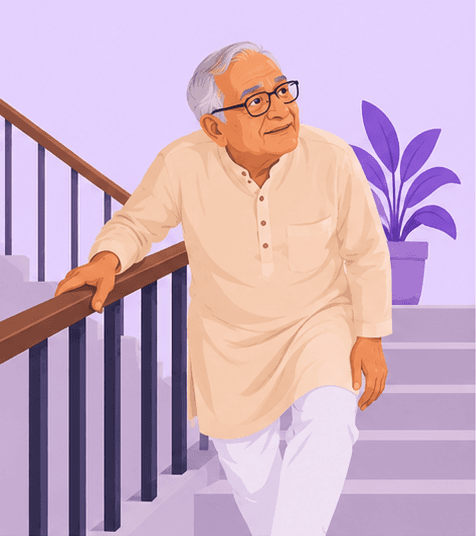
Pace, Do Not Stop
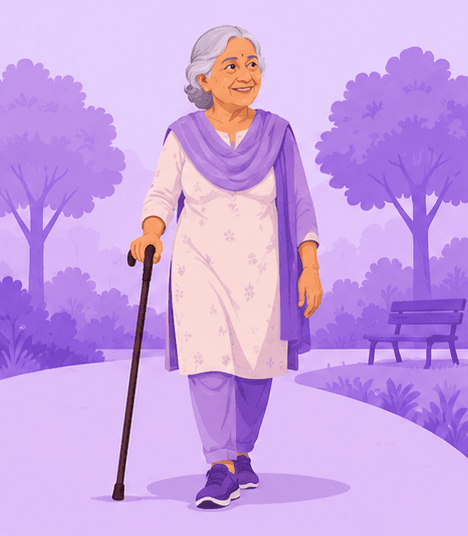
Keep Walking, Gently
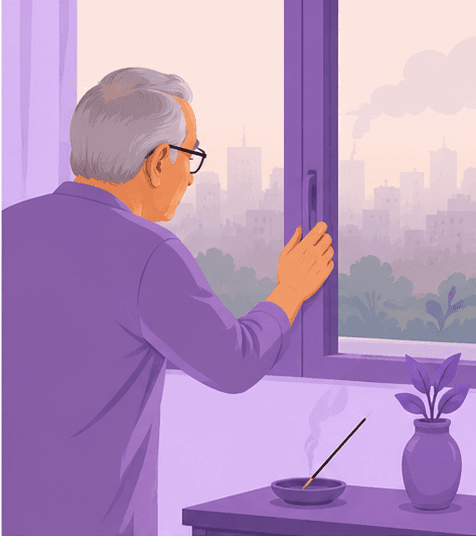
Clear the Air at Home
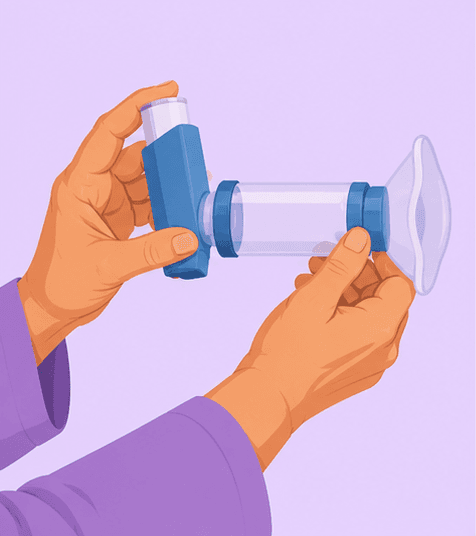
Use Inhalers Correctly
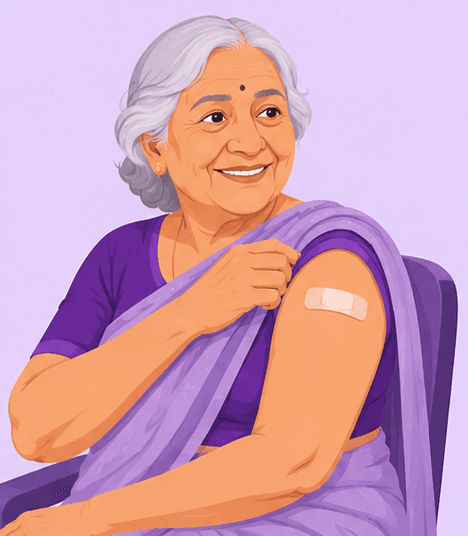
Stay Up to Date on Vaccines
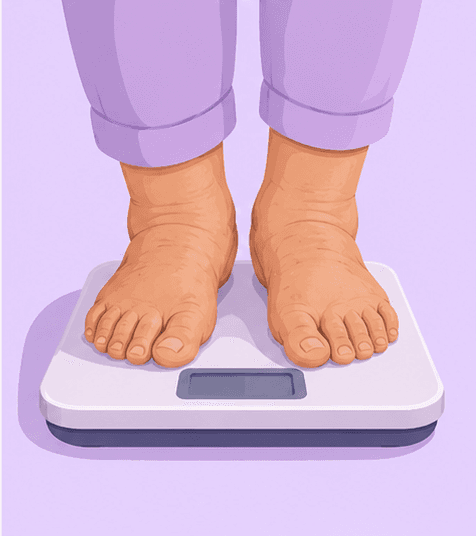
Watch the Swelling and Weight
For more on building up activity safely, see our guide on walking for seniors, and for the vaccines worth raising with their doctor, our guide on vaccinations for elderly parents.
Air pollution and smoke can worsen symptoms in people with COPD, asthma or heart disease. On days when air quality is poor, reduce unnecessary exposure to outdoor pollution and smoke and follow the treatment plan given by your parent's doctor.
How a Care Manager and caretaker help
Breathlessness hides in plain sight, which is why regular in-person eyes matter. A caretaker who spends the day with your parent notices the slower walk, the extra pillows, the tight slippers, the cough that has lingered for three weeks. Their role is to observe, remind, and report: remind your parent to use their inhaler and take medicines as prescribed, encourage the daily walk, and tell the family and Care Manager when something changes.
A Care Manager brings the pieces together. They arrange a doctor consultation when breathlessness is new or worsening, coordinate the tests, and can have someone go with your parent to appointments through hospital accompaniment, so what the doctor says actually reaches you. Once the cause is clear, physiotherapy at home can help rebuild strength and stamina safely.
Frequently asked questions
Is it normal for elderly parents to get breathless?
Exercise capacity can decrease with age, so an older person may become breathless sooner during strenuous activity than they once did. But new or worsening breathlessness during ordinary activities, such as walking a short distance, getting dressed or climbing a flight of stairs, deserves medical assessment.
My parent never smoked. Can they still have COPD?
Yes. In India, much COPD comes from years of cooking-fire smoke, dust, and polluted air. Indian studies have found that many women exposed to biomass cooking fuels have COPD that had not previously been diagnosed. A simple breathing test called spirometry can confirm it.
When should I call for emergency help?
Immediately for sudden or severe breathlessness, breathlessness at rest, chest pain or tightness, blue or grey lips, new confusion, fainting, or coughing up blood. Call 112 or get your parent to the nearest emergency department. In older adults, a heart attack or serious infection can show up as sudden breathlessness or confusion alone.
Can breathlessness affect my parent's sleep?
Very often. Heart-related breathlessness worsens when lying flat, so parents sleep propped up or wake short of breath, and lung conditions cause night-time coughing. Our guide on sleep problems in elderly parents covers what else can disturb sleep at this age.
A simple next step
Breathlessness that gets called "just age" is one of the quietest ways an older parent's world shrinks, and many of its causes can be identified and treated or managed. If your parent has started avoiding the stairs or sleeping propped up, it is worth having it looked at.
A doctor consultation is the right place to begin. If you would like a wider picture first, a Kare@home Assessment Visit costs ₹999: a Care Manager visits your parent at home, reviews their health, breathing, mobility, and daily routine, and sends the family a Family Report within 48 hours. From there, we can arrange the doctor, go with your parent to appointments, and, if daily support is needed, place a caretaker to keep an eye on things every day.