

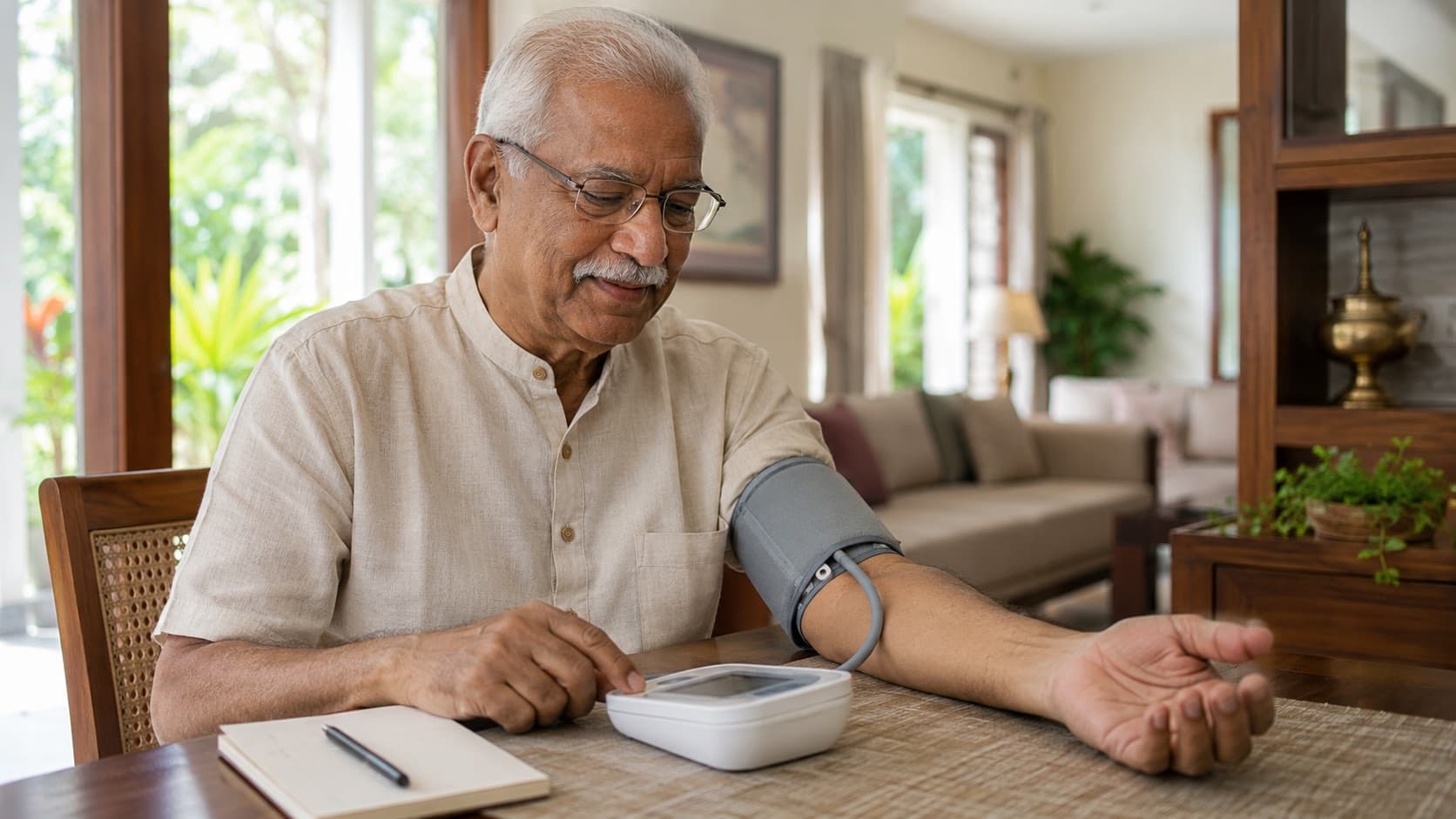
Ask most families how their parent's blood pressure is, and you will get a single number. It was fine last time the doctor checked. It was a bit high that one morning. Someone has a figure in their head from a reading taken weeks ago, and that figure stands in for the whole story.
The problem is that a single blood pressure reading tells you almost nothing about an older parent. Blood pressure is not a fixed fact like height. It rises and falls through the day, spikes in the early morning, drops after meals, jumps in a doctor's clinic, and settles at home. In an older parent it swings more than it used to, and both the highs and the lows can be dangerous. What matters is not one number but the pattern, and the pattern is exactly what nobody far away can see.
This guide is about reading blood pressure the way it actually behaves in an older parent, the swings, the spikes, the drops that cause falls, and the quiet years of harm that show no symptoms at all.
Why one reading is not the truth
High blood pressure earns its nickname, the silent condition, honestly. For years it can do real harm to the heart, the brain, the kidneys, and the eyes while causing no symptoms a parent would notice. There is no ache that says the pressure is high. This is why a parent will insist they feel perfectly well, and mean it, while the numbers tell a different story.
Because there are no symptoms to go by, the reading is all you have, and a single reading is a snapshot of one moment. Blood pressure genuinely changes through the day. It tends to be higher in the early morning, can rise with stress or activity, and often reads higher in a clinic than at home. So one figure, taken once, at the wrong moment, can either falsely reassure or falsely alarm. The truth lives in the pattern over days, taken calmly at home, at consistent times.
The swings that matter more than the average
In an older parent, it is not just that blood pressure is high. It is that it swings, and the swings themselves cause trouble.
The morning spike. Blood pressure naturally rises in the early hours, and in older adults this rise can be sharp. This is one of the reasons early morning carries a higher risk, and one of the reasons the first hour after waking, getting up, walking to the bathroom, is a moment to be steady and unhurried rather than sudden.
The drop that causes falls. This is the swing families least expect. An older parent can have blood pressure that falls too low when they stand up quickly, or after a meal, leaving them dizzy, lightheaded, or unsteady for a few seconds. That is often enough to cause a fall. So a parent with high blood pressure can also, confusingly, be at risk from low blood pressure at particular moments. If your parent feels dizzy on standing, it is worth mentioning to the doctor rather than dismissing, because it links directly to fall risk. Our guide to fall prevention at home covers the practical side of keeping a dizzy-prone parent safe.
The white-coat jump. Many older parents read markedly higher in a clinic than they do at home, simply from the setting. If decisions are made only on clinic readings, a parent can end up over-treated, which then makes the dizzy drops worse. Calm readings at home, over several days, give the doctor a truer picture.
The lesson in all of this is that the average is not the whole story. A parent whose numbers look acceptable on average can still be swinging dangerously between a morning high and a mid-day dizzy low. Only a pattern, watched over time, shows it.
Reading it right at home
Home readings are the single most useful thing a family can gather, but only if they are taken properly. Done casually, they mislead as often as they help.

Sit and Settle First
Same Times Each Day
Write the Numbers Down
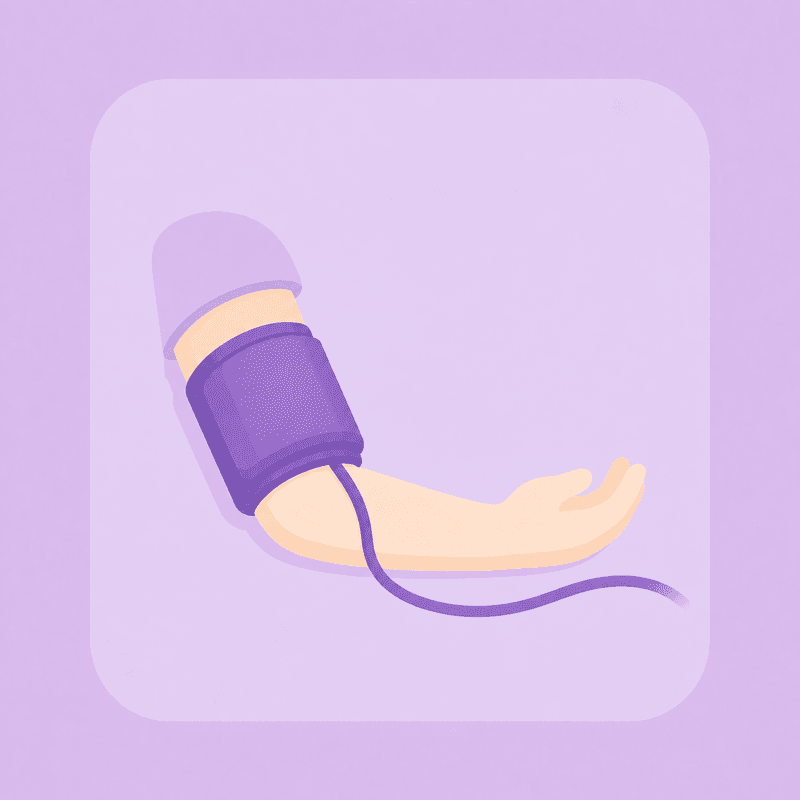
The Right Cuff, the Right Arm
The Salt Nobody Counts

Movement and Calm
Two readings that disagree wildly usually mean something in the method was off, not that the parent is in crisis. Rest, retake calmly, and look at the run of readings rather than any single alarming one.
The everyday things that move the number
Blood pressure responds, gently and over time, to how a parent lives, and much of it is within reach without any drama.
Salt is the big, hidden one in Indian kitchens. It is not only the salt at the table but the pickles, papad, namkeen, packaged snacks, and restaurant food, and it adds up quietly. Sensible, familiar reductions in everyday cooking help more than any single sacrifice. Steady, unhurried physical activity like a daily walk helps, and so does decent sleep, which is easy to overlook. Our guide to walking for seniors has easy ways to build gentle movement in.
Fluids matter too, in both directions. Too little fluid can worsen the dizzy drops on standing, especially in a parent who already does not drink enough, and older parents very commonly do not. Our guide to dehydration in seniors explains how easily that slips. None of this replaces the doctor's treatment, but it is the ground the treatment stands on.
The medicine side, and why it is delicate
Blood pressure medicines only work if they are taken consistently, at the right times, every day. In older parents this is exactly where things slip, a missed dose here, a double dose there, confusion between similar-looking tablets, especially when blood pressure medicines sit alongside diabetes and other conditions. High blood pressure and diabetes very often travel together and compound each other's effects on the heart, kidneys, and eyes, so a parent with both needs a joined-up picture, not two separate ones.
A caretaker's role with medicines is to remind, observe, and report, never to adjust doses or manage the medicine clinically, which stays with the doctor and, where needed, a nurse. Our guide to medicine management for elderly parents sets out simple systems that prevent the everyday slips. And because over-treatment can cause the dizzy drops, any new unsteadiness, faintness, or falls after a medicine change is something to report to the doctor rather than push through.
Why distance makes it harder
Blood pressure is the definition of a condition a phone call cannot see. Your parent feels well, so they tell you they are well, and they are not hiding anything, there is genuinely nothing for them to feel. Meanwhile the readings go untaken, the salt goes uncounted, the morning dizziness goes unmentioned, and the pattern that would tell the real story never gets gathered.
What changes this is someone who sees your parent regularly and knows what to gather. A caretaker through the day can help take readings calmly and consistently, keep the log, encourage the walk, watch for dizziness on standing, and report what a distant family cannot see. A Care Manager brings it together, spotting when the pattern is drifting, making sure the readings and reviews actually happen, involving the doctor when the numbers or the dizziness call for it, and keeping you informed without you having to quiz your parent from abroad.
When to seek help promptly
Most of blood pressure care is patient, everyday attention. But some situations need prompt medical help. Seek urgent care for a very high reading combined with symptoms such as a severe headache, chest pain, breathlessness, weakness or numbness on one side, difficulty speaking, or vision changes, as these can signal a heart or brain emergency. Contact the doctor promptly, though not as an emergency, for repeated dizziness or faintness on standing, new unsteadiness or falls, or a run of readings that is consistently high or unusually low. And keep the routine reviews, because the silent harm is caught in those, not in a crisis.
Frequently asked questions
My parent's reading was fine at the doctor. Isn't that enough?
Not really. One reading is a single moment, and many older parents read higher in a clinic than at home. Blood pressure swings through the day, so a pattern of calm home readings over several days tells the truth far better than one clinic figure.
Can high blood pressure cause falls?
Indirectly, yes. Older parents with high blood pressure can also have moments when pressure drops too low, on standing or after meals, causing dizziness and unsteadiness that lead to falls. Over-treatment can make this worse, so report any new dizziness to the doctor. Our fall prevention guide has practical steps.
How often should we check blood pressure at home?
Follow the doctor's advice for your parent, but a common pattern is calm readings at consistent times, often morning and evening, taken after five minutes of rest, and written down. The log matters more than any single number.
Does reducing salt really help?
Yes, and the salt that matters is not only at the table but in pickles, papad, namkeen, packaged snacks, and restaurant food. Gentle, familiar reductions in everyday cooking help the numbers over time alongside the doctor's treatment.
Can a caretaker manage my parent's blood pressure medicines?
No. A caretaker reminds, observes, and reports. They can help take and log readings and flag concerns, but dose decisions stay with the doctor, and clinical tasks with a nurse.
A simple next step
High blood pressure asks for something families find hard to give from a distance, quiet, consistent attention over time rather than a single reassuring number. The pattern is where the truth lives, and gathering it takes someone close by who knows what to watch.
If your parent has high blood pressure and you are not confident the day-to-day is really being tracked, a Kare@home Assessment Visit is a sensible place to start. For ₹999, a Care Manager visits at home and reviews health, medicines, and daily routine, then sends the family a Family Report within 48 hours. Where the numbers or symptoms need a doctor's eye, a doctor consultation can be arranged, and if daily support would help, a caretaker can be placed to keep the readings, the walks, and the small steadying habits going.