| No. 24 · Thursday, 29th October 2026 |
For those who care from a distance |
Kareverse, Bangalore |
|
|
Newsletter
Elder care intelligence for NRI families with parents in Bangalore
|

|
Feature Essay
Stop Asking “Do You Remember?”
When a parent has dementia, our most loving questions can feel like a test. “Do you know who this is?” “What did you have for lunch?” Each one asks them to find something that may no longer be there. The good news: how you talk can make a call feel calm and warm, and that feeling can stay with them long after the details fade.
30 min
In a University of Iowa study, people with Alzheimer’s disease kept feeling the emotion from short film clips well after they had forgotten the clips. Sadness lasted more than 30 minutes. What we do leaves a feeling behind, even when the moment is forgotten.
|
|
"It is not ‘does she remember?’ It is ‘how did she feel when we hung up?’"
Edition 24
|
|
It is Diwali, and the whole family has squeezed into one video call. Someone holds the phone up to Amma. “Amma, who is this? Tell us her name.” She smiles, hesitates, and the room goes quiet. Somebody whispers the answer. Everyone laughs kindly and moves on. Amma does not move on quite as quickly.
We ask “do you remember?” because we are hoping. Remembering feels like proof that our parent is still there. But dementia often affects recent memory first, so for a parent living with it, every one of those questions is a small exam, taken in front of the people they love most. Many respond in ways we misread: they go quiet, get irritable, say “I’m tired” and end the call early. Families often take that as the illness getting worse, when it may simply be the conversation that has become hard.
In 2014, researchers at the University of Iowa showed 17 people with Alzheimer’s disease short film clips chosen to make them feel sad or happy. A few minutes later, many could recall very little about what they had watched, and some could recall nothing at all. Yet the feelings stayed. The sadness lasted more than 30 minutes, and the less a person remembered of the film, the longer the sadness tended to last. The researchers’ conclusion was simple: what we do still matters, even when it is forgotten.
Here is the hopeful side of that finding. It works both ways. A call that leaves your parent feeling capable, laughed with and loved can leave something warm behind, even if by evening they cannot tell you that you called. So the goal of the conversation changes. It is not “does she remember?” It is “how did she feel when we hung up?”
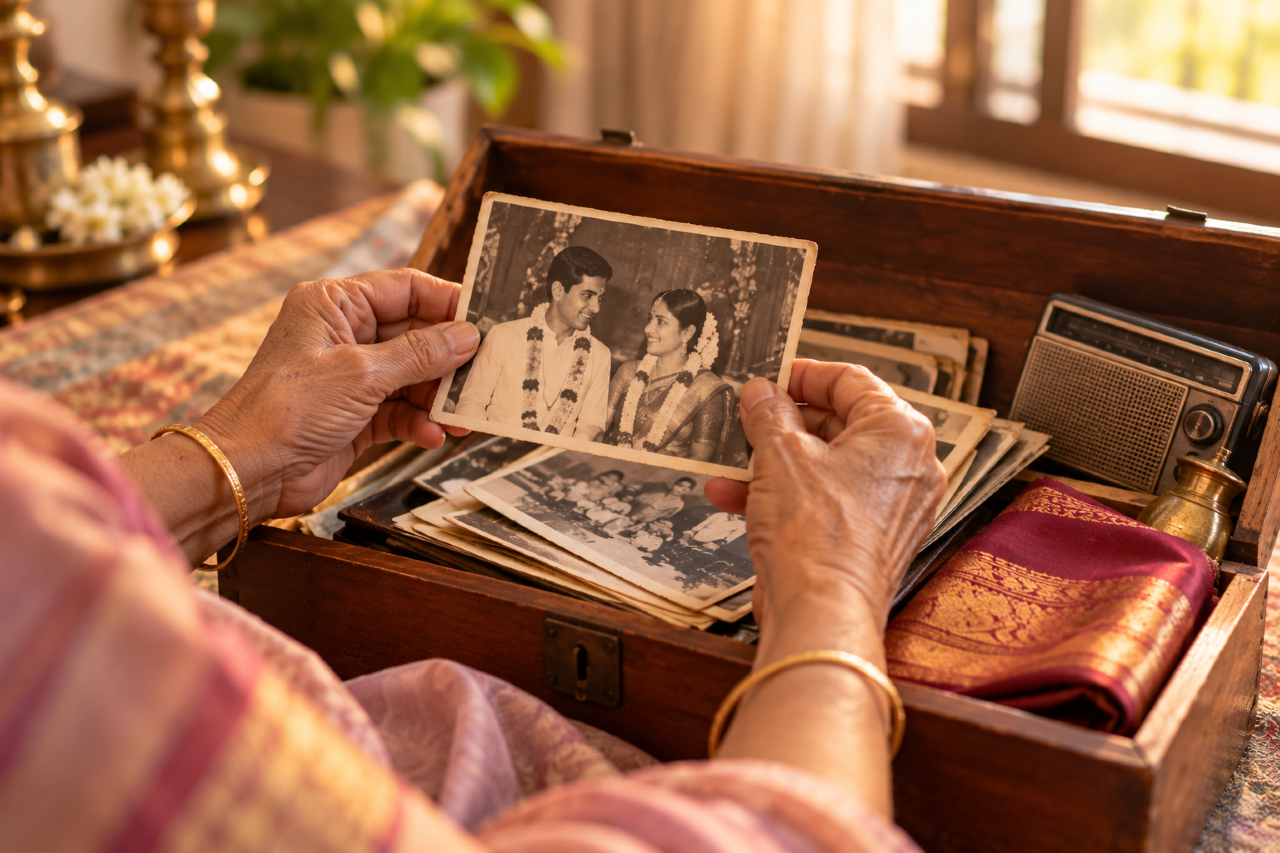
That shift changes what you say. Introduce yourself before they have to work it out: “Hi Appa, it’s Arjun, your son, calling from Toronto.” Swap open questions for gentle choices or statements: instead of “What did you eat today?”, try “Did you have dosa or idli this morning?” or “I heard you had dosa, was it good?” Go back in time with them. Older memories are often better kept than recent ones, so “Tell me about the house in Mysore” can open up a conversation that “What did you do yesterday?” shuts down. An old film song or a wedding photo can do the same.
The hardest moment is when a parent says something that isn’t true. Amma says she is waiting for her mother to come home. The instinct is to correct her: “Ajji passed away thirty years ago.” But for someone with dementia, that can feel like hearing the news for the very first time. Dementia care guidance suggests responding to the feeling rather than the fact: “You’re thinking about Ajji. Tell me about her.” You are not arguing, and you are not inventing a story. You are simply meeting your parent where they are.
A few practical things help the call itself. Choose a quiet room with the TV off. One or two faces on screen, not five. Speak a little slower and leave pauses. A short call at the same time every day often works better than one long call a week. And one important exception: if your parent’s confusion changes suddenly, over hours or a few days, that is not the usual slow course of dementia. Infection, dehydration or a medicine change are possible causes, so call their doctor the same day.
|
Also in this edition
"They may forget the call. The feeling it leaves can stay."
Introduce yourself. Offer choices, not quizzes. Answer the feeling, not the fact.
This week: make a memory box before your next visit.
|
|
|
● The Bangalore Lens
What's happening locally, right now
|
At Diwali, the festival room can be the hardest room in the house.
In the next few weeks, homes across Bangalore will fill up: relatives arriving from Chennai and Hyderabad, crackers outside, every room busy, and the well-meant family game of “Do you know who I am?” For a parent with dementia, a full house and a changed routine can be tiring and unsettling, even when they love every person in it.
A little planning makes a big difference. Gently ask relatives, before they arrive, to say their name and how they’re related when they greet your parent. Keep the usual meal and sleep times. Set aside one quiet room your parent can step into, and keep a familiar person beside them during the busiest hours. And if the festival is when you first notice changes in a parent who has never been assessed, write down what you saw and talk to their doctor before you fly back.
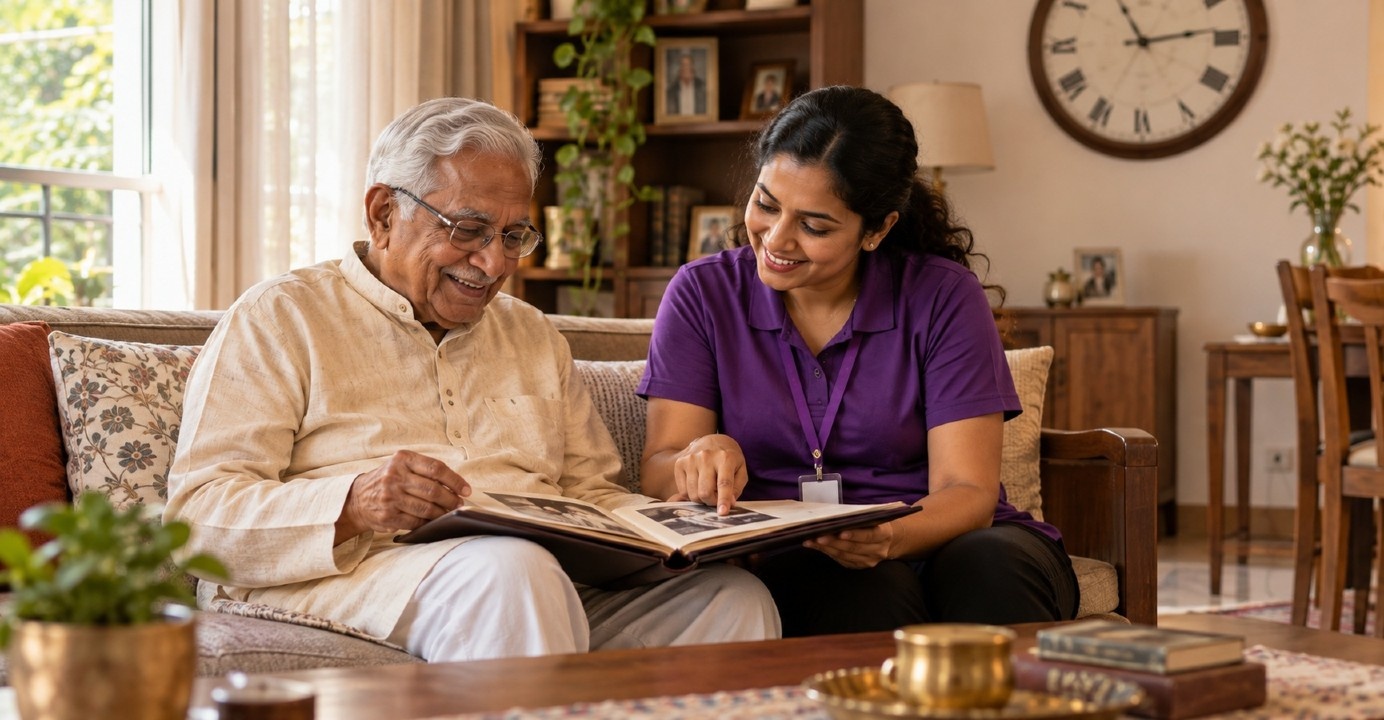
When daily support is needed, a Kareverse caretaker can be the steady, familiar face in the house: the same routine every day, the same calm, gentle way of talking, and a Care Manager who keeps you updated from wherever you are.
If you are noticing changes but there has been no assessment yet, our online Memory and Thinking Check is a simple 20 to 30 minute screening, with no right or wrong answers, that a family member can join. It is a screening, not a diagnosis. Find out more
For daily tips and follow-along videos in local languages, your parent can join our free Active Age WhatsApp community.
|
5 min
Plan the first five minutes of your festival visit: say your name and who you are, sit at their eye level, and bring one old photo to talk about. A calm start makes the rest of the day easier for everyone.
|
|
|
● One Thing To Do
This week
|
|
Action
Before your next visit
Make a Memory Box Before Your Next Visit
A small box of familiar things gives every call and visit an easy, happy place to start.
1. Gather 10 old photos. The older the better: their wedding, their first home, their hometown, you and your siblings as children, old friends from work.
2. Pick 3 songs they loved when they were young. An old film song, a favourite bhajan, a Carnatic piece they used to hum.
3. Write one line on the back of each photo: who is in it and where. That way a sibling, a neighbour or a caretaker can use the box too.
4. Open the visit or call with it. “Look what I found, Amma.” Let them tell the story, even if the details come out differently from how you remember them.
5. Leave the box behind with whoever is with them every day, so the good moments carry on after you fly back.
Good days and harder days are both normal. On a harder day, a song or a photo with no questions attached can be enough.
|
|
● From The Blog
Further reading on kareverse.com
|
|
|
|
For most of our lives, our parents remembered things for us: our first words, the name of our first school, the fever we had when we were four. Now it is our turn to carry the memories, gently, without asking them to prove anything. They may not remember the call. But if they put the phone down feeling loved, listened to and not tested at all, that call did exactly what it was meant to do.
The Kin Letter, Edition 24 · Thursday, 29th October 2026
|
|
Know someone whose parents are in Bangalore? Forward this letter, or invite them to subscribe.
Subscribe
Join Active Age Community
Follow on LinkedIn
|
|
Sources: Feelings outlast memory: Guzmán-Vélez E, Feinstein JS, Tranel D, "Feelings without memory in Alzheimer disease," Cognitive and Behavioral Neurology, 2014;27(3) (17 people with probable Alzheimer's disease and 17 matched comparison participants; sadness stayed raised for more than 30 minutes after film clips, and poorer recall went with longer-lasting sadness; small sample, self-reported feelings). Communication guidance: NHS 111 Wales, "Communicating with someone with dementia"; Alzheimer's Society, communicating factsheet; Alzheimer Society of Canada, communication tips. The online Memory and Thinking Check is a screening, not a diagnosis. General information, not medical advice.
You're receiving The Kin Letter because you're part of our community. Unsubscribe
|
|