| No. 25 · Thursday, 5th November 2026 |
For those who care from a distance |
Kareverse, Bangalore |
|
|
Newsletter
Elder care intelligence for NRI families with parents in Bangalore
|
|
Feature Essay
Give Them a Job This Diwali
Every Diwali, someone says it with love: “Amma, you sit, we’ll do everything.” But a parent who is always handed a cup of tea and a chair can quietly start to feel like a guest in their own festival. Being needed keeps them dignified, keeps the mind busy, and tells them, without a speech, that they still matter.
2.4×
In a Rush University study of 951 older adults, those with the strongest sense of purpose were about 2.4 times more likely to stay free of Alzheimer’s disease over up to seven years than those with the weakest.
|
|
"A parent leading the puja is not someone being looked after. They are someone the family is learning from."
Edition 25
|
|
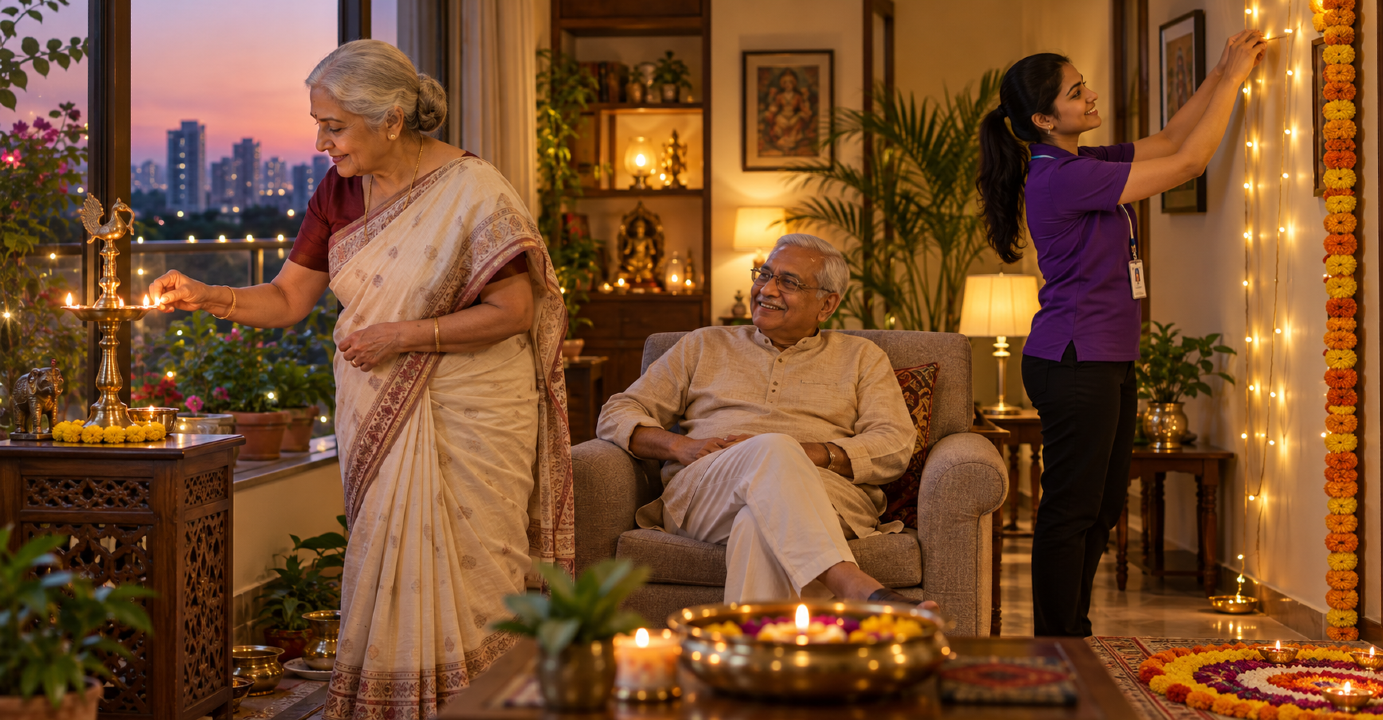
For forty years, Diwali ran on Amma. She knew which shop had the best ghee, how many diyas the balcony needed, which relative must never be seated next to which. Appa did the puja, slowly and properly, and explained each step whether anyone was listening or not. This year the children are home, the house is full, and everyone is being very kind. “Amma, don’t stand so long.” “Appa, we’ve ordered the sweets.” By the second day, they are sitting on the sofa, watching their own festival happen around them.
Nobody meant any harm. We take over because we love them, because we are in a hurry, and because doing it ourselves is faster. But what a parent often hears is something else: you are not needed for this any more. That is a hard thing to feel at any age. At eighty, after a lifetime of being the one who held the family together, it can be harder still.
There is good evidence that this matters for health, not just for feelings. In a well-known study from Rush University in Chicago, researchers followed 951 older adults for up to seven years. People who felt their lives had purpose, who still had plans and things they were working towards, were far less likely to develop Alzheimer’s disease. Those with the strongest sense of purpose were about 2.4 times more likely to stay free of it than those with the weakest. The study shows a link rather than proof of cause, but the link held up even after the researchers accounted for mood, social life and other health conditions.
Being given real responsibility seems to help the brain, too. In a small pilot study in Baltimore, older women who spent six months helping children learn to read showed more activity in the parts of the brain used for planning and focus, and did better on a test of those skills, than a similar group who had not yet started. It was a small group, but the idea is simple and familiar to every Indian family: a grandparent teaching a grandchild is not only good for the child.
There is a dignity side to this as well. A job says we trust you. A parent who is leading the puja, running the kitchen for one dish, or telling the story behind a family custom is not someone being looked after. They are someone the family is learning from. And the brain gets real work along the way: remembering the steps, planning the order, explaining it to a twelve-year-old who keeps asking why.
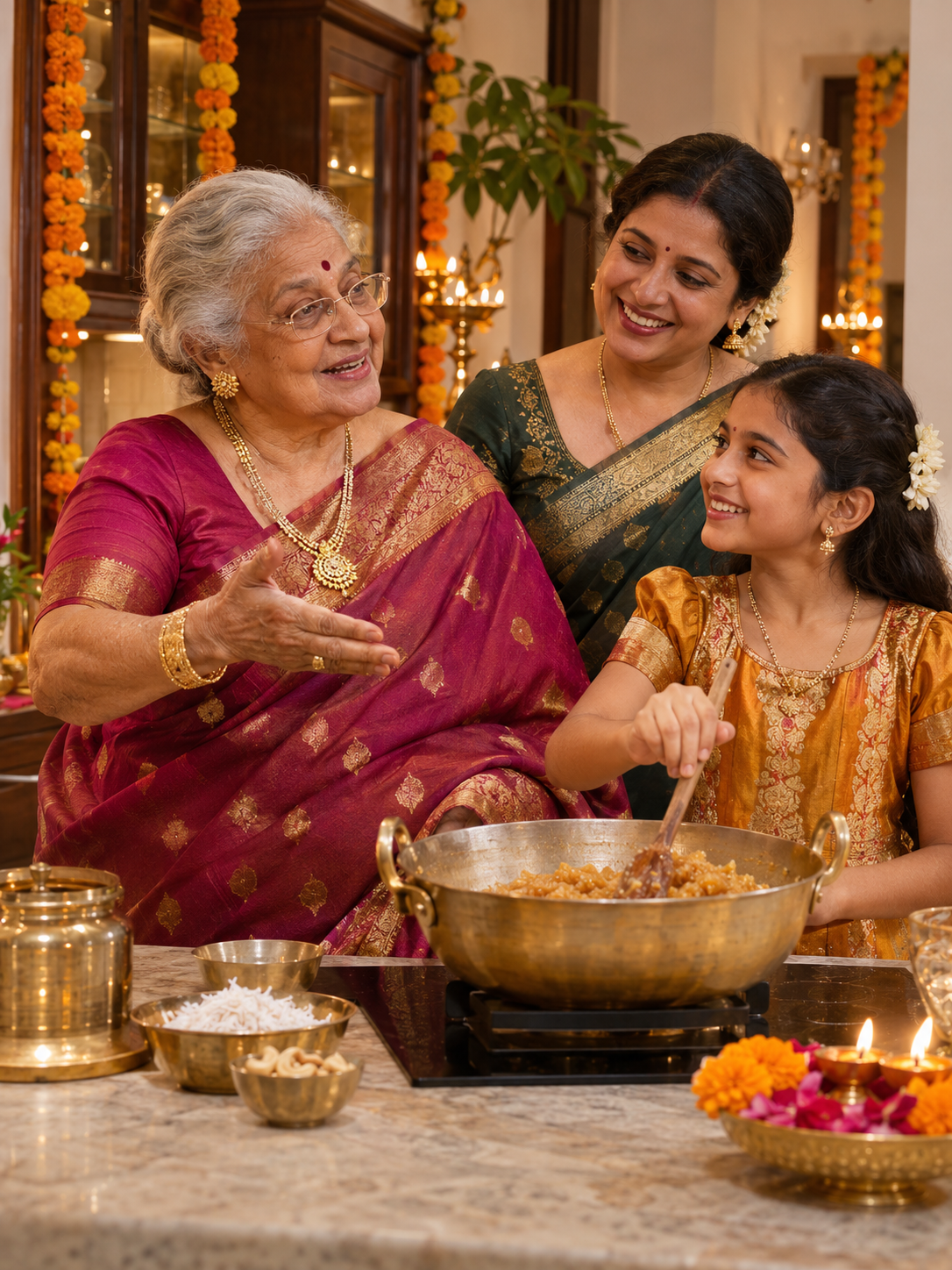
The trick is to make it a real job, not a pretend one. Not “Amma, you can watch,” but “Amma, the payasam is yours this year. Tell us what to do.” Match the job to what they can do today, not what they did ten years ago. If knees are bad, the job can be done sitting down. If hands shake, they can be in charge while someone else does the stirring. You do it with them, not for them, and let them do it their way, even if it is slower. And when it is done, say so, out loud, in front of everyone: “This is Amma’s payasam.”
|
Also in this edition
"You do it with them, not for them. And when it’s done, say so out loud: this is Amma’s payasam."
A job says we trust you. It is one of the simplest ways to tell a parent they still matter.
This weekend: hand over one Diwali job, and let them do it their way.
|
|
|
● The Bangalore Lens
What's happening locally, right now
|
In a Bangalore home with a cook, a driver and an app for everything, a parent can be “retired” from the house without anyone deciding it.
In many Bangalore homes, help arrived bit by bit. A cook so Amma doesn’t have to stand at the stove. A driver so Appa doesn’t have to drive. Groceries on an app. Each change made sense. But together, they can leave a parent with very little left that is truly theirs to do. The festival shows it most clearly: a full house, and the one person who used to run it, sitting at the side.
Diwali is a good time to give something back. Then make sure one job stays with them after the festival: watering the plants, choosing the week’s menu with the cook, teaching a grandchild a shloka on a video call, or running the society’s festival committee.

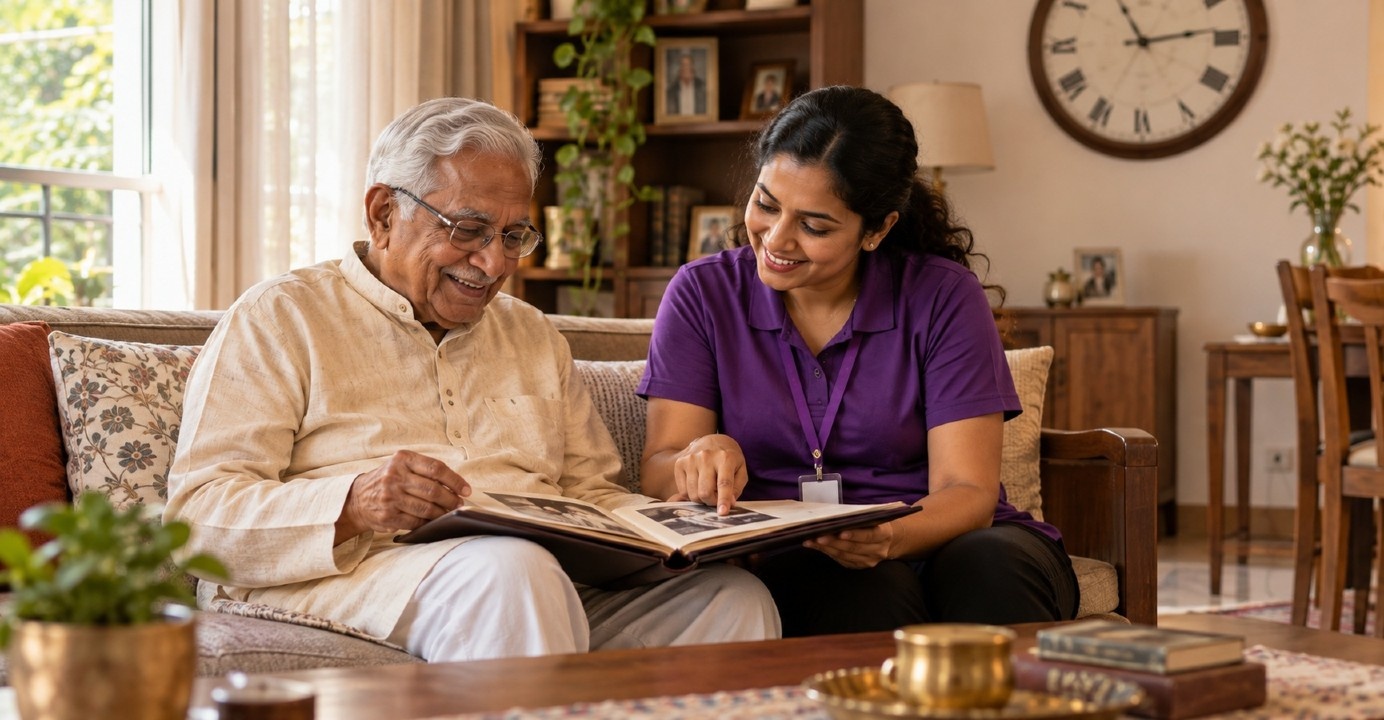
A Genie helps alongside your parent, never instead of them. Go With Them can take them to wherever their role lives: the temple committee meeting, the library, a class they want to join. Help at Home gives a steady pair of hands for the jobs they still want to do themselves, so they stay in charge.
A Genie never touches your parent's money, never asks for a PIN, never transacts, and never signs anything on their behalf. The things you'd do for your parents, if you were here.
For daily tips and follow-along videos in local languages, your parent can join our free Active Age WhatsApp community.
|
1 job
Before you fly back, agree on one real job that stays with your parent every day: theirs to do, their way.
|
|
|
● One Thing To Do
This week
|
|
Action
This Diwali weekend
Hand Over One Diwali Job This Weekend
1. Ask, don’t assign. “Amma, what did Diwali at your home look like when you were young? Which part do you want to run this year?”
2. Pick a real job they can do today. Leading the puja, one signature sweet, the rangoli design, the guest list, or telling the grandchildren the story behind each ritual. If standing is hard, choose a job that can be done sitting.
3. Be the helper, not the boss. Let them give the instructions. Resist the urge to correct or speed things up.
4. Put the grandchildren beside them. Teaching is one of the best workouts for the brain, and the children get something no app can give them.
5. Give credit out loud. In front of the whole family, say whose work it was.
Keep festival safety in mind while they work: a stable seat near the puja, diyas away from saree pallus and dupattas, and no lighting crackers by hand.
|
|
● From The Blog
Further reading on kareverse.com
|
|
|
|
Our parents spent decades making the festival happen for us. They don’t need to be thanked by being moved to the sofa. They need what everyone needs at every age: to be useful, to be trusted, to be part of it. This Diwali, the best gift may not be the one you carried in your suitcase. It may be the moment you say, “Appa, we can’t do this part without you,” and mean it.
The Kin Letter, Edition 25 · Thursday, 5th November 2026
|
|
Know someone whose parents are in Bangalore? Forward this letter, or invite them to subscribe.
Subscribe
Join Active Age Community
Follow on LinkedIn
|
|
Sources: Purpose in life and Alzheimer’s disease: Boyle PA, Buchman AS, Barnes LL, Bennett DA, “Effect of a purpose in life on risk of incident Alzheimer disease and mild cognitive impairment in community-dwelling older persons,” Archives of General Psychiatry, 2010;67(3):304–310 (Rush Memory and Aging Project, 951 older adults followed up to seven years; top-10% vs bottom-10% purpose scores; an association, not proof of cause). Purposeful roles and the brain: Carlson MC, Erickson KI, Kramer AF et al., “Evidence for neurocognitive plasticity in at-risk older adults: the Experience Corps program,” Journals of Gerontology Series A, 2009 (pilot study, 8 volunteers and 9 comparison participants over six months; very small sample). And Genie by Kareverse (kareverse.com/genie). This letter is general information, not medical advice.
You're receiving The Kin Letter because you're part of our community. Unsubscribe
|
|