Kareverse
WhatsApp
All editionsNo. 03 · 4 June 2026

The Kin Letter · No. 03 · 4 June 2026

The Memory Loss Families Normalize Until It's Too Late

No. 03  ·  Thursday, 4th June 2026 For those who care from a distance Kareverse, Bangalore

Newsletter

The Kin.Letter

Elder care intelligence for NRI families with parents in Bangalore

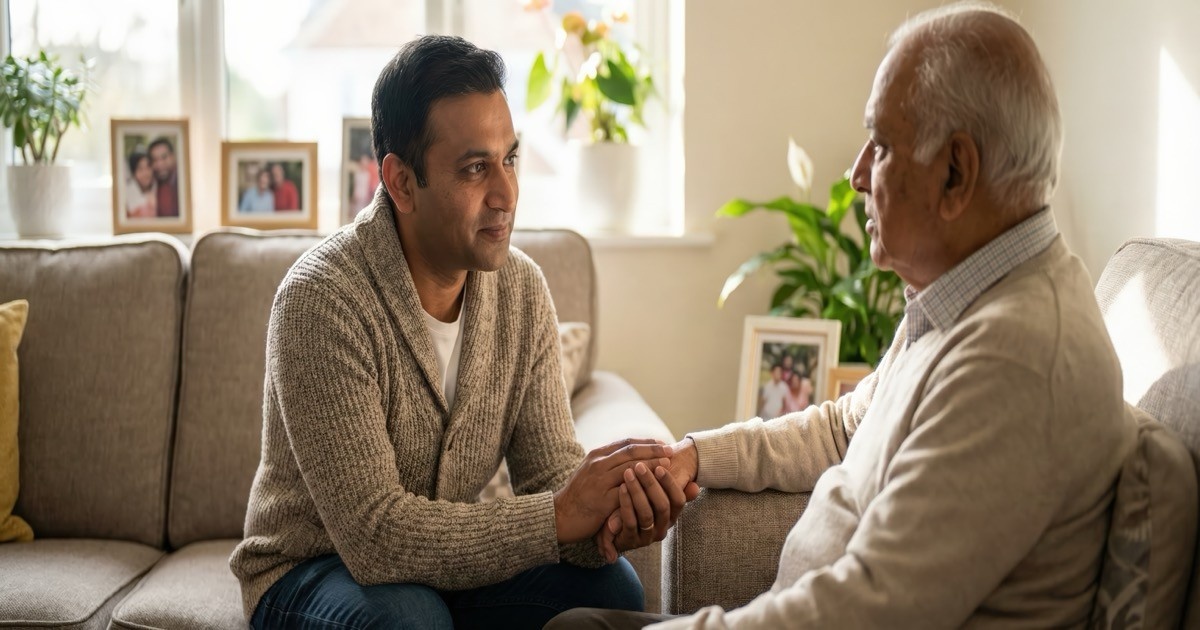
Elderly Indian parent at home

Feature Essay

The Memory Loss Families Normalize Until It's Too Late

The repeated questions. The burned pan. The missed temple visit. These are not part of healthy aging — they are signals. And the window to act closes quietly, while the room pretends not to notice.

41%

of dementia cases in India could potentially be delayed by addressing modifiable risk factors — the same chronic conditions most Bangalore families already manage for their parents.

"The window between 'just getting old' and 'something is wrong' does not announce itself. It closes quietly, while the room pretends not to notice."
— Edition 03

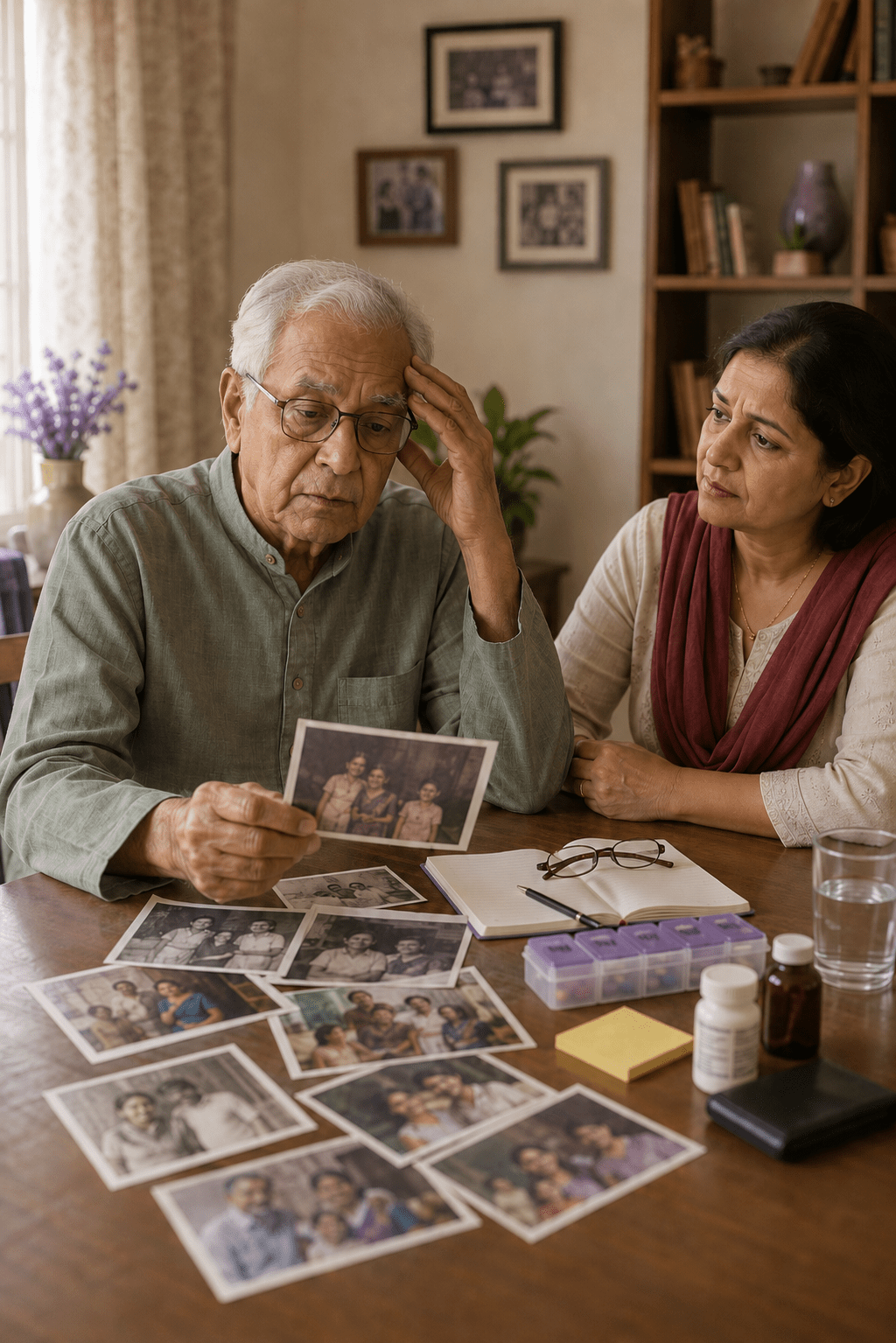
The uncle who got lost coming home from the temple. The mother who asked when your flight was — three times in the same phone call. The father who left the gas stove on twice last week, and laughed it off as "thoda bhool gaya." In Indian households, these moments get absorbed into daily life. By the time a family walks into a memory clinic, the average patient in India has been showing symptoms for two to three years. Not because no one noticed. Because everyone decided not to name it.

India has roughly 8.8 million people aged 60 and above living with dementia — a number that will nearly double to 16.9 million by 2036. But the raw numbers are not the story. The story is what families do with the early signs. Researchers found a recurring pattern: relatives only brought elders to memory clinics when the situation became impossible to hide. These were never sudden events. They were the final, undeniable breaches of a safety wall that had been eroding for years.

Before that point, the language of denial is consistent. "Umar ka asar hai." "She's always been forgetful." The signs get quietly managed — a daughter-in-law starts keeping the house keys, a son begins handling the bank accounts, a spouse answers questions on their behalf. The work of compensation is often invisible, usually done by women, and it masks the very decline it is meant to accommodate.

Then there is the stigma. Caregivers admitted they kept memory problems hidden even from relatives. "We prefer to keep it confidential. If we tell others, they might laugh at us." In this frame, memory loss is not a medical problem to be treated. It is a family failing to be concealed.

The question for the adult child on a video call from London or Sydney is not "does my parent have dementia?" It is: "what am I seeing that I have trained myself not to see?" These are signals — most likely to be drowned out by love, duty, and the desperate hope that if no one names it, it might not be real.

Also in this edition

Elderly person at home

"Nobody tells them these conditions are also eating away at their parent's brain."

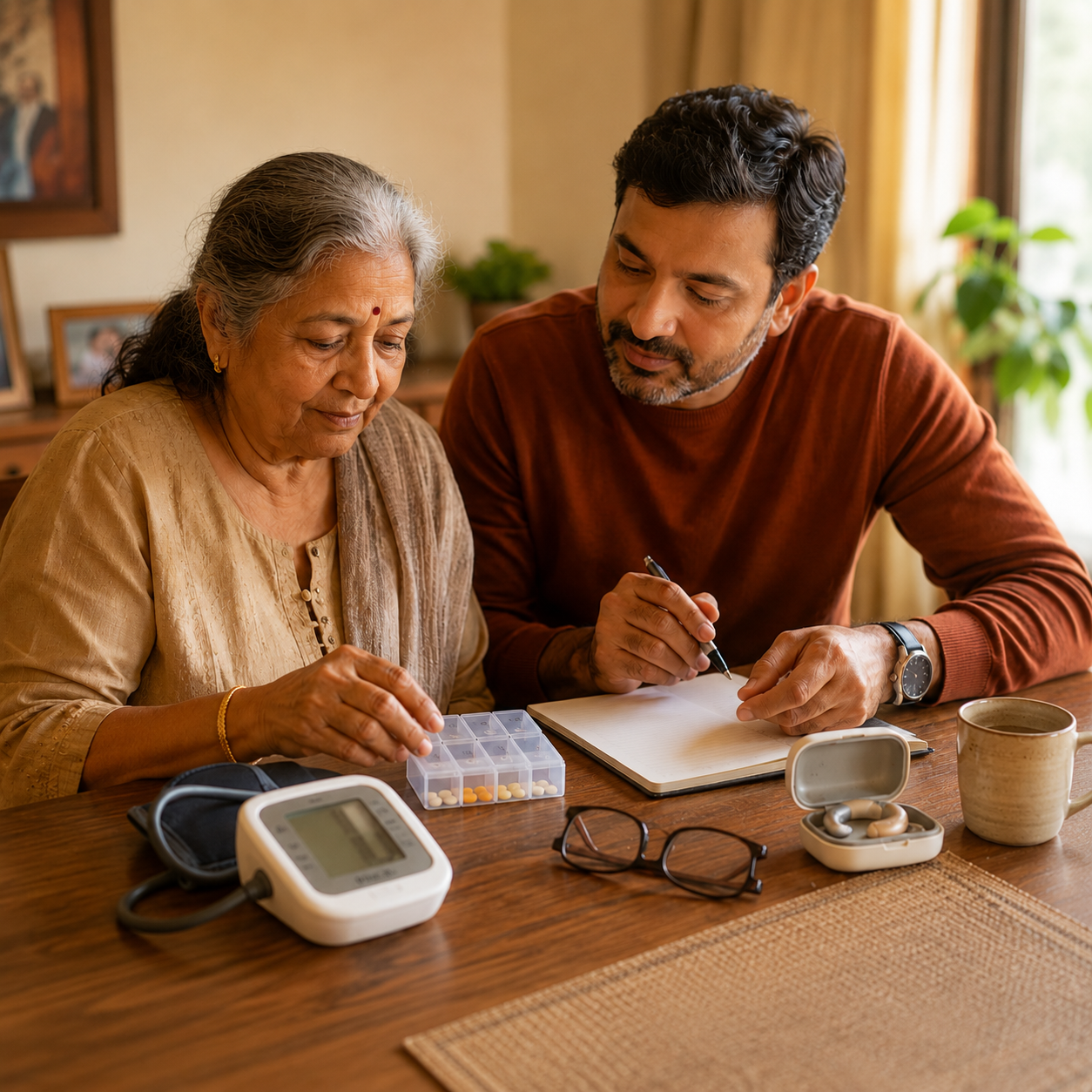
Uncontrolled diabetes, hypertension, mid-life hearing loss, depression — these are the same chronic conditions Bangalore families already manage. They are also the most modifiable risk factors for dementia.

The financial curve rewards the families who act early. Late-stage care in Bangalore can cost ₹65,000–1,00,000 a month. Early intervention costs a fraction of that.

●  The Bangalore Lens    What's happening locally, right now

If there is anywhere in India to catch this early, it is Bangalore

NIMHANS runs one of the country's oldest memory clinics. Dr. Suvarna Alladi's research found that speaking multiple languages — Kannada and Tamil at home, Hindi in the market, English with grandchildren — builds cognitive reserve that delays dementia symptom onset by 4–6 years. In September 2025, NIMHANS launched community outreach that takes psychiatric services directly to elderly citizens' homes.

Nightingales Centre for Ageing & Alzheimer's in Kasturinagar runs India's largest dedicated dementia facility with 96 beds. ARDSI Bangalore (R.T. Nagar) runs memory screenings, caregiver training, and support groups. Early-stage home care runs ₹15,000–38,000/month; late-stage can reach ₹1,00,000 or more.

4–6 yrs

delay in dementia symptom onset for bilingual speakers — from NIMHANS research on Bangalore's multilingual elderly population. The conversations your parent grew up having may be protecting their brain.

●  One Thing To Do    This week

Action

Do this now

Book a Baseline Cognitive Screen This Month

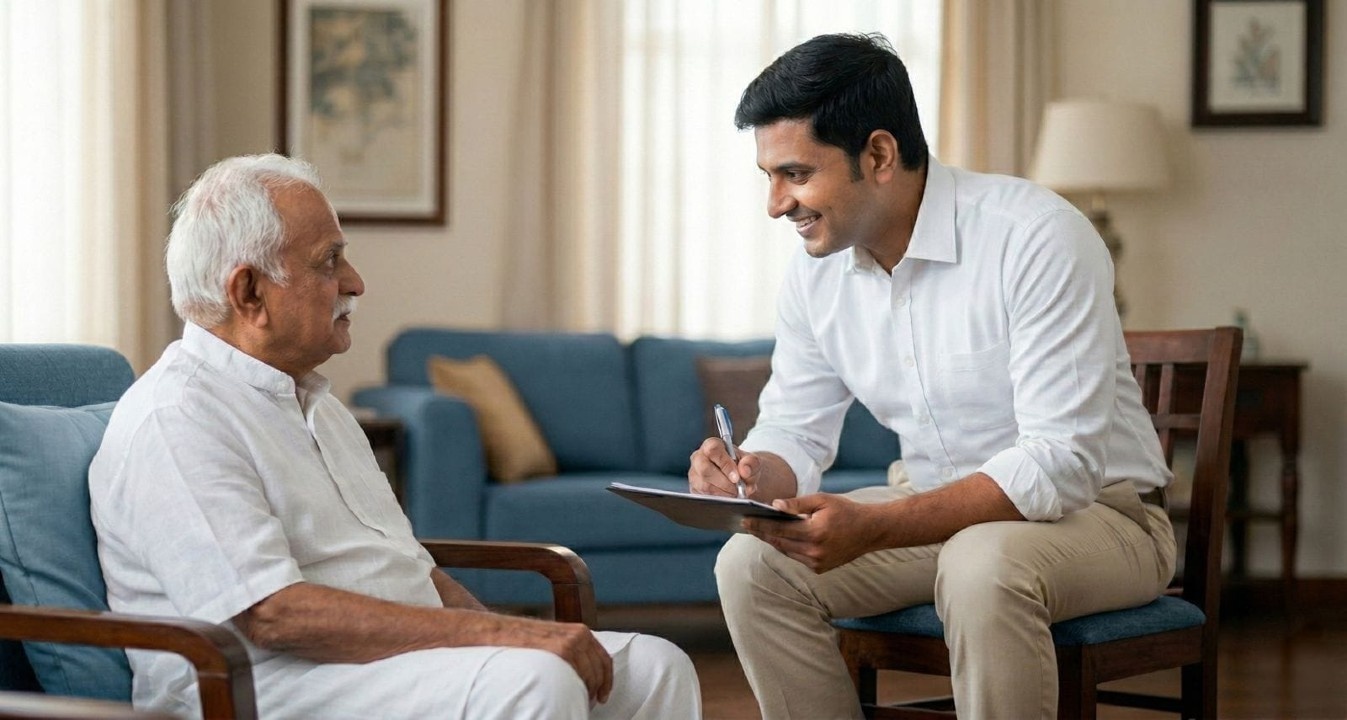
If your parent is 65 or older, book a baseline cognitive screen — not because you suspect dementia, but because you need a reference point before you need one. In Bangalore, NIMHANS, Manipal Hospital Old Airport Road, and Nightingales Memory Clinic all administer the Montreal Cognitive Assessment (MoCA) or ACE-III — available in Indian languages, including versions for illiterate patients. The test takes 20–30 minutes. If the score is normal, you have a dated baseline to compare against in two years. If it flags something, you have caught it in the window where risk factors can still be aggressively managed and where your parent still has the capacity to participate in their own care.

●  From The Blog    Further reading on kareverse.com
What is a Care Manager

What Does a Care Manager for Elderly Do?

Signs Elderly Parents Need More Help

Signs Your Elderly Parents Need Help: A Practical Guide for Bangalore Families

How to Talk to Aging Parents About Getting Help

How to Talk to Aging Parents About Getting Help: Scripts That Actually Work

The hardest part of being far away is not the diagnosis — it is the years of video calls where you could not tell if your father was repeating himself or if you simply were not listening closely enough. "Wait and see" feels like the gentle option. But from 10,000 miles away, the most loving thing you can do is insist on a memory screen. Because the window does not announce itself when it closes.

— The Kin Letter, Edition 03  ·  Thursday, 4th June 2026

Sources: Dementia India Alliance, NIMHANS, ARDSI, Nightingales Centre for Ageing & Alzheimer's, Lancet Commission on Dementia 2024, KITES Senior Care, Manipal Hospitals.

You're receiving The Kin Letter because you're part of our community. Unsubscribe

Get The Kin.Letter
in your inbox

Elder care intelligence for families with parents in Bangalore.

  • A short essay every Thursday
  • One practical thing to do
  • 5-minute read, no spam

You can unsubscribe at any time — every edition has a one-click unsubscribe link.

Get in touch