| No. 18 · Thursday, 17th September 2026 |
For those who care from a distance |
Kareverse, Bangalore |
|
|
Newsletter
Elder care intelligence for NRI families with parents in Bangalore
|
|
Feature Essay
The Ten Days You're Actually Home
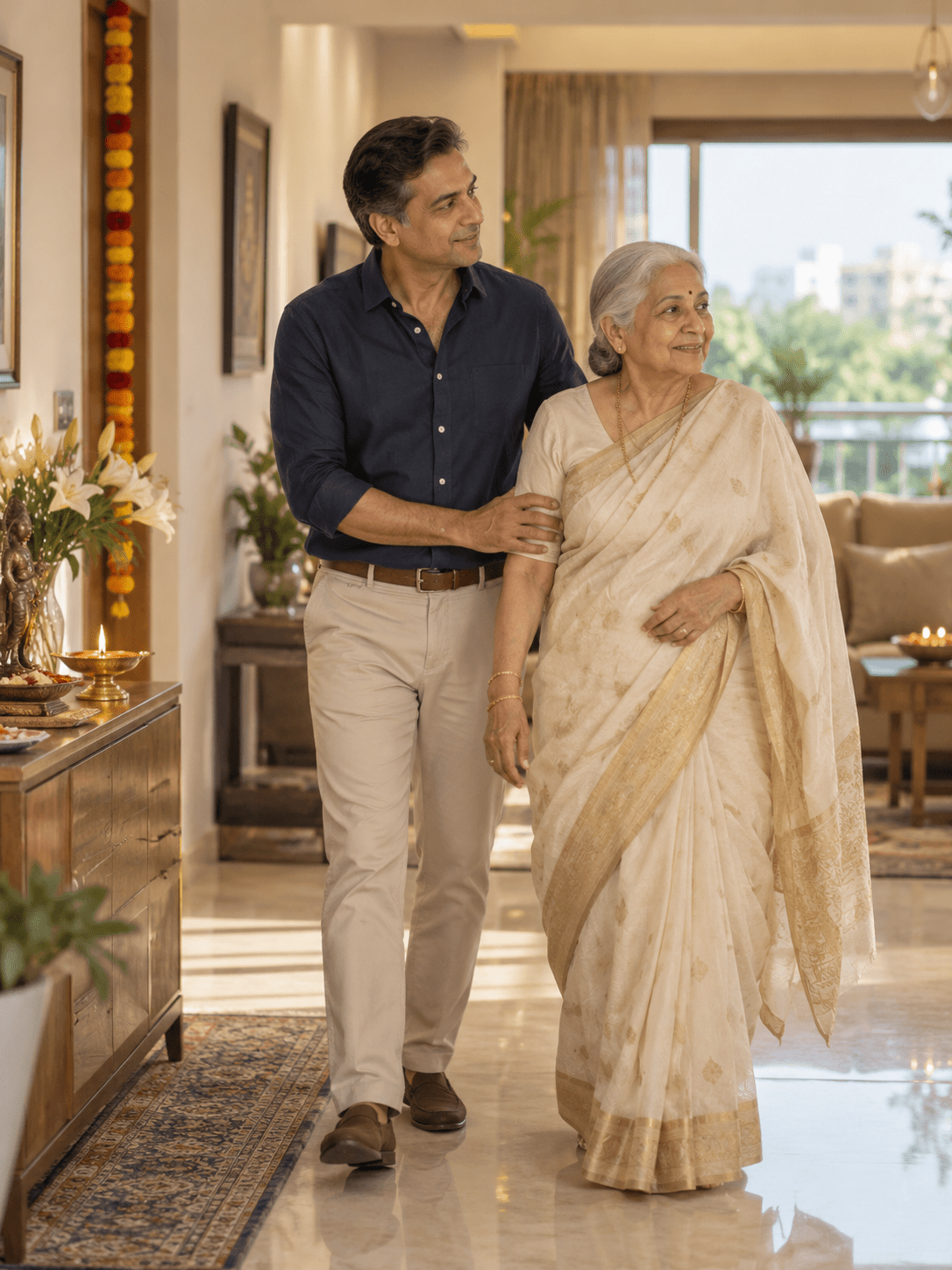
Somewhere in the next few weeks, most of us will book a flight home for the festival season. It is, quietly, the single most useful window in your whole year as a distant child: the only time you can walk through your parents' actual life instead of watching it through a phone. Most of us waste it. Here is how not to.
1 in 4
adults over 65 fall each year, and around 60% of those falls happen inside the home — very often from hazards a visitor could spot and fix in a single afternoon.
|
|
"The video call shows you a curated frame. The house shows you the truth, but only if you walk through it looking."
Edition 18
|
|
Somewhere in the next few weeks, you will probably book a flight home. Dussehra, then Diwali; the calendar pulls us back the way it always does. And for ten days, or seven, or whatever you can carve out of your working life, you will be inside your parents' home, in their actual life, in a way that no number of Sunday video calls can replicate. It is the single most valuable window you get all year. And most of us spend all of it on the wrong things.
The trip fills up before you land. There are relatives to see and relatives who will be offended if you don't. There is food, endless food, and the particular exhaustion of jet lag colliding with a house full of people. There is the sheer relief of being home, which makes you want to sink into it rather than inspect it. And so the days pass in a warm blur, and on the flight back you realise you never actually looked. You were home, but you were a guest in it, not the one person in the family positioned to notice what has quietly changed.
Because things do change, and they change in ways a phone camera is engineered to hide. Your mother holds the screen at the flattering angle, in the good light, sitting down. You never see her get up from that low sofa, or how long it now takes, or the small wince she has stopped mentioning. You don't see the grab bar you paid for last year still in its box behind the door. You don't see the strip of medicines that expired in March, or the three that look identical and get muddled, or the fact that the bathroom floor turns to glass when it's wet. You don't feel, until you hug them at the airport, that your father is thinner in your arms than he looked on the screen. The video call shows you a curated frame. The house shows you the truth, but only if you walk through it looking.
This is the reframe worth carrying onto the plane: you are not only going home to celebrate. You are going home to do the one in-person audit of your parents' life that you get all year, and it is worth protecting a few hours of the trip for it, the way you would protect a doctor's appointment. Not as a grim inspection that sours the festival, but as a quiet, loving walk-through, done once, so that the eleven months you are away rest on something you have actually seen with your own eyes rather than something you assumed from ten thousand miles.
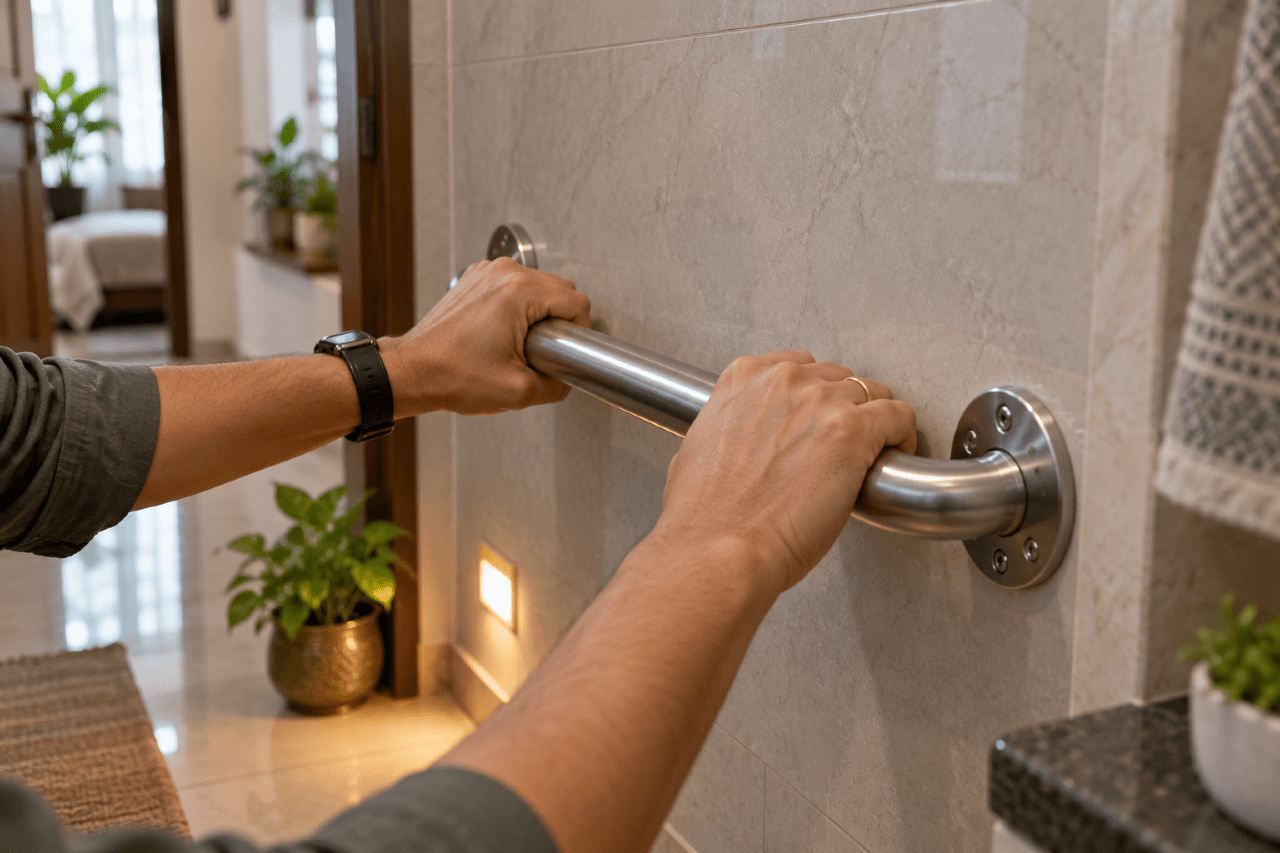
And the highest-value thing to look at is the home itself, because it is where the most preventable disasters happen. More than one in four people over sixty-five fall every year, and the majority of those falls happen indoors, in the bathroom, on the stairs, in a dim hallway, on a rug that slides. These are not acts of God. They are, overwhelmingly, hazards that a clear-eyed visitor can find and fix in an afternoon: a bath mat that grips, a grab bar actually screwed into the wall this time, a night light on the route to the toilet, a loose rug taken up, a bulb replaced in the stairwell your parent has quietly been navigating in the dark. You will not get another chance this good to do it in person, standing in the room, testing it yourself.
So go home and enjoy the festival fully; that matters too, and your parents want the son or daughter, not the auditor. But somewhere in those ten days, take one unhurried morning and walk the whole house with them, slowly, as if you were seeing it for the first time. It is the most useful thing you will do all year, and you can only do it now.
|
Also in this edition
"You were home, but you were a guest in it, not the one person positioned to notice what has quietly changed."
A phone camera is engineered to flatter: the good angle, the good light, always sitting down. It cannot show you how long it now takes your mother to stand, or the bathroom floor that turns to glass when wet.
Protect one unhurried morning of the trip and walk the whole house with them. It is the most loving audit there is, and your phone will never do it for you.
|
|
|
● The Bangalore Lens
What's happening locally, right now
|
The audit is easy while you're standing in the house. The hard part is everything you noticed staying fixed after you fly back.
Here is the trap of the festival trip. You go home, you finally see clearly, you spot the ten things that need doing, and in a burst of energy you fix half of them yourself. Then you fly back, and the other half — the ones that needed a second visit, a follow-up, a person to actually show up and finish — quietly slide back into the eleven-month fog. The grab bar gets ordered but never installed. The appointment you meant to set up waits for a lift that never comes. You saw everything and could only fix what was reachable in ten days. This is exactly the gap our Active Age community and Genie are built to close: turning what you noticed on the trip into things that actually happen after you've gone.

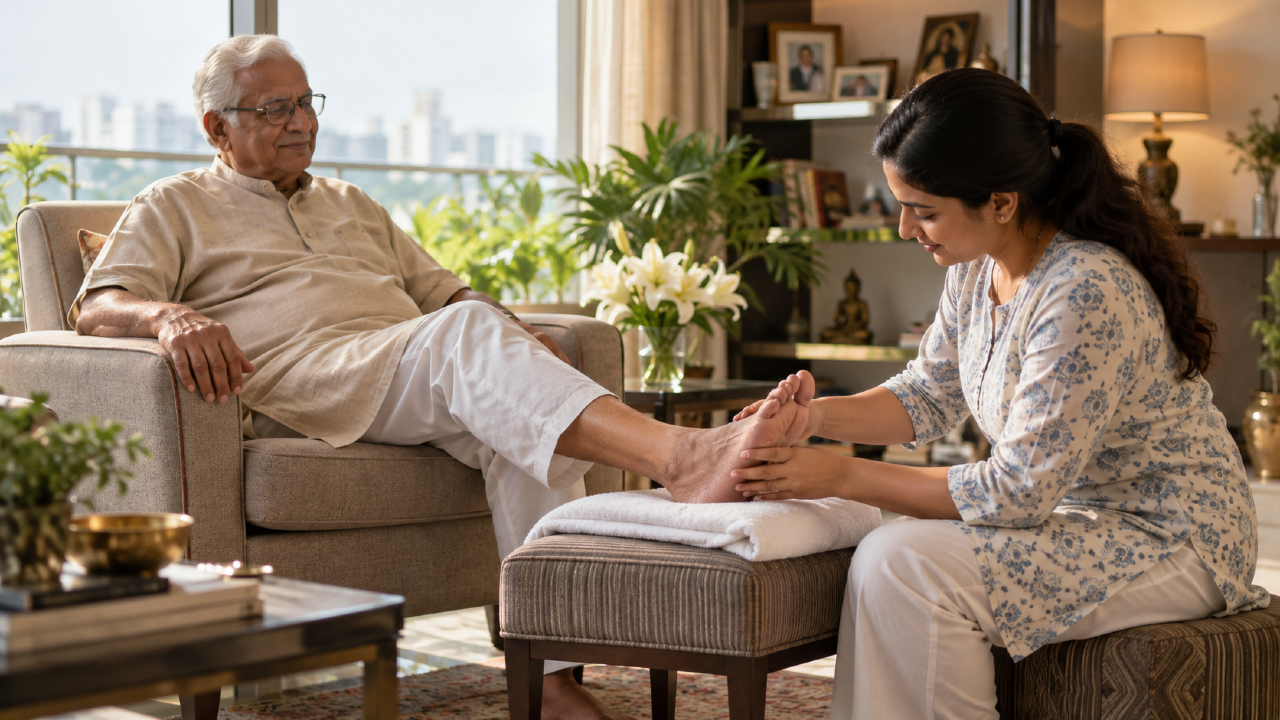
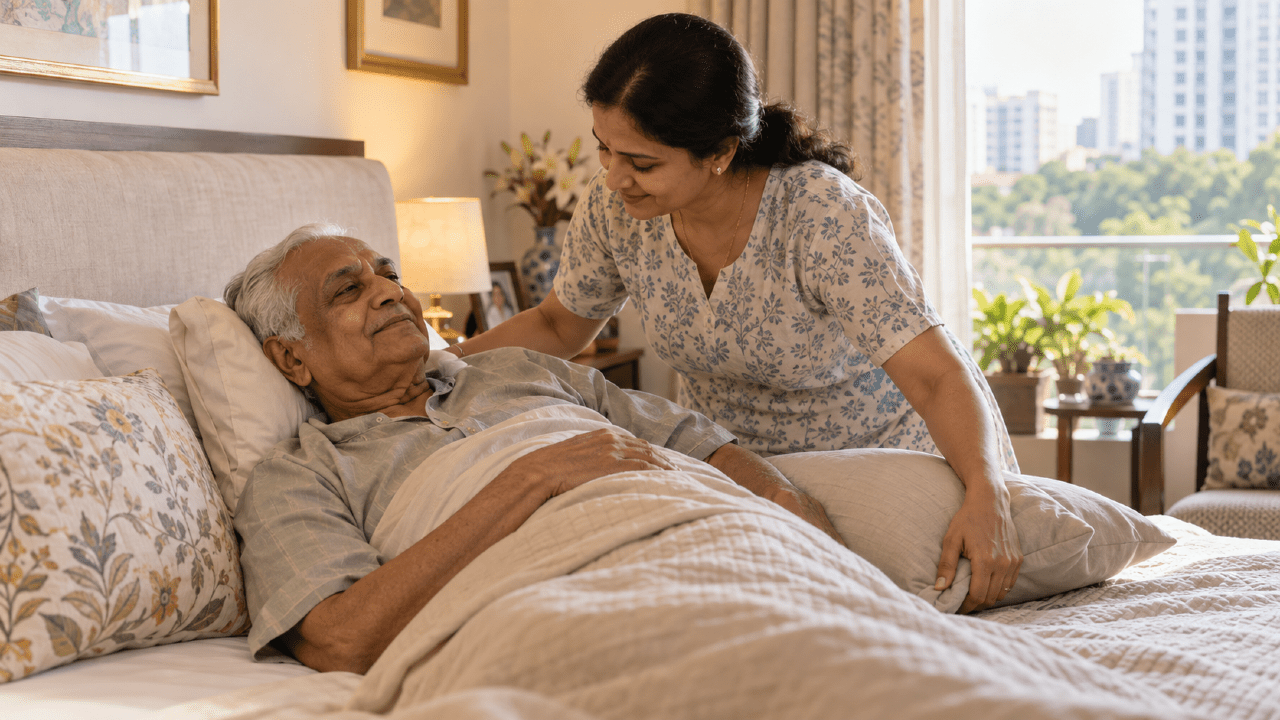
Before you fly back, hand Genie the list. Genie's Be There at Home can carry on the small, steady things you started — the daily walk, the tidied bathroom, a real pair of eyes on how your parent is actually moving through the house week to week. Genie's Go With Them takes your parent to the appointments you lined up but couldn't stay for — the doctor, the eye test, the physiotherapy assessment — and sends you back a clear note of what happened. The audit becomes a handover instead of a to-do list that dies at the airport.
A Genie never touches your parent's money, never asks for a PIN, never transacts. It is simply the attentive presence you would be yourself, if you were here. The things you'd do for your parents, if you were here.
You get ten days. Someone should have the other three hundred and fifty-five.
|
60%
the share of older-adult falls that happen inside the home — in the bathroom, on the stairs, in a dark hallway — which is exactly why the single most useful hour of your whole trip is a slow, honest walk through the house.
|
|
|
● One Thing To Do
This week
|
|
Action
Do this on the trip
Take the Walk-Through Before You Fly Back
Don't let the whole trip pass in a warm blur. Protect one unhurried morning, and walk your parents' home with them as if you were seeing it new. Take your phone, take notes, and turn what you notice into a handover, not a memory.
1. Walk the fall routes. Follow the paths your parent actually uses: bed to bathroom in the dark, the stairs, the kitchen. Test the bathroom floor when it's wet, check every rug, look for a night light on the route to the toilet, and confirm any grab bar is actually screwed into the wall, not still in its box.
2. Open the medicine shelf. Read the strips. Bin anything expired, separate the ones that look alike, and photograph the current list so you both have the same record from your own kitchen table abroad.
3. Hug them, and notice. You will feel things a screen hides: weight lost, a stoop, a tremor, breathlessness on the stairs. If something has changed, use the trip to get them to a doctor while you can still go with them.
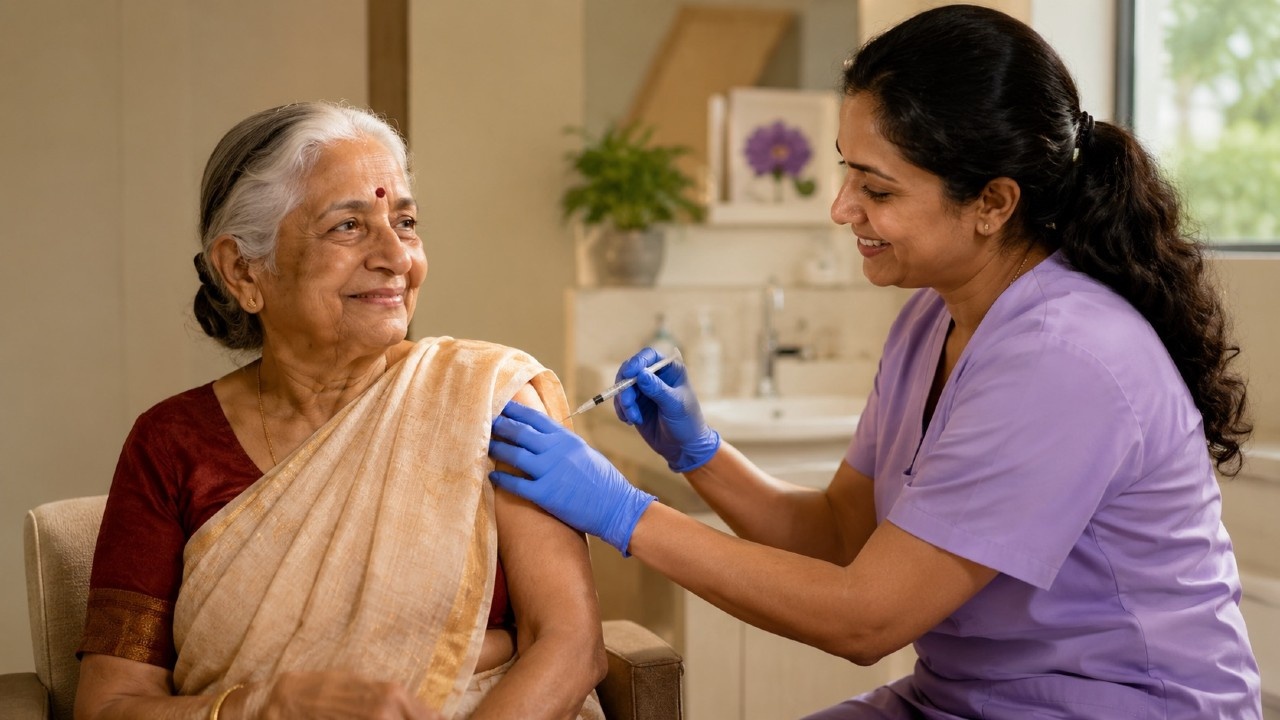
4. Line up the appointments now. Book the eye test, the dental check, the doctor's review while you are there to make it happen, even if the visit itself falls after you leave, and arrange for someone to take them.
5. Hand over the list before the airport. Everything you couldn't finish in ten days, write it down and give it to a person who will actually carry it on: a sibling, a trusted neighbour, a Care Manager, or Genie. A fix you noticed but nobody owns is a fix that quietly never happens.
You get this window once a year. Spend a few hours of it looking, and the other eleven months rest on something real.
|
|
● From The Blog
Further reading on kareverse.com
|
|
|
|
There is a particular kind of blindness that distance breeds, and it is not carelessness; it is the opposite. We call, we worry, we send money and medicines and love across an ocean, and we build, out of a hundred cheerful video calls, a picture of our parents that is mostly true and quietly out of date. The festival trip is the one time the real picture is right there in front of us — in the low sofa and the dim stairwell and the too-light hug — if we are willing to put down the plate for a morning and look. Go home and celebrate; that is the whole point of going. But somewhere in those ten days, walk the house. It is the most loving audit there is, and it is the one thing your phone will never be able to do for you.
The Kin Letter, Edition 18 · Thursday, 17th September 2026
|
|
Know someone whose parents are in Bangalore? Forward this letter, or invite them to subscribe.
Subscribe
Join Active Age Community
Follow on LinkedIn
|
|
Sources: CDC, Older Adult Falls Data (2020) — more than one in four adults aged 65+ (27.6%) report falling each year; falls are the leading cause of injury in this age group. Location of falls: approximately 60% of older-adult falls occur inside the home (bathroom, stairways and hallways among the most common sites), with a further share in the immediate community (National Safety Council / CDC data). WHO, Falls fact sheet: adults over 60 suffer the greatest number of fatal falls worldwide, and the majority of falls are preventable through home-hazard reduction. Home-hazard interventions (grab bars, non-slip mats, adequate lighting, removal of loose rugs) are consistently associated with reduced fall risk (CDC STEADI / NCOA falls-prevention guidance). And Genie by Kareverse (kareverse.com/genie). This letter is general information, not medical advice; any change you notice in a parent's health should be discussed with their own doctor.
You're receiving The Kin Letter because you're part of our community. Unsubscribe
|
|