| No. 17 · Thursday, 10th September 2026 |
For those who care from a distance |
Kareverse, Bangalore |
|
|
Newsletter
Elder care intelligence for NRI families with parents in Bangalore
|
|
Feature Essay
The Shot Almost No One Books
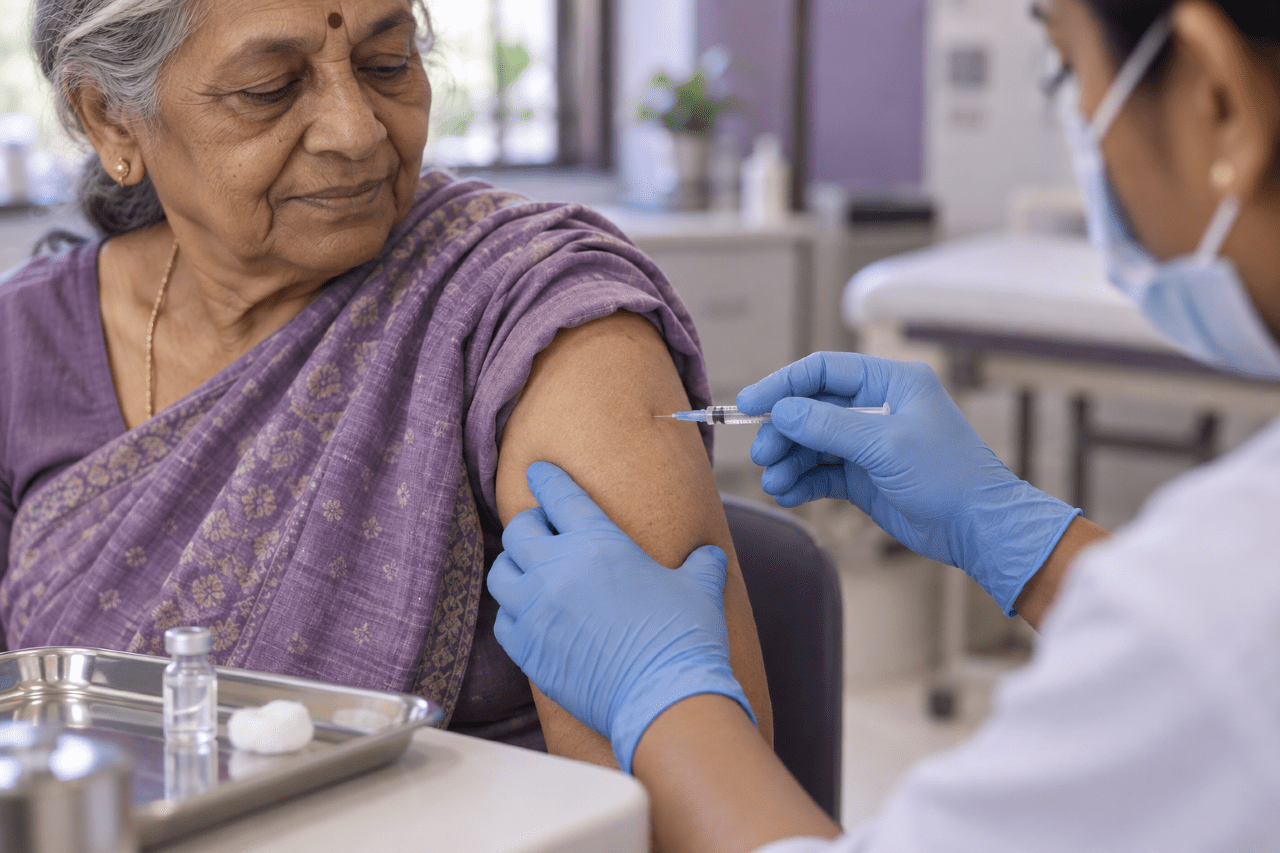
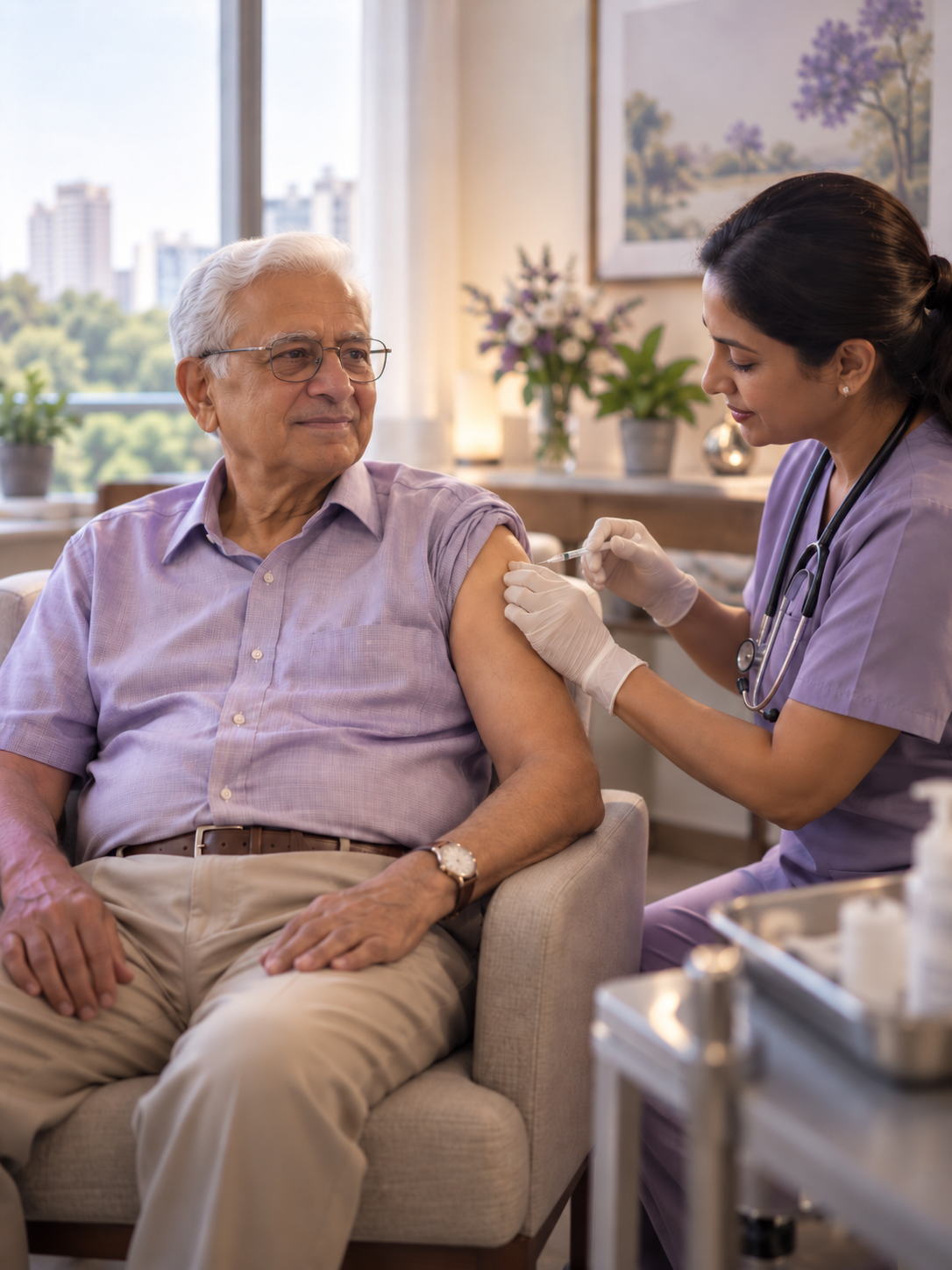
You would never let a newborn in your family miss a vaccine. And yet the same diligence quietly evaporates for the oldest person in the house, whose defences are every bit as fragile. A flu shot is one of the simplest, highest-value preventive steps families routinely overlook, and almost no one books it.
1.6%
of Indians aged 60+ reported ever having received a flu vaccine, in nationally representative data (LASI, 2017–18); for the pneumococcal vaccine it was 0.7%. In the UK, seasonal uptake among the over-65s is around three-quarters.
|
|
"We vaccinate the very young with devotion and leave the very old almost entirely unprotected, and we do it without ever deciding to."
Edition 17
|
|
There is a strange asymmetry in how Indian families handle vaccines. When a baby is born, the immunisation card becomes one of the most important pieces of paper in the house. Dates are circled, reminders set, appointments never missed; a grandmother will phone from another city to check the six-week shots are done. And then, somewhere along the way, that same fierce diligence simply stops applying to the oldest person in the family, whose defences are, if anything, more fragile than the infant's. We vaccinate the very young with devotion and leave the very old almost entirely unprotected, and we do it without ever deciding to.
The numbers are stark. In nationally representative data, just 1.6% of Indians aged 60 and over reported ever having received an influenza vaccine. For pneumococcal vaccination, it was 0.7%. In the same survey, uptake of each of the adult vaccines studied was below 3%. Hold that against the countries where it is simply routine, with around three-quarters of everyone over sixty-five vaccinated each season, and the gap is striking; it is not a medical one, but a matter of habit and awareness. The vaccine is widely available, generally well tolerated, and takes only a few minutes to administer. There is just a blank space in the family calendar where the appointment should be.
And the flu is not the trivial thing its name suggests when it lands on an eighty-year-old. For a healthy adult it is a miserable week in bed. For an older parent with a heart condition, diabetes, or weaker lungs, it is a genuine danger: it can slide into pneumonia, worsen the chronic illnesses that were until then under control, and increase the risk of cardiovascular events such as heart attacks and strokes, and it puts frail people in hospital beds. And a hospital bed, as we wrote only last week, is where an older body loses its strength fastest, so that even a flu they survive can leave them weaker for months afterward. One preventable infection can set off a cascade, from a fever to a ward to a walker, that families can then spend the following year trying to undo.
The timing, right now, is worth understanding. Influenza is circulating in Karnataka as we write. The state typically sees two influenza peaks, one from January to March and another from July to September, and it had already recorded over 4,200 laboratory-confirmed cases by late August this year, with much of that burden in Bengaluru. Laid over that is the festival season: Dussehra and Diwali are weeks away, and with them come crowded markets, packed pujas, long-distance travel, and the grandchildren who arrive full of affection and, very often, whatever is going around their school. It is the most joyful and the most infectious time of the year. It takes about two weeks after vaccination for protective antibodies to develop, so if your parent has not yet had this season's flu vaccine, this is a good time to ask their doctor whether they should get it, rather than leaving it until everyone around them is already coughing.
The flu shot is also the rare intervention in elder care that asks almost nothing of anyone. It is not a lifestyle your parent has to change, a diet they have to keep, an exercise they have to remember. It is one appointment, a few minutes, once a year. And it opens a door to the others that matter just as much, because the same clinic visit is the moment to ask the doctor about the pneumococcal vaccine that protects against pneumococcal disease, including pneumococcal pneumonia and serious invasive infections, about the shingles vaccine that spares older adults one of the more agonising illnesses of later life, and about whether their tetanus booster is still in date.
So this is not one of the hard letters. There is no delicate conversation to navigate, no habit to build over months, no signal to learn to read from a distance. There is only a small, unglamorous errand that we have all somehow been skipping, and a season, right now, when it is well worth stopping to sort it out.
|
Also in this edition
"One appointment. A few minutes. Once a year. It is the smallest possible act of care, and quietly one of the largest."
It takes about two weeks after vaccination for protective antibodies to develop, and influenza is already circulating in Karnataka. If your parent hasn't had this season's shot, it's a good time to ask their doctor.
Don't leave it as a suggestion on a call. "You should get your flu shot" quietly never happens. Fix an actual date, and arrange for someone to take them.
|
|
|
● The Bangalore Lens
What's happening locally, right now
|
The appointment is simple. Getting your parent to actually keep it, from another continent, is the part that needs a person.
On paper this is the easiest fix we have ever written about: book a slot, get the shot, done. In practice, from ten thousand miles away, "just go and get the flu vaccine" is the kind of instruction that sits on a to-do list for three years. Your parent doesn't want to trouble anyone for a lift; the clinic feels like a whole expedition; it is never quite urgent enough to happen today. This is exactly the sort of small, important, endlessly-postponed errand our Active Age community nudges people to finish, and it is precisely what Genie is built to carry across the line.

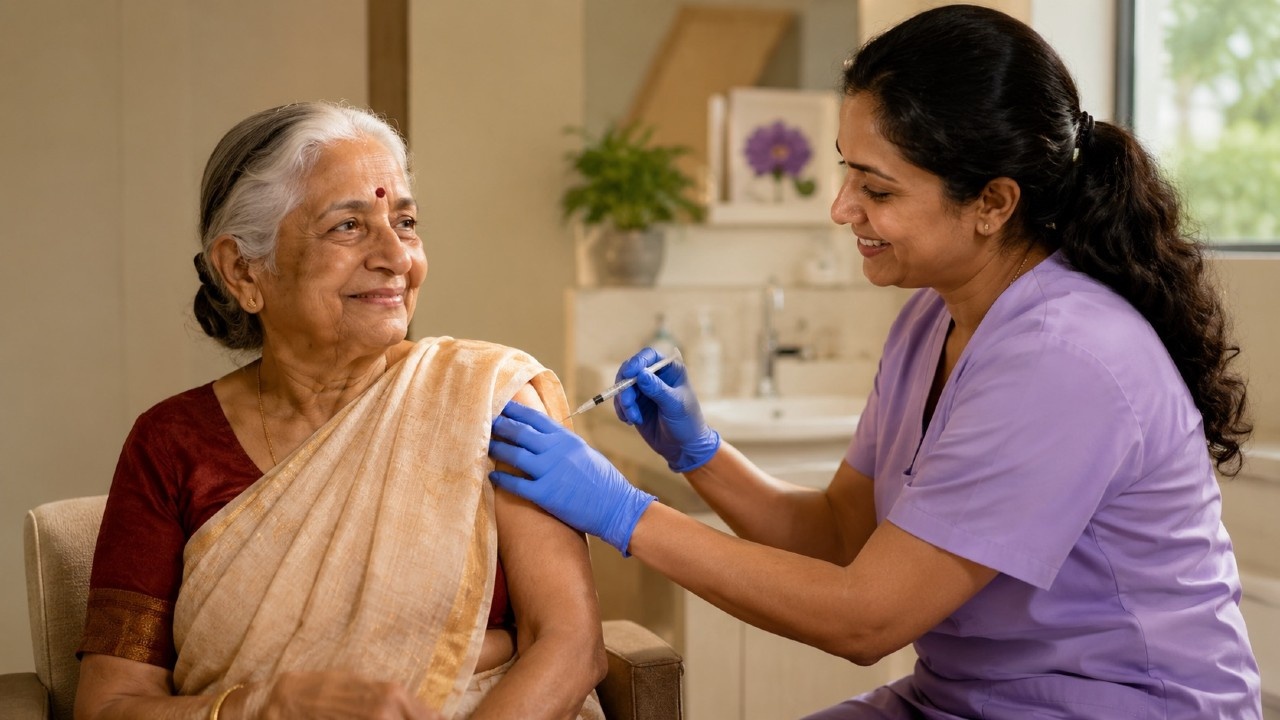
Genie's Go With Them takes your parent to their doctor or a trusted clinic for the flu shot, waits with them, and while they are in the chair, helps them ask the three questions that matter: is the pneumococcal vaccine due, would the shingles vaccine help, is the tetanus booster still in date. You get back a clear note of what was given and what the doctor advised, so a vague good intention becomes a dated, recorded fact.
A Genie never touches your parent's money, never asks for a PIN, never transacts. It is simply the attentive presence you would be yourself, if you were here. The things you'd do for your parents, if you were here.
You cannot drive your parent to the clinic from another country. But you can make sure someone does, this month, before the festival crowds arrive.
|
4
the vaccines worth asking your parent's doctor about at a single visit: influenza (every year), pneumococcal (against pneumococcal disease), shingles (the recombinant vaccine, from age 50), and a tetanus-diphtheria booster (roughly every ten years). One appointment can review all four and get the vaccines that are due started.
|
|
|
● One Thing To Do
This week
|
|
Action
Do this now
Book the Flu Shot. Don't Leave It as a Suggestion.
Don't let this sit on a to-do list, because influenza is already circulating in Karnataka and the festival crowds are only weeks away. One of the highest-value errands you can run for your parent right now is a flu vaccine.
1. Book it, don't suggest it. Do not leave "you should get your flu shot" hanging on a phone call, where it will quietly never happen. Fix an actual date this week, at their regular doctor or a nearby clinic, and arrange for someone to take them.
2. Make it the whole set. Ask the doctor, at the same visit, about the pneumococcal vaccine, the shingles vaccine (the recombinant vaccine, for parents 50 and over), and whether their tetanus booster is still in date. Most of these are not annual, so it is a small task with years of protection.
3. Mind the timing. It takes about two weeks after vaccination for protective antibodies to develop, and influenza is already circulating in Karnataka. If your parent hasn't had this season's flu vaccine, ask their doctor now whether they should get it, rather than waiting for the cold weather when everyone around them is coughing.
4. Get it on the record. Have whoever takes them note down exactly what was given and the date, and send you a photo. Next year, you will know precisely what is due, and you will have turned a vague worry into a simple ritual.
5. Do it for both parents. If both are living, book them together on the same visit. It halves the logistics and doubles the protection, and neither has to make the trip alone.
A flu shot is one of the simplest, highest-value steps in elder care: quick, once a year, and it can prevent the kind of illness that unravels a whole year of a parent's health.
|
|
● From The Blog
Further reading on kareverse.com
|
|
|
|
We are, as families, capable of extraordinary diligence when we decide something matters. We keep a baby's immunisation card like a sacred text. We can move mountains for a child's health without a second thought. Somewhere in the long middle of our own lives, that same instinct quietly stops reaching all the way to the top of the family, to the parents who protected us first and now sit, unguarded, through every flu season we forget to think about. There is nothing complicated to fix here, and that is almost the hardest part, because a problem with so little difficulty is one we assume must already be handled, and so no one handles it. This season, be the one who notices the blank space on the calendar and fills it. One appointment. A few minutes. Once a year. It is the smallest possible act of care, and quietly one of the largest.
The Kin Letter, Edition 17 · Thursday, 10th September 2026
|
|
Know someone whose parents are in Bangalore? Forward this letter, or invite them to subscribe.
Subscribe
Join Active Age Community
Follow on LinkedIn
|
|
Sources: LASI (Longitudinal Ageing Study in India), Wave 1, 2017–18 — nationally representative data on Indians aged 60+: ~1.59% reported ever having received an influenza vaccine, ~0.74% ever a pneumococcal vaccine, with uptake of each adult vaccine studied below 3% (these are "ever vaccinated" figures). UK comparison: 2025–26 seasonal influenza uptake among those 65+ was ~74.5% in England (roughly 71–75% across UK nations); this is seasonal uptake and not perfectly like-for-like with India's "ever vaccinated" figure. Karnataka influenza seasonality (Karnataka Health Dept): typical peaks Jan–Mar and Jul–Sep, with over 4,200 laboratory-confirmed cases in the state by ~22 August 2026, much of it in Bengaluru. Vaccination for Older Adults in India: Position Statement, Journal of the Indian Academy of Geriatrics (annual influenza; age/risk-based pneumococcal; recombinant shingles/herpes zoster from age 50; Tdap/Td booster ~every 10 years). Protective antibodies generally develop ~2 weeks after influenza vaccination; the vaccine is generally well tolerated, and as with any vaccine, precautions and rare adverse reactions apply. And Genie by Kareverse (kareverse.com/genie). This letter is general information, not medical advice; which vaccines are right, and when, should be decided with your parent's own doctor.
You're receiving The Kin Letter because you're part of our community. Unsubscribe
|
|