


At family dinners, your father has started coughing. Not every meal, and not badly. A little splutter after a sip of water, a throat-clear after a mouthful of rice, a moment where he stops, pats his chest, and carries on. Everyone looks away politely. "It went down the wrong way," he says. It happens to everyone.
It does, occasionally. But when coughing or spluttering happens repeatedly during meals in an older parent, it is worth paying attention. It can be a sign that swallowing has become difficult. Doctors call this dysphagia. It matters because food, drink or saliva that enters the airway can sometimes reach the lungs.
This guide explains why swallowing difficulty in the elderly happens, the signs to catch, how it links to chest infections and weight loss, and the changes that keep meals safe.
What happens when swallowing gets harder
Swallowing looks simple, but in a fraction of a second the tongue pushes food back, the airway closes, breathing pauses, and the food pipe opens. Dozens of muscles have to work in exactly the right order.
Ageing can bring subtle changes to the muscles, sensation and coordination involved in swallowing. These changes do not necessarily cause dysphagia on their own, but they can leave an older person more vulnerable when other health problems are added.
Stroke, Parkinson's disease, dementia, frailty and some medicines can all increase the risk. Dental problems, poorly fitting dentures and dry mouth can make eating and swallowing harder too.
How common is swallowing difficulty in the elderly?
More common than many families realise. Swallowing problems become more frequent with age and are particularly common among older adults who have had a stroke or live with conditions such as Parkinson's disease or dementia.
The problem can also go unnoticed. Some people gradually adapt by choosing softer foods, taking smaller sips or avoiding foods that have become difficult to swallow.
Why it matters: the chest, the plate, and the scales
It matters for three reasons, and families usually notice only the last.
Chest infections. Swallowing difficulty can allow food, drink or saliva to enter the airway. This is called aspiration. In some cases, aspiration can contribute to pneumonia, which can be particularly serious in frail older adults. Repeated chest infections or pneumonia without an obvious explanation are therefore worth discussing with a doctor, especially when there are also signs of swallowing difficulty.
Silent aspiration. Not everyone coughs when food goes the wrong way. In some older adults, especially after a stroke or with dementia, the cough reflex is weakened, so food can enter the airway with no cough at all. Possible clues can include a wet, gurgly voice after eating, a low fever, tiredness, or breathlessness after meals.
What they eat. A parent who finds swallowing hard avoids foods that feel risky: dry chapatis, rice, nuts, meat, even water. Meals get smaller and softer and lose protein and fibre. Over months, this means weight loss, weakness, and dehydration, all blamed on age. Our guide on nutrition for elderly parents explains why protein matters so much at this stage.
The signs to watch for
This happens at the dinner table, not on a video call, so it is nearly invisible from far away. Ask about these, or ask someone at home to notice:
- Coughing or choking during or just after eating or drinking, especially with water or thin liquids
- Frequent throat clearing at meals
- A wet or gurgly voice after swallowing
- Food feeling stuck in the throat or chest, or needing several swallows for one mouthful
- Taking much longer to finish meals, or leaving food unfinished
- Avoiding certain foods they used to enjoy, especially rice, chapatis, or anything dry or crumbly
- Food left in the mouth after eating, or drooling
- Difficulty swallowing tablets, or quietly skipping them
- Unexplained weight loss, repeated chest infections, or a low fever with no obvious cause
A direct question helps: "Do you ever feel food getting stuck, or cough when you drink water?" Many parents admit it once they know it is common and fixable.
When it is an emergency
Most swallowing difficulty needs an assessment, not a rush to hospital. But call 112 or get your parent to an emergency department immediately if:
- Swallowing difficulty comes on suddenly, especially with a drooping face, slurred speech, or weakness in an arm or leg. This can be a stroke, and every minute matters.
- Your parent is choking and cannot cough, speak, or breathe.
- Your parent develops significant breathlessness, fever or a worsening cough after a choking episode. These symptoms need prompt medical assessment.
Our guide on stroke recovery at home covers what happens after a stroke, including how swallowing is checked before a parent eats normally again.
Getting it assessed properly
A doctor will look for a cause and review the mouth, teeth, and medicines. Often the next step is an assessment by a speech-language pathologist or swallowing therapist, who watches your parent eat and drink different textures, sometimes with a special X-ray or small camera test.
Once the problem is understood, much can be done. Swallowing exercises, posture changes, and adjusted food textures help many older adults eat safely again. Have the mouth and dentures checked too, since a sore mouth or loose denture makes swallowing harder. Our guide on oral and dental care for elderly parents covers what to look for.
Everyday ways to keep meals safe
These are general, safe habits that help many older adults at mealtimes. They support a proper assessment and do not replace it. If a therapist has given specific advice, such as a particular food texture or thickened drinks, follow that advice.
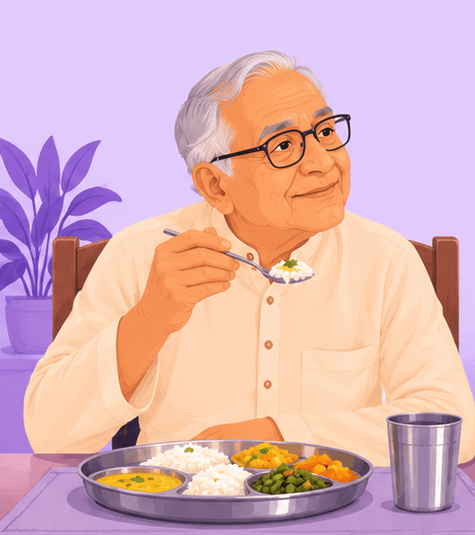
Sit Fully Upright
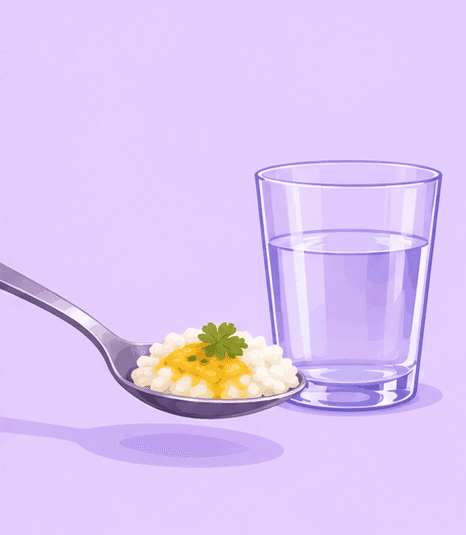
Small Bites, Slow Pace
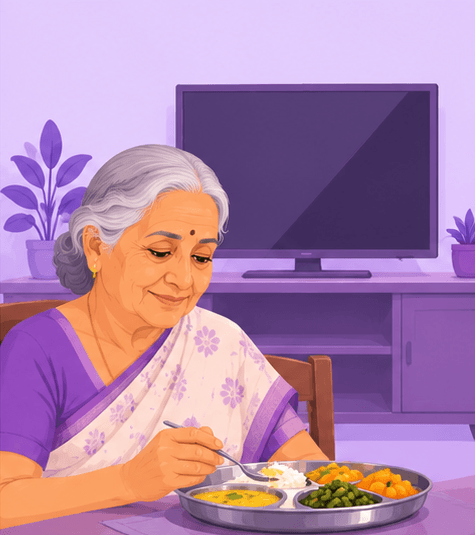
Make Mealtimes Calm
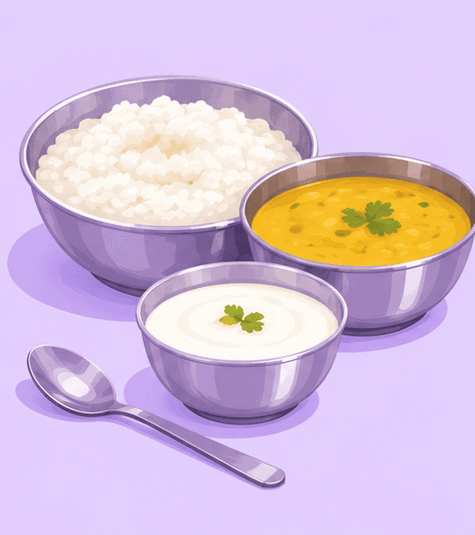
Adjust the Texture
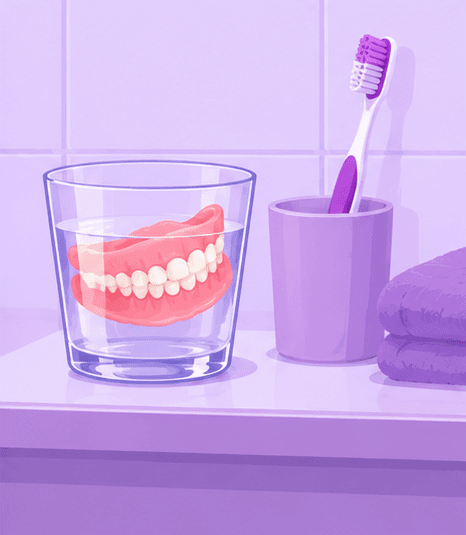
Keep the Mouth Clean

Ask Before Crushing Tablets
A gentle caution about thickened drinks: they help some people with swallowing difficulty, but they are not right for everyone and should only be used on professional advice. Thickening everything "just in case" can make a parent drink less and become dehydrated. Our guide on dehydration in seniors explains why fluids matter so much at this age.
It is also worth checking whether recommended vaccinations are up to date. Older adults may be advised to receive vaccines such as influenza and pneumococcal vaccines based on their age, health and vaccination history. Our guide on vaccinations for elderly parents covers which ones to raise with their doctor.
How a Care Manager and caretaker help
Swallowing difficulty lives at the dinner table, where a distant family cannot see. A caretaker who shares mealtimes notices the coughing, the untouched chapati, the tablets left on the plate. Their role is to observe, remind, and report: make sure your parent sits upright to eat, encourage small bites and a calm pace, help with mouth and denture care, follow any texture advice the therapist has given, and tell the family and Care Manager about coughing episodes, weight loss, or a fever.
A Care Manager joins it up. They can coordinate a doctor consultation, help arrange any swallowing assessment recommended by the doctor, make sure medicines are reviewed, and keep the family informed. And because swallowing trouble so often leads to smaller, less nourishing meals, nutrition counselling can help design meals that are safe to swallow and still full of the protein, fibre, and flavour a parent needs to stay strong.
Frequently asked questions
Is it normal for elderly parents to cough while eating?
An occasional cough when something "goes down the wrong way" happens to everyone. Repeated coughing, choking or throat clearing during meals is worth getting assessed, particularly if it is new or becoming more frequent. Swallowing difficulty is more common after a stroke or with Parkinson's disease or dementia.
What is silent aspiration?
It is when food, drink, or saliva enters the airway without causing a cough, because the protective reflex has weakened. It is more common after a stroke and with dementia. Possible clues can include a wet or gurgly voice after eating, a low fever, tiredness, or repeated chest infections. A swallowing assessment can help determine whether aspiration is occurring and whether further testing is needed.
Who assesses swallowing problems?
Usually a doctor first, who looks for causes and reviews medicines, then a speech-language pathologist or swallowing therapist, who watches your parent eat and drink different textures and may recommend a special X-ray. They then advise on safe food textures, posture, and swallowing exercises.
My parent struggles to swallow tablets. Can I crush them?
Not without checking first. Some tablets, such as slow-release or coated ones, must never be crushed or split, because it changes how the medicine is released and can be harmful. Ask the doctor or pharmacist whether a liquid, dispersible, or smaller form is available. Our guide on medication management for elderly parents has more on keeping medicines safe.
Can swallowing difficulty cause weight loss?
Yes. A parent who finds swallowing hard often eats less and avoids foods that feel risky, especially dry or protein-rich foods. Over time this can cause weight loss, weakness, and dehydration. Nutrition counselling can help plan meals that are easy to swallow and still nourishing.
A simple next step
Coughing at meals is easy to dismiss and easy to miss from far away. But if your parent has started coughing or choking during meals, taking much longer to eat, losing weight or avoiding foods they used to enjoy, it is worth getting checked.
A doctor consultation is a good place to start. If you would like a wider picture of your parent's health and daily routine, a Kare@home Assessment Visit costs ₹999. A Kareverse Care Manager visits your parent at home and reviews their health, eating, medicines and daily routine.
From there, Kareverse can help coordinate the doctor consultation and any recommended swallowing assessment, nutrition support and follow-up care.