|
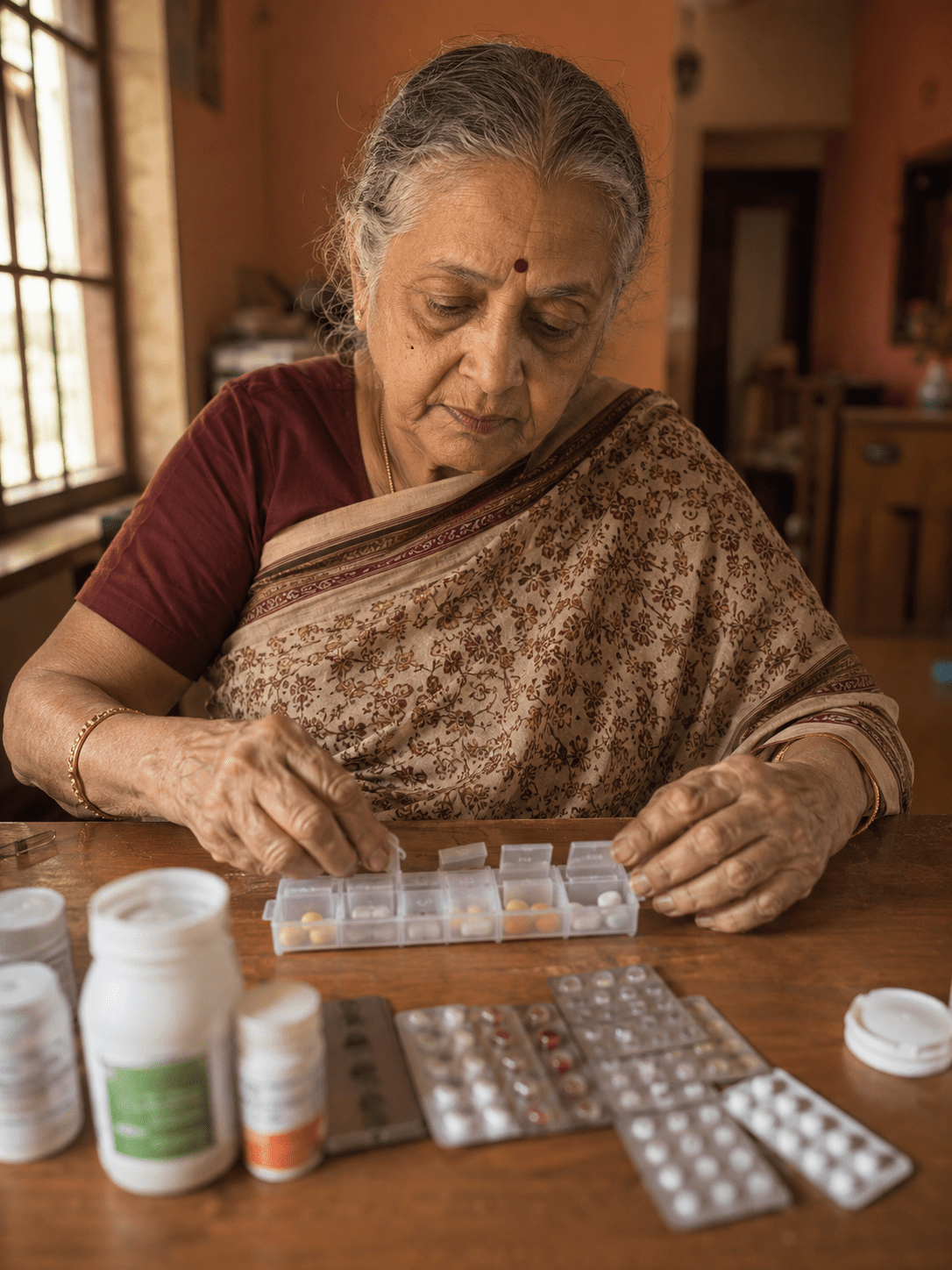
A 74-year-old woman arrives at a Delhi hospital with chest tightness and leaves on ten medications. The average elderly patient discharged from a tertiary hospital in India is on 8.3 drugs — some leave with sixteen. A pooled analysis of 27 Indian studies found that 49% of older adults are on polypharmacy. 31% are on ten or more. Nearly 28% are taking something their body should not be taking at all. Most of this happens in plain sight, prescribed by well-meaning doctors who never speak to each other.
India has no family doctor system. Your mother sees a cardiologist for BP, a diabetologist for her sugar, an orthopedist for her knee, a neurologist for her headaches. Each writes independently. Each assumes someone else is watching the full list. Nobody is. The result is what clinicians call a prescribing cascade: drug A causes a side effect, treated with drug B, which causes another, treated with drug C. Before long, a parent who started with hypertension is swallowing twelve pills a day, half of them solving problems the other half created.
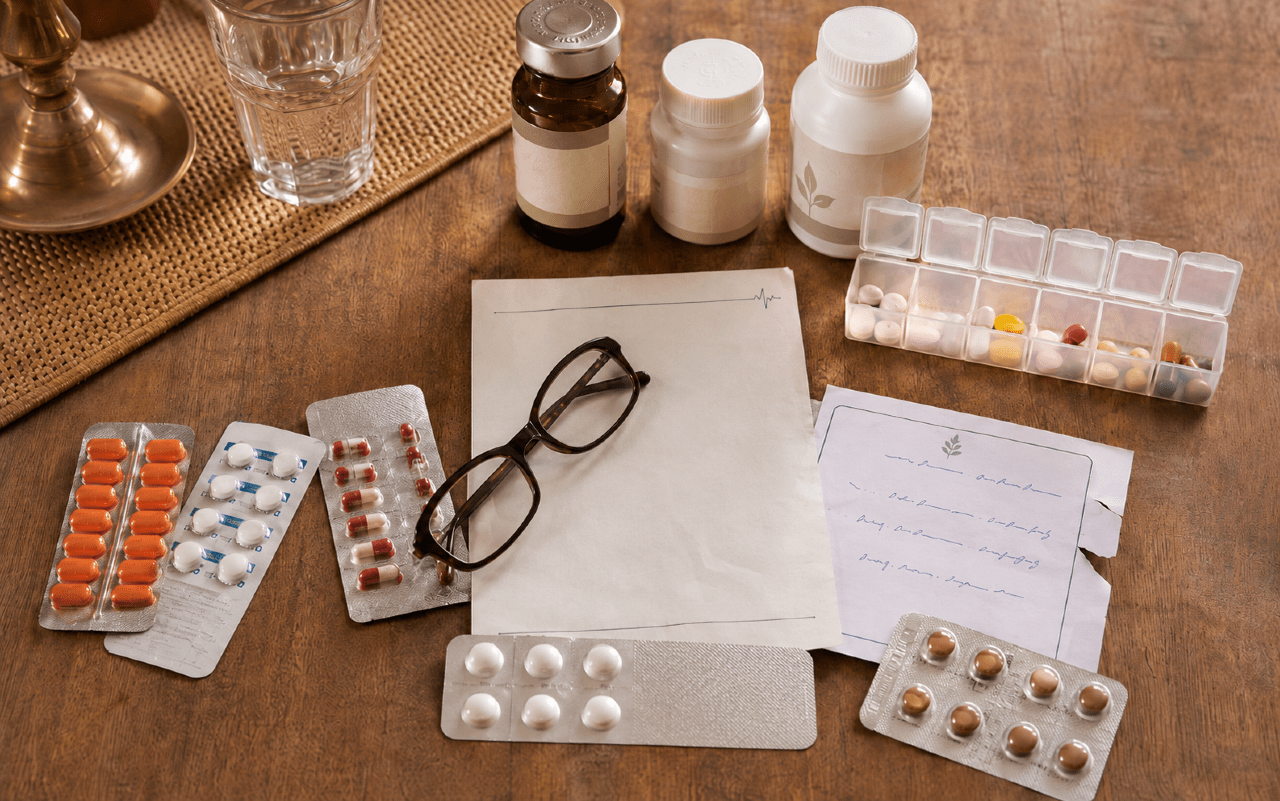
Then there is the hidden layer. A 2024 study across six Indian cities found that 19.7% of older adults self-medicate, and 27.3% use traditional medicines — Ayurvedic capsules, herbal tonics, noni juice — without telling their allopathic doctors. Nearly half of those formulations have no label. Your father's "natural supplement" could explain why his INR is suddenly off. Adherence compounds the problem: pooled studies show medication adherence below 50% among Indian adults with hypertension and diabetes. Seven medicines. Four different timings. Some before food, some after, some only on alternate days.
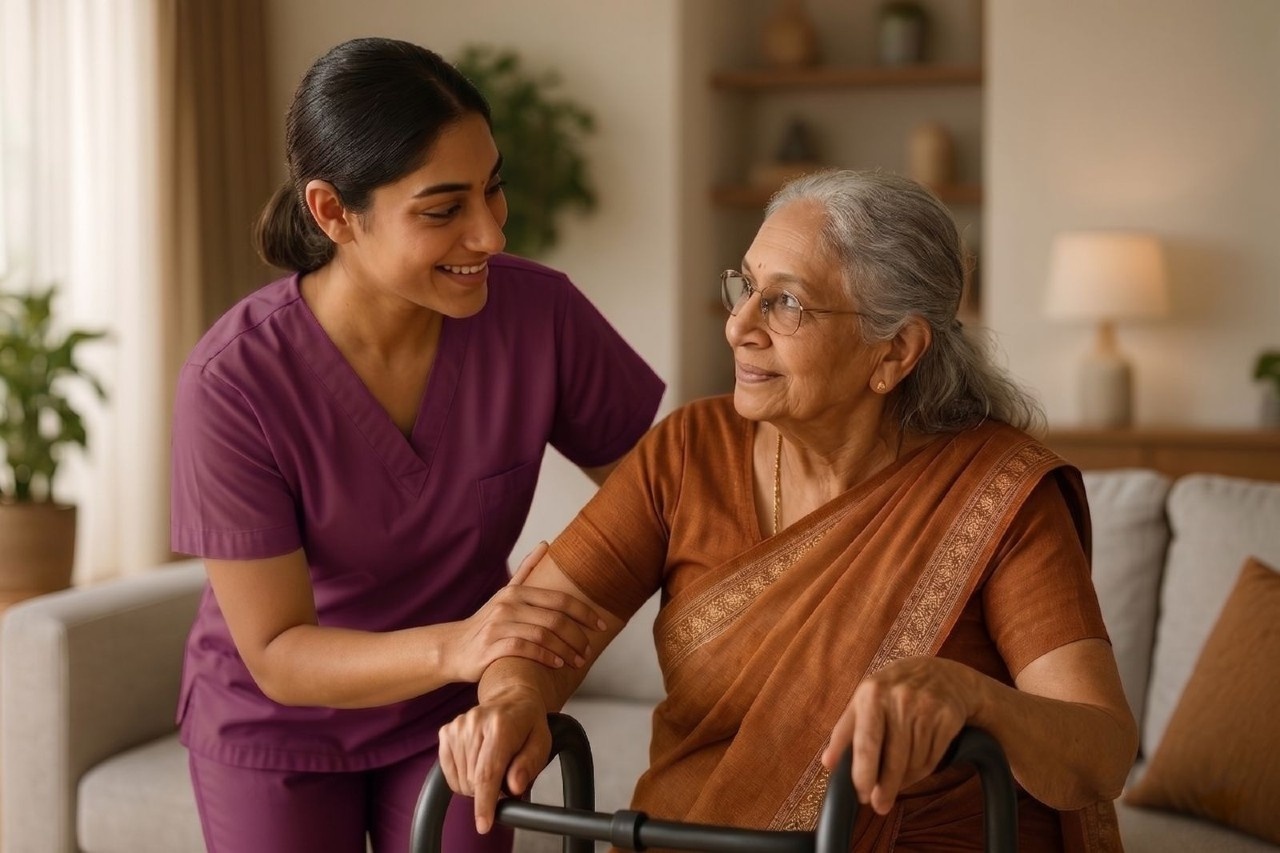
In March 2025, researchers at AIIMS Bhopal and St. John's Medical College, Bengaluru published India's first deprescribing tool — a 52-item checklist built for Indian elderly, accounting for fixed-dose combinations, herbal interactions, and drugs available in the Indian market. The tool exists because Western checklists do not fit our parents. But tools on paper do not coordinate care. In a system with fewer than a thousand qualified geriatricians for a population aging faster than almost any on earth, you are the coordinator — even from 10,000 miles away.
|
Also in this edition
"Nobody is watching the full list. That role has quietly fallen to you."
59.6% of all adverse drug reactions among Indian elderly are preventable — the drugs are documented, the interactions are known, but no single doctor sees the complete picture.
India's new deprescribing tool (2025) is the first ever built for our parents' medicine cabinets — including herb-drug interactions no Western checklist has ever considered.
|