|
When people hear "Japan" and "elder care" in the same sentence, they picture humanoid robots serving tea. The reality is far more human. Japan spent decades and billions on nursing homes, robots, and sensors. What actually worked was simpler: programmes built around one person who shows up regularly, observes, and knows when something is off.
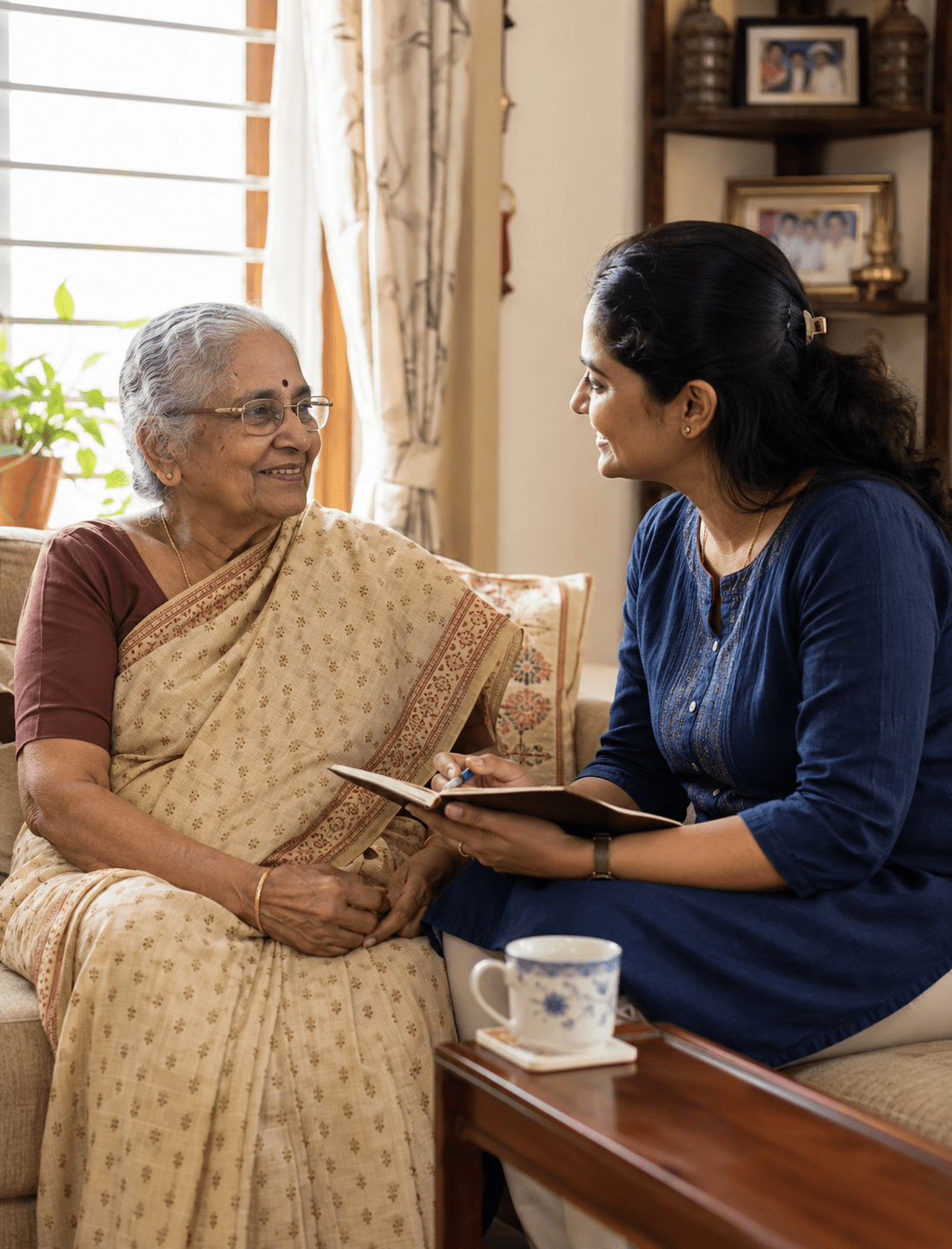
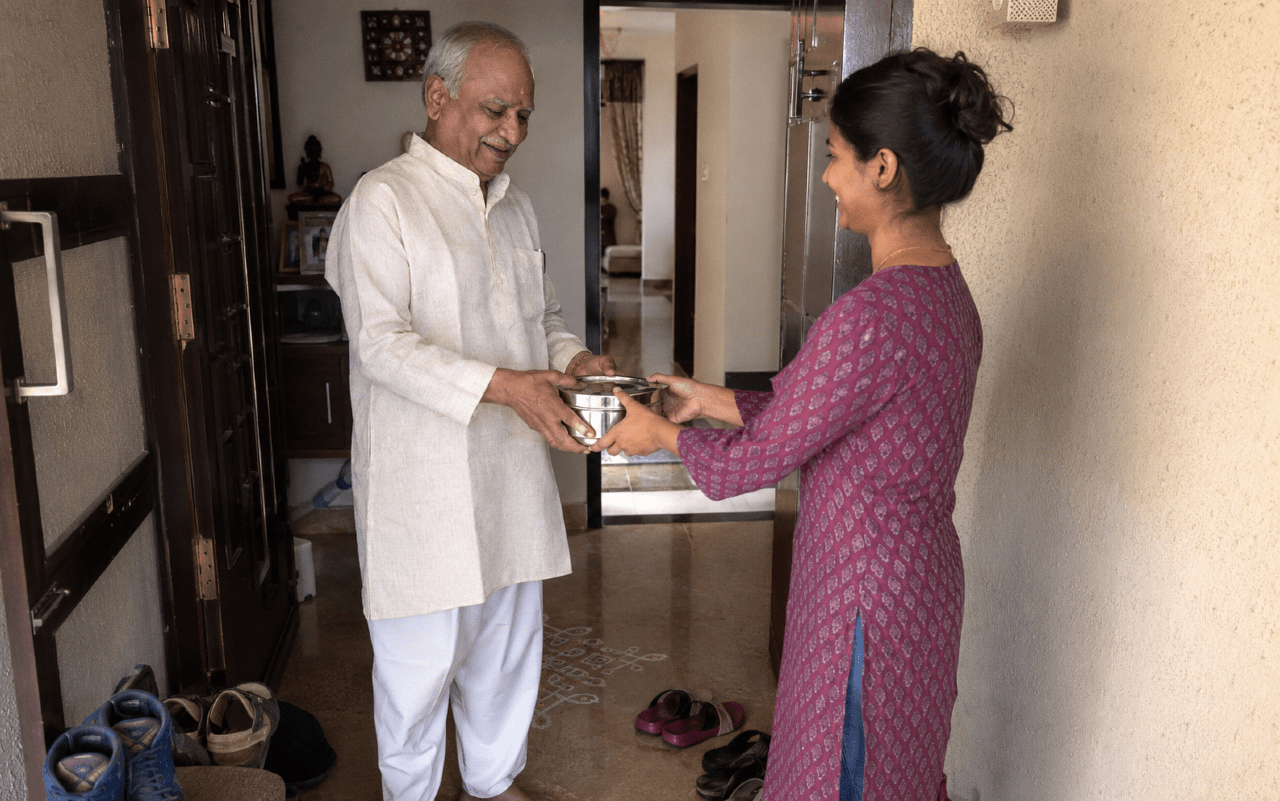
In rural Shiga Prefecture, a daily bento delivery programme sends drivers to senior homes. But the driver does not drop the box and leave. They speak with the recipient. They observe. If something seems off, they escalate. The meal is the excuse. The welfare check is the real service. This is exactly how a dedicated Care Manager works: someone who visits your parent regularly, notices the small changes a phone call cannot catch, and follows up before things slip.
Tokyo's "Under One Roof Project" pairs elderly homeowners with university students. The student pays modest rent, on one condition: they must speak with the homeowner at least once a week. The insight is powerful. Companionship does not need to be expensive. It needs to be consistent. For NRI families, a Care Manager fills this exact gap: someone in Bangalore who has a regular, face-to-face relationship with your parent, not just a helpline number.
Japan also pioneered community time-banking, where volunteers earn credits for helping elderly neighbours, redeemable for their own future care. These programmes survive because they give the helper dignity alongside the helped. It is a model built on reciprocity, not charity. In India, this spirit already exists in our culture. What is missing is someone to coordinate it: to connect the neighbour, the doctor visit, the medicine schedule, and the family abroad into one reliable loop.
Then there are the quiet innovations. Waterproof QR-code nail stickers for people with dementia. When scanned, they reveal a caregiver's phone number. Ambient sensors on refrigerator doors that send a gentle notification if no kitchen activity is detected by mid-morning. No camera watching, just a quiet signal that says: all is well. These are clever, but notice the pattern. Every one of these tools still depends on a person at the other end who knows what to do next. The technology is the alert. The person is the care.
|
Also in this edition
"Every clever tool Japan built still depends on a person at the other end who knows what to do next."
India's situation is different from Japan's. Our parents are not alone because they never married. They are alone because their children moved: for careers, for education, for opportunities abroad. The multigenerational household is still the norm, but the nuclear family is rising.
A Care Manager bridges this distance. Not with sensors or apps, but with regular visits, familiar conversations, and the kind of observation that only comes from knowing someone over time.
|