| No. 12 · Thursday, 6th August 2026 |
For those who care from a distance |
Kareverse, Bangalore |
|
|
Newsletter
Elder care intelligence for NRI families with parents in Bangalore
|
|
Feature Essay
When the Rain Slows, the Risk Doesn't
Families exhale when August's heavy showers ease. That is exactly the wrong moment. The monsoon's tail, not its peak, is when dengue climbs, floors stay treacherous, and a parent's quiet "I'm just tired" can hide something worse.
2.6×
Karnataka logged 5,976 dengue cases by 30 June this year, against 2,260 in the same window last year. And the season's most dangerous stretch is only beginning.
|
|
"Dengue in an older body rarely announces itself. No dramatic rash, no textbook fever. Just a parent who is off their food and unusually tired, in the very days it matters most to look closely."
Edition 12
|
|
In Bangalore the drama of the monsoon is the downpour: the flooded underpass, the stalled traffic, the stranded commute. So when the heavy rain finally thins out in August, families exhale. But the mosquito does not breed in the storm. It breeds in what the storm leaves behind, in the still, clear water sitting in a plant saucer, a discarded cup on the balcony, the drip tray under the fridge, the puddle in the sunshade. Aedes aegypti, the dengue mosquito, needs only a bottle-cap of clean water and about a week. The tail of the monsoon, warm and wet and quiet, is its ideal season.
The numbers this year say the same thing. Karnataka had recorded 5,976 dengue cases by the end of June, more than double the 2,260 from the same point last year. Doctors across Bengaluru report cases arriving earlier and lingering later than the old monsoon calendar predicted. Dengue is no longer a neat June-to-September event. It now stretches across a longer, blurrier season, which means the vigilance cannot switch off just because the sky has cleared.
Here is what most families do not know: dengue in an older parent often does not look like dengue. The classic picture, high fever, body ache, rash, is what younger patients show. An older body, with its blunted immune response, may skip the fever or run only a low one. What you see instead is vaguer and easier to dismiss: loss of appetite, unusual fatigue, a little stomach discomfort, a moment of confusion. Underneath, the platelet count can be falling fast. And parents who already live with high blood pressure or diabetes, which is most of them, carry a meaningfully higher risk of the severe form. The danger is not that the patient misses it. It is that everyone misses it, until it is advanced.
Dengue also keeps a cruel rhythm. The first two days feel like an ordinary viral fever. Then, around day three to seven, exactly when the fever may drop and everyone assumes the worst is over, the dangerous phase can begin. The warning signs are specific and worth memorising: severe abdominal pain, persistent vomiting, bleeding from the gums or nose, black stools, restlessness or extreme drowsiness, cold clammy skin. Any one of these is not a wait-and-watch. It is a same-day hospital visit. From abroad the instinct is to say, "let's see how you feel tomorrow." In this window, tomorrow is the wrong answer.
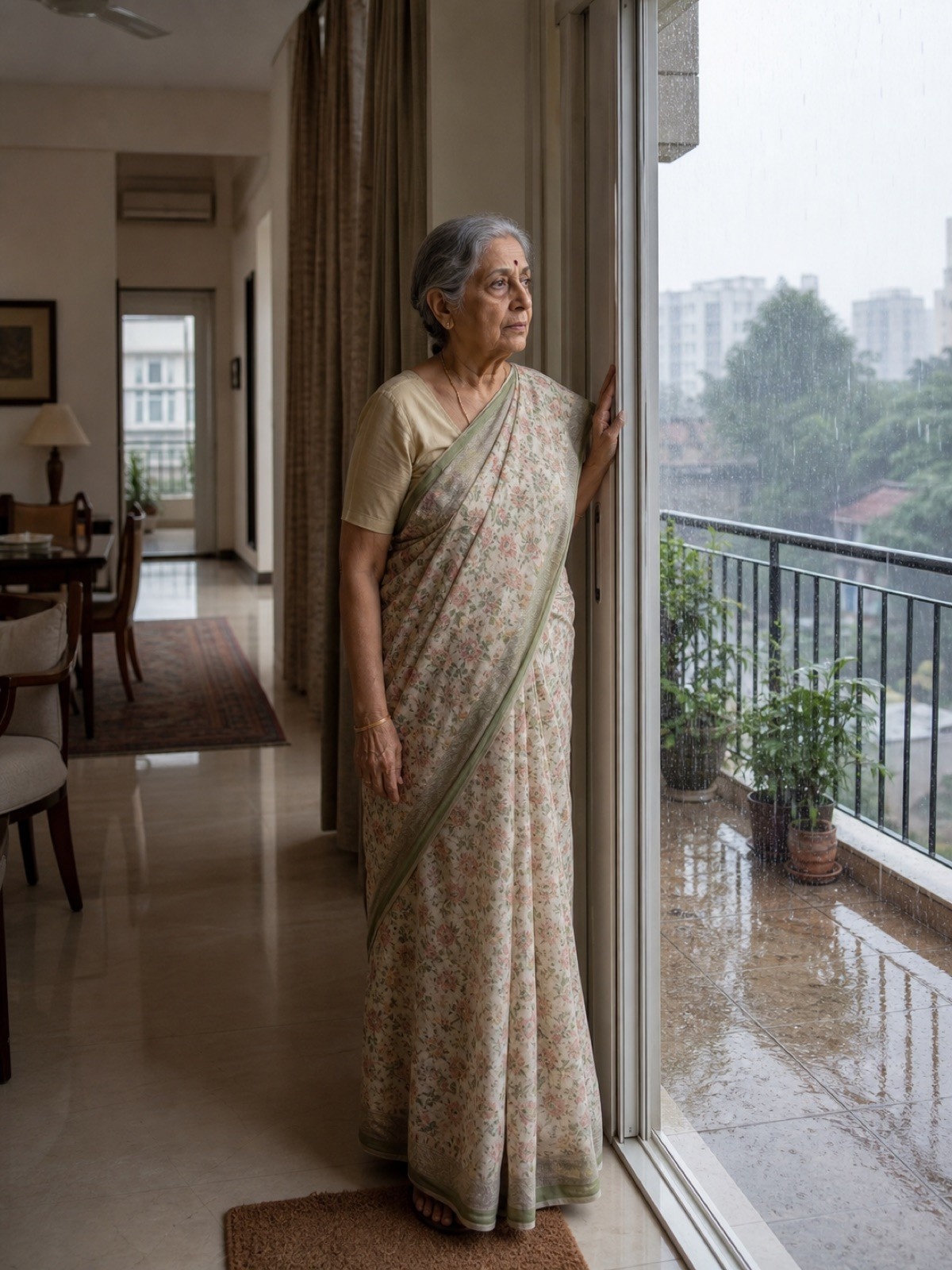
And it is not only dengue. The monsoon's tail carries a quieter set of hazards that hospitalise just as many elderly parents. Floors and building lobbies stay wet and slick long after the rain, and a fall on wet granite is how many independent parents lose their independence overnight. Power cuts, common in these weeks, do more than inconvenience: they stall the lift a parent depends on and silence the oxygen concentrator or CPAP machine they may need through the night. Damp air aggravates asthma and arthritis. None of it is dramatic. All of it is preventable by someone walking through the home who knows what to look for.
|
Also in this edition
"The mosquito does not breed in the storm. It breeds in the bottle-cap of still water the storm leaves behind. And it only needs a week."
Aedes, the dengue mosquito, bites mostly by day, not at night. A bed net alone will not protect a parent who is home all afternoon.
In older patients the fever may be mild or absent. A falling appetite and unusual tiredness can be the only early clue.
|
|
|
● The Bangalore Lens
What's happening locally, right now
|
What a video call can't see, and how Genie can.
BBMP's fogging machine drives past on the street, but the dengue mosquito is breeding inside your parent's home and balcony, in water you cannot see on a video call: the AC drip tray, the puja-room flower water changed too rarely, the overhead-tank overflow, the money-plant pot. The single most useful thing is for someone to physically walk the home and empty every one of them.
And if your parent already has a fever, the harder problem is getting an unsteady 75-year-old to a lab for a platelet test and back, alone, in the rain. That gap is exactly what Kareverse built Genie to fill.

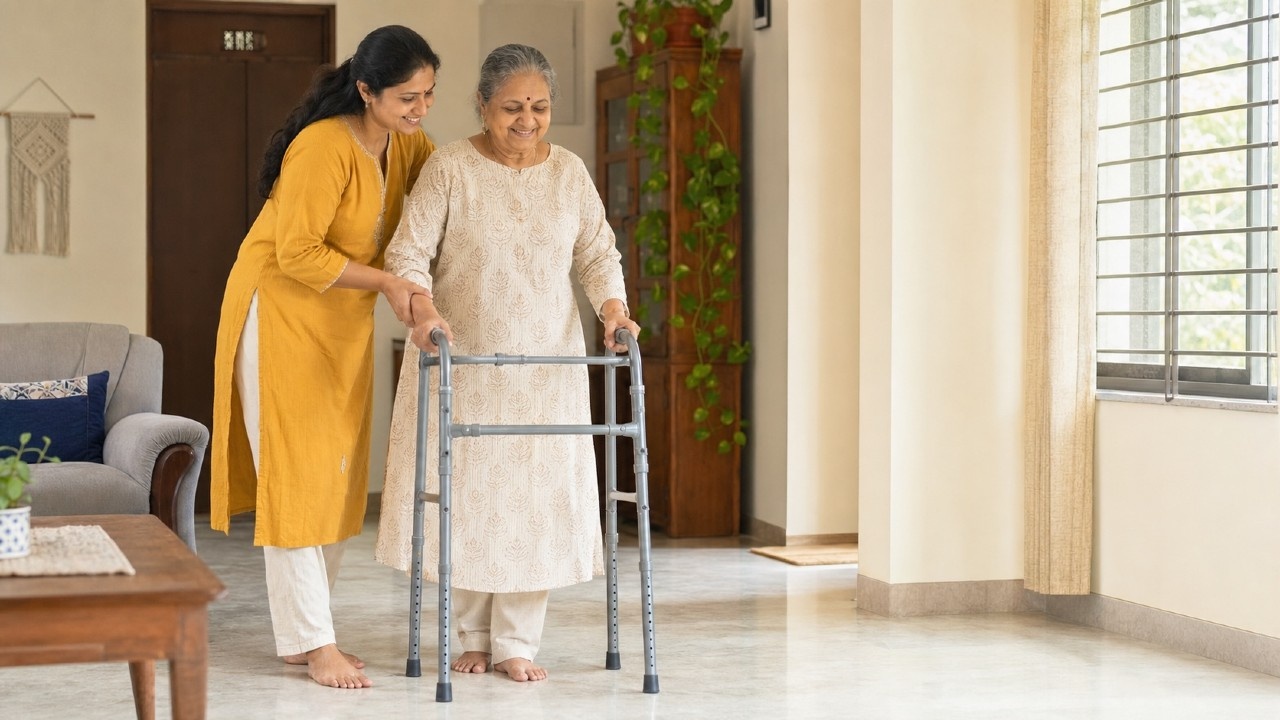
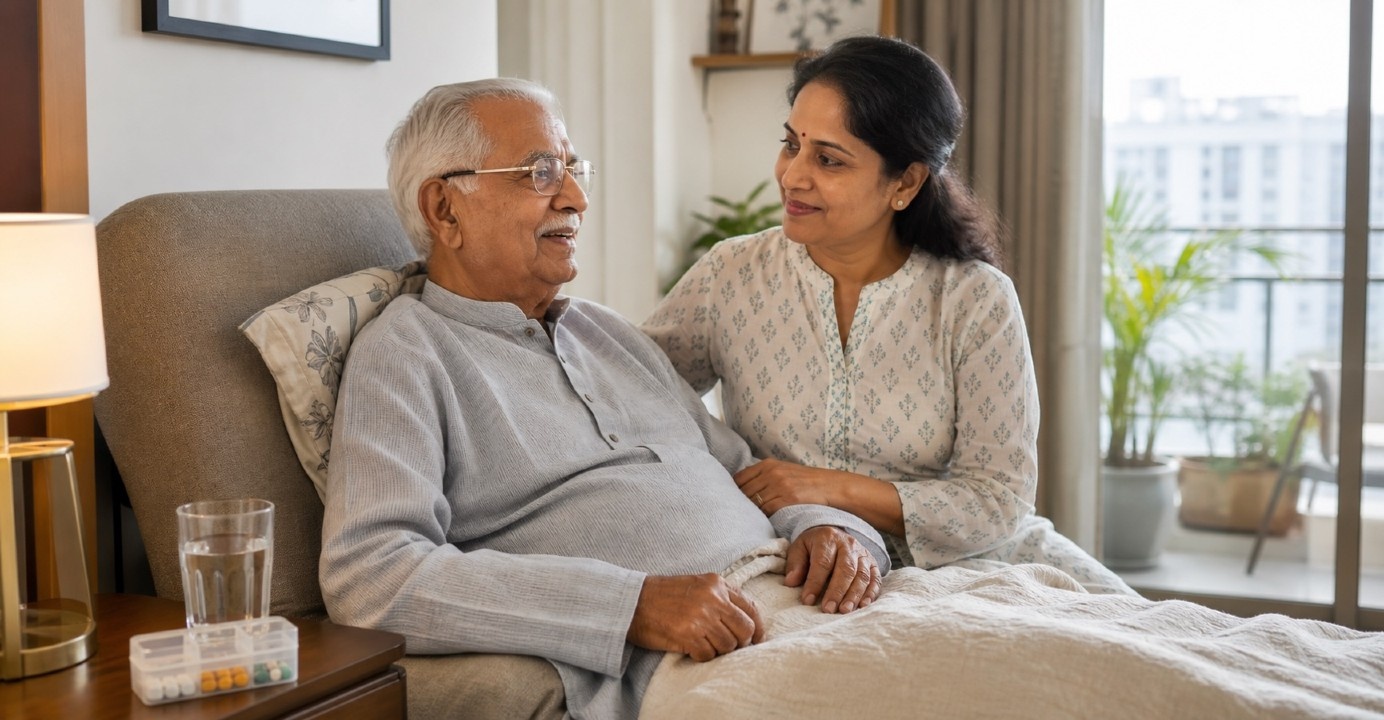
Genie's Go With Them service sends a background-verified, elder-care-trained person to accompany your parent to the doctor or diagnostic lab for the dengue blood test and platelet count, wait with them, and bring them safely home, so a fever day is never faced alone. For the anxious in-between days, Be There at Home puts a trusted person beside your parent to watch for the warning signs, keep fluids up, and send you a photo update.
As always, a Genie never touches your parent's money, never asks for a PIN, never transacts. They handle the trip, the queue, and the quiet company, while your parent stays in full control. The things you'd do for your parents, if you were here.
That is the honest answer to "I can't tell how bad it is from here." Someone who knows the warning signs can be in the room, today.
|
Day 3–7
is dengue's danger window, the days after the fever starts when the illness can turn severe, often just as the fever drops and everyone assumes the worst is over. A Genie accompanies your parent to the lab and back, booked on WhatsApp, with a photo report after. Money and PINs stay entirely with your parent.
|
|
|
● One Thing To Do
This week
|
|
Action
Do this now
The Ten-Minute Monsoon Walk-Through, This Sunday.
Call your parent this Sunday and go room by room together on video, or ask a local contact or a Genie to do it in person.
1. Empty and scrub every standing-water source: plant saucers, vases, AC and fridge trays, buckets, and the balcony corner that collects rain. Change the water, don't just top it up.
2. Check the window mesh, and put a repellent in the rooms your parent uses by day, not just at night. The dengue mosquito bites in daylight.
3. Dry the danger floors: bathroom, kitchen, entrance, balcony. Add a non-slip mat where water pools. A fall on wet stone hospitalises as surely as any fever.
4. Test the backup: does the inverter or emergency light work? Is the oxygen concentrator or CPAP on a UPS? Does your parent know which neighbour to call if the lift dies in a power cut?
5. Agree the one rule: if fever comes with severe stomach pain, vomiting, any bleeding, or unusual drowsiness, it is a hospital today, not a call-me-tomorrow.
Ten minutes now is worth more than any amount of worry later in the season.
|
|
● From The Blog
Further reading on kareverse.com
|
|
|
|
The monsoon's most dangerous weeks are not the ones that make the news. They are the quiet ones after, when the rain thins, the guard drops, and a mosquito the size of a grain of rice breeds in a saucer nobody emptied. You cannot drain that water from another continent, and you cannot always hear, in your mother's voice, the tiredness for what it really is. But you can make sure someone walks the home before the season turns, and that when a fever arrives on a Thursday, there is a trusted person who can sit beside her, take her for the test, and know that day three is not the day to wait.
The Kin Letter, Edition 12 · Thursday, 6th August 2026
|
|
Know someone whose parents are in Bangalore? Forward this letter, or invite them to subscribe.
Subscribe
Join Active Age Community
Follow on LinkedIn
|
|
Sources: Deccan Herald (Karnataka dengue tally, 5,976 cases to 30 June 2026 vs 2,260 in the same period last year); The Week and Al Jazeera (earlier onset and longer dengue season in Bengaluru); peer-reviewed literature on atypical dengue presentation and elevated severe-dengue risk in the elderly (PLOS Neglected Tropical Diseases; Open Forum Infectious Diseases); WHO dengue warning-sign criteria (days 3–7); and Genie by Kareverse (kareverse.com/genie).
You're receiving The Kin Letter because you're part of our community. Unsubscribe
|
|