

Caring for a bedridden parent at home comes down to a steady daily routine: turning them regularly, keeping their skin clean and dry, helping them eat and drink sitting up, gentle movement, and company. A trained caretaker can handle the daily routine, while a nurse handles clinical tasks such as wound dressings, catheters and injections.
Sometimes it happens slowly. Sometimes it happens all at once, after a fall, a stroke or a long hospital stay. Either way, the day comes when your parent can no longer get out of bed on their own, and the house has to change around them.
Most families have never done bedridden parent care at home before, and nobody hands you a manual at the hospital door. If you live in another city or another country, it is even harder to see what is really happening.
This guide covers the practical side: how to set up the room, the daily routine that keeps a bedridden parent comfortable and safe, which jobs a caretaker can do and which need a nurse, the warning signs that mean calling a doctor, and how to look after the person doing the caring.
What changes when a parent becomes bedridden
When someone spends most of the day lying down, the body starts to struggle in several ways at once. Skin over the bony areas comes under constant pressure. Muscles weaken and joints stiffen from lack of use. Swallowing can become less safe, especially when lying flat. Bowels slow down. A parent who drinks less because getting to the toilet is hard can become dehydrated without anyone noticing. And lying alone in one room for most of the day takes a toll on mood.
None of this means things will go badly. It means care has to be deliberate. Small things done well every day (turning, cleaning, feeding upright, a few gentle movements, a conversation) prevent most of the problems families fear. Many parents who are bedridden after an illness also regain some movement with time and the right therapy, so the aim is comfort and safety now, without giving up on recovery.
If your parent has just come home from hospital, our guide to post-hospital care for elderly parents covers the first few weeks in more detail.
Setting up the room
A well-arranged room makes every task safer and easier, for your parent and for whoever is caring for them. A few things matter most.
The bed. A hospital-style bed with an adjustable backrest and side rails is usually worth it, whether rented or bought. Raising the head of the bed makes eating, drinking and breathing easier, and the right height saves the carer's back. Leave space on both sides so someone can help your parent turn and change the sheets.
The mattress. For a parent who will spend most of the day in bed, ask the nurse or doctor whether a pressure-relieving mattress (often an air mattress) is needed. It does not replace turning, but it spreads the load.
Within reach. Water in a cup they can hold, the phone, spectacles, hearing aid, a bell or call button, and a light switch or bedside lamp. A parent who cannot reach these things will either go without or try to get up and fall.
Toileting. A bedside commode, a bedpan or urinal, and adult diapers with protective bed pads, depending on how much your parent can do. Our guide to mobility aids for elderly parents explains the main options.
Bedridden parent care at home: the daily routine
It is mostly a routine of ordinary tasks, done consistently. These six matter most.

Turn and Reposition
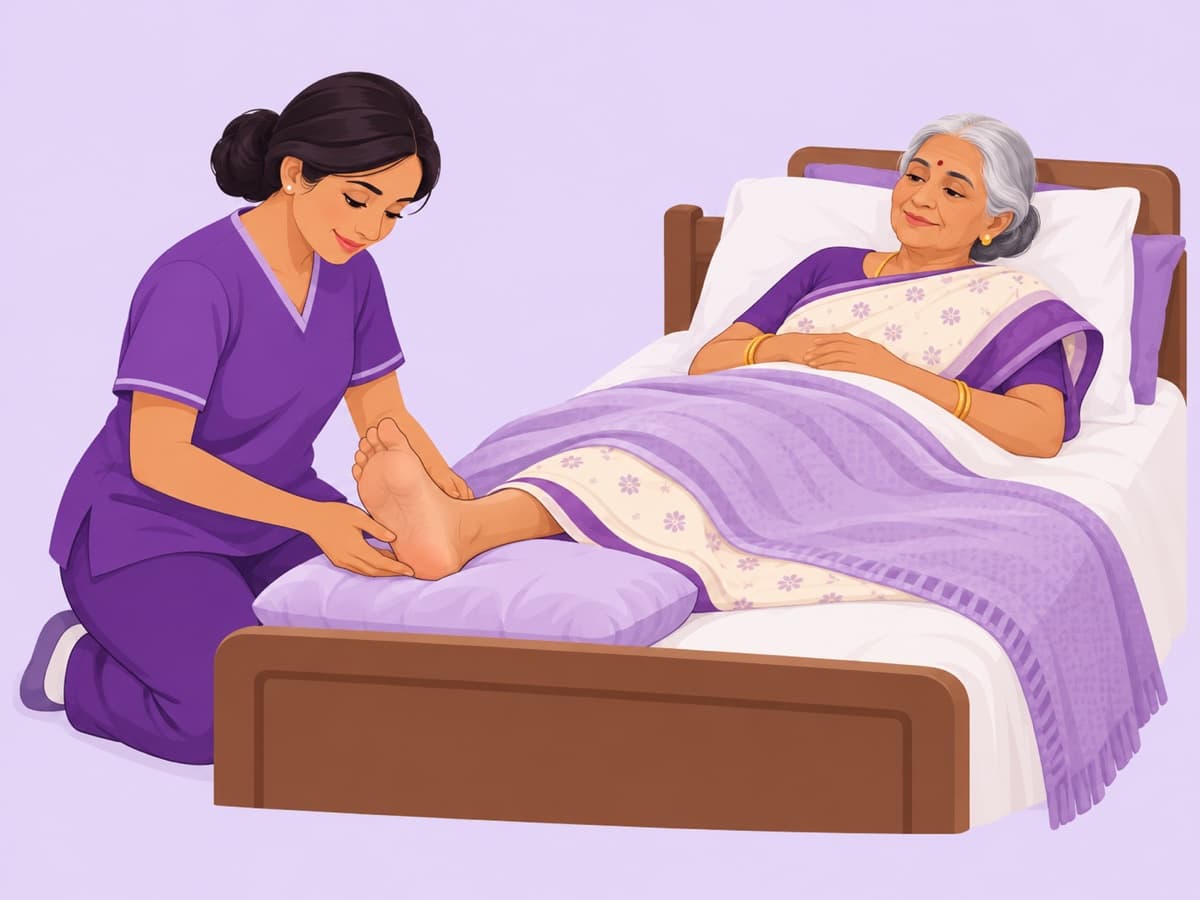
Check the Skin Daily
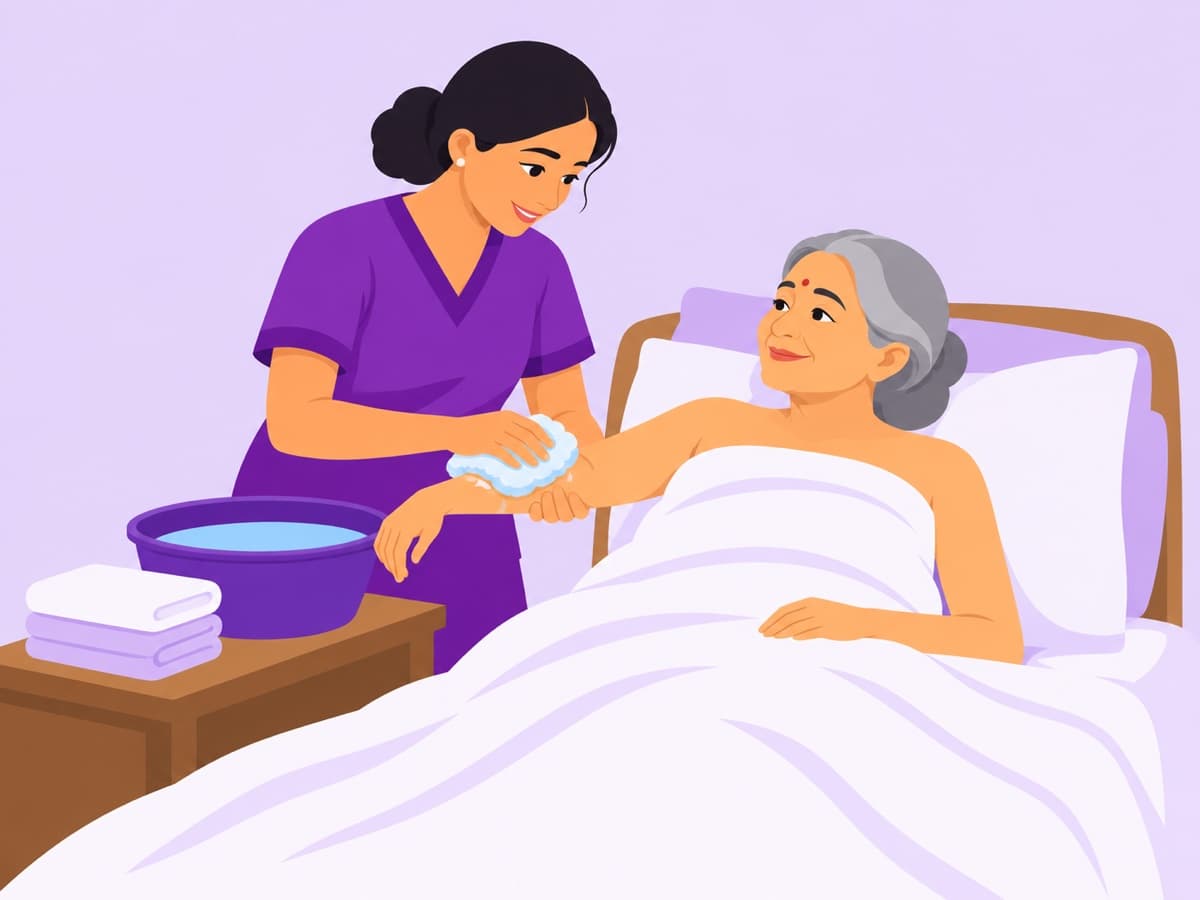
Gentle Bed Bath
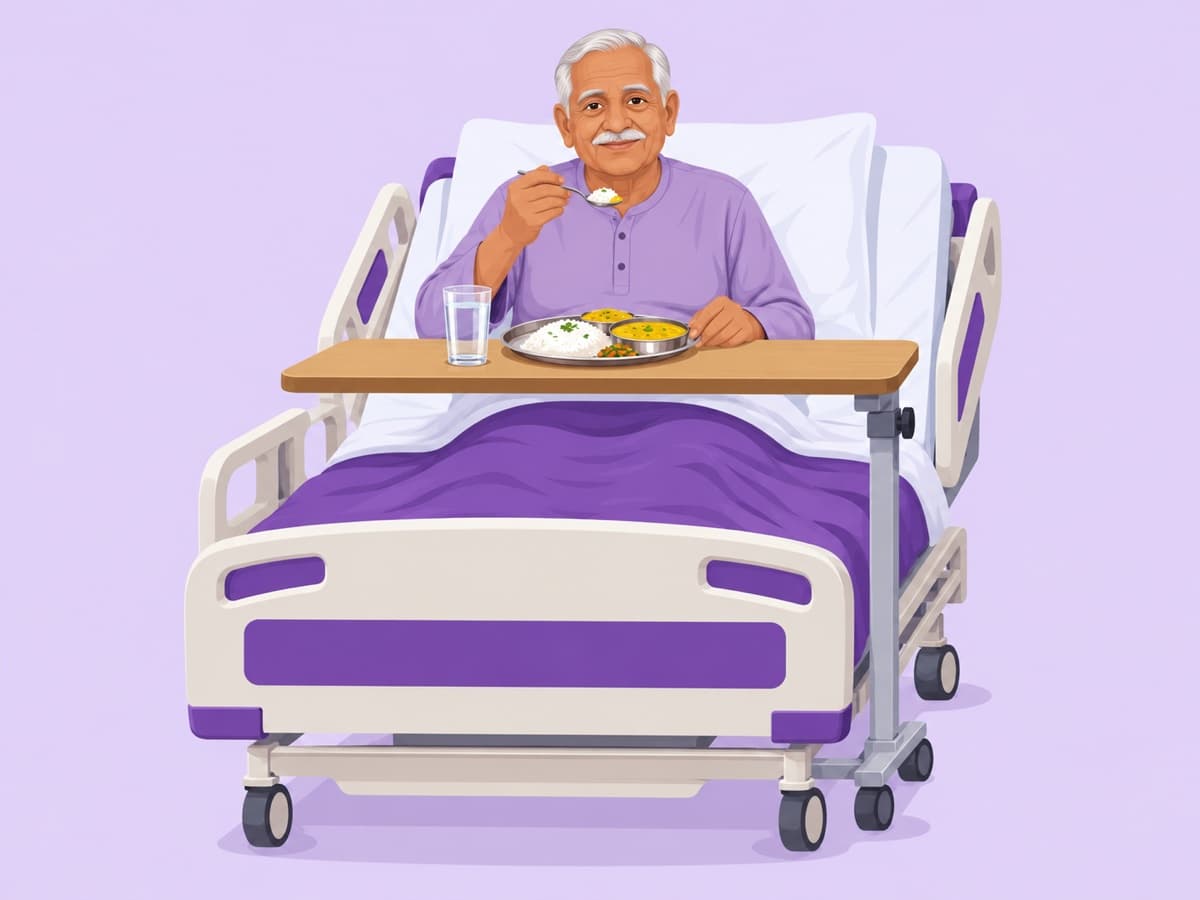
Eat and Drink Sitting Up
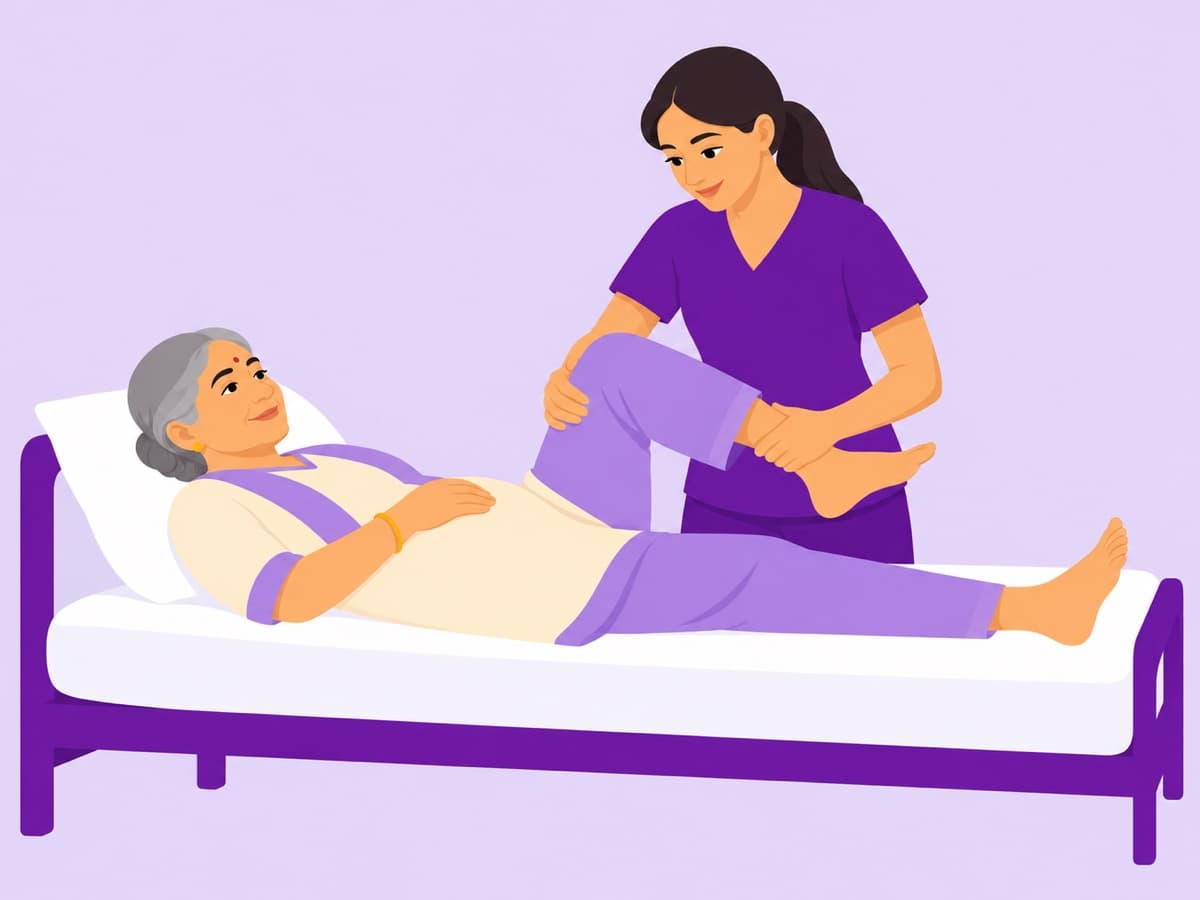
Keep Joints Moving

Company and Conversation
Preventing bedsores
Bedsores (pressure sores) are one of the most common and most preventable problems for a bedridden parent. They can develop faster than families expect. Regular turning, clean and dry skin, good food and fluids, and a daily skin check prevent most of them. Our guide to pressure sores in bedbound parents explains the early signs and the press-and-blanch test in detail. Any broken skin needs a nurse, not a home remedy.
Eating, drinking and swallowing
Lying flat while eating or drinking is risky, because food or liquid can go down the wrong way into the lungs. Always sit your parent up as far as they comfortably can. Watch for coughing or clearing the throat during meals, a wet or gurgly voice after swallowing, or food left in the mouth. These can be signs of swallowing difficulty and are worth getting assessed. Our guide to swallowing difficulty in elderly parents explains what to watch for.
Bedridden parents often drink less, sometimes on purpose so they need the toilet less often. That makes dehydration, constipation and urine infections more likely. Offer small drinks often, and keep an eye on how much is actually going in. Our guide to dehydration in seniors covers the quiet signs.
Toilet care and dignity
For many parents, needing help with the toilet is the hardest part of being bedridden. Talk to them, explain what you are doing, keep them covered, and never rush. Change pads promptly, clean gently from front to back, and let the skin dry before a fresh pad goes on. Constipation is very common when someone is not moving, so mention it to the doctor early rather than waiting. Our guide to constipation and gut health has more.
Medicines
A bedridden parent is often on several medicines, sometimes with new ones added at discharge. Keep an up-to-date list, use a weekly pill organiser, and make sure everyone caring for your parent follows the same schedule as prescribed. A caretaker can remind, observe and report, but should not change doses or give anything not prescribed. Our guide to medication management for elderly parents explains how to keep it organised.
What a caretaker does, and what needs a nurse
Families often ask whether they need a caretaker, a nurse, or both. It depends on your parent's condition, but the two roles are fairly clear.
A trained caretaker handles the daily routine. The most important part is personal hygiene: a daily bath in bed, and cleaning your parent gently and thoroughly after they pass urine or stool, changing the diaper or pad, and keeping the skin clean and dry. They also handle turning and repositioning, changing sheets, help with meals and drinks, gentle movement as shown by the physiotherapist, medicine reminders, and keeping your parent company. They are the eyes in the room, noticing a red patch of skin, a skipped meal or a change in mood, and reporting it.
A nurse handles the clinical tasks: wound and bedsore dressings, catheter care, feeding tubes, injections, checking vital signs, and assessing whether something needs a doctor. A nursing assessment at home is a good first step, because the nurse looks at mobility, skin, nutrition and medicines together and writes a simple care plan the whole family and the caretaker can follow.
Many families end up with a mix: a day or night caretaker or a live-in caretaker for the daily routine, with home nursing visits for clinical tasks, and physiotherapy at home where recovery of movement is possible.
Warning signs that need a doctor
Bedridden parents can become unwell quickly, and the signs are not always dramatic. Call the doctor the same day if you notice:
- A fever, or your parent feeling unusually hot or cold
- New or sudden confusion, drowsiness, or being much less responsive than usual
- Coughing during or after meals, or a new chesty cough
- Much less urine than usual, very dark urine, or no urine for many hours
- Broken skin, a blister over a pressure point, or a sore that smells or oozes
- Swelling, warmth or pain in one calf
- Not eating or drinking for a day or more
Call 108 for an ambulance straight away if your parent has trouble breathing, chest pain, signs of a stroke (face drooping, arm weakness, slurred speech), or cannot be woken.
Looking after the person doing the caring
In many homes, the main carer is the other parent, who may be elderly themselves. Turning someone in bed, lifting, broken nights and constant worry wear a person down quickly, and a carer who is exhausted is more likely to get hurt or become unwell.
Make sure the main carer gets a proper break every week, help with the heavy tasks like turning and bathing, and a chance to see their own doctor. Short-term respite care, where a caretaker steps in for a few days, can give them a real rest. If you live away, ask the carer directly how they are sleeping, not just how your parent is doing.
Caring from another city or country
From far away, a video call shows you your parent's face. It does not show you their heels, how much water is left in the jug at the end of the day, or how the carer is holding up. A few habits help:
- Ask specific questions: "Did they eat lunch sitting up?", "Any red patches on the skin today?", "How many times was he turned last night?"
- Ask the caretaker or nurse for a short daily update at a fixed time.
- Keep the doctor's number, the nearest hospital and the medicine list in one shared place the whole family can see.
Frequently asked questions
How often should a bedridden parent be turned?
Commonly every two hours, day and night, but the right timing depends on your parent's skin, weight and condition. A nurse can assess this and set a turning plan. Our guide to pressure sores explains why regular turning matters so much.
Do we need a hospital bed at home?
Not always, but for a parent who spends most of the day in bed it usually makes care safer and easier. An adjustable backrest helps with eating and breathing, side rails reduce the risk of falls, and the right height protects the carer's back. Renting is often a sensible first step. See our guide to mobility aids.
Can a caretaker give injections or change dressings?
No. Caretakers handle the daily routine: bathing, cleaning up after toilet use, turning, feeding, reminders and company. Injections, wound dressings, catheter care and feeding tubes are nursing tasks. Home nursing visits can be booked for these alongside a caretaker.
Can a bedridden parent get better?
Some can. Many parents who become bedridden after a fall, surgery, illness or stroke regain some movement with time, good nutrition and physiotherapy at home. Even when full recovery is not possible, good daily care keeps them comfortable and prevents problems. Our guide to stroke recovery at home covers one common situation.
What should we do if a bedsore has already started?
Relieve the pressure on that area straight away and get a nurse to look at it. Do not massage it or apply home remedies. A nurse can assess the wound and dress it properly, and Kareverse offers pressure sore care at home.
A simple next step
Bedridden parent care at home is hard work, but most of it comes down to a steady routine: turning, keeping the skin clean, eating and drinking upright, gentle movement, and company, with a nurse for the clinical tasks. If you are setting this up for your parent in Bangalore, start with a nursing assessment at home, so a nurse can look at the whole picture and write a care plan. If your parent needs help through the day or night, a trained caretaker can keep the routine going, and a Care Manager can keep the family informed, wherever you are. You can also WhatsApp us to talk it through.