Kareverse
WhatsApp
All editionsNo. 09 · 16 July 2026

The Kin Letter · No. 09 · 16 July 2026

Can Your Apartment Society Become a Care Network?

No. 09  ·  Thursday, 16th July 2026 For those who care from a distance Kareverse, Bangalore

Newsletter

The Kin.Letter

Elder care intelligence for NRI families with parents in Bangalore

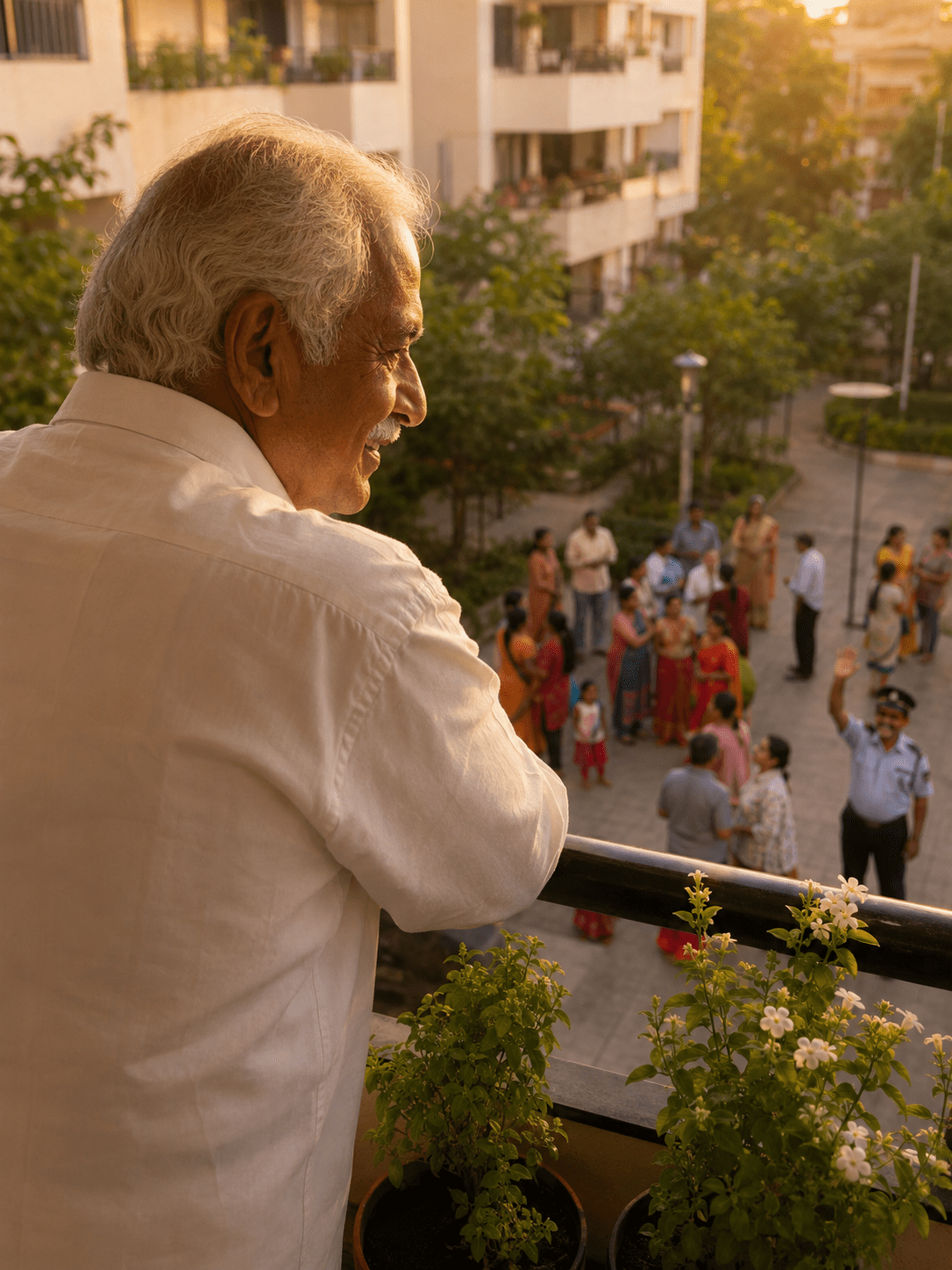
Elderly residents chatting in the courtyard of a Bangalore apartment complex, morning light

Feature Essay

Can Your Apartment Society Become a Care Network?

Your parents' apartment complex already has everything a care network needs: neighbours who see them daily, security guards who notice routines, and shared spaces where small acts of attention can prevent big emergencies. Some Bangalore societies have figured this out. Yours can too.

1,284

apartment associations are part of the Bangalore Apartments' Federation. The infrastructure for community care already exists. It just needs to be activated.

"A building is just concrete until someone remembers who lives behind each door. Care is not always a person in the room. Sometimes it is a registry that exists, a phone number that works, a neighbour who knows to check."
Edition 09

When hospital beds vanished during COVID's second wave in April 2021, the residents of Ranka Heights in Domlur did something remarkable. They converted their apartment clubhouse into an Emergency Medical Room, stocked it with oxygen concentrators, hospital beds, CPAP machines, and oximeters, and trained ten resident volunteers to stabilise patients while Manipal Hospitals provided remote consultation until ambulances arrived. That makeshift room went on to help over 1,000 patients. Nobody asked them to do it. No government directive, no legal mandate. Just neighbours deciding that the person down the corridor mattered enough to act.

That was a crisis response. But the principle behind it works every ordinary Tuesday too. According to the NSO, 20% of urban elderly in India live alone. In Bangalore, where tech careers pull adult children to other continents, that share is almost certainly higher. And only about 1% of India's elderly live in dedicated senior housing. The other 99% live in ordinary apartments and colonies, surrounded by people who could help, if anyone thought to organise it.

Most apartment societies already have the raw ingredients. Security guards see your parents every morning. They notice when the walk is skipped, when the newspaper is not picked up, when the lights stay off too long. Housekeeping staff enter elderly residents' homes regularly and notice when something feels different. Morning walking groups at Cubbon Park, Lalbagh, and JP Park, usually between 6:00 and 7:30 AM, are not just exercise groups. They are daily check-in systems disguised as social clubs. WhatsApp groups and apps like ADDA, MyGate, and ANACITY already connect residents. The infrastructure is there. What is missing is intention.

The societies that get it right share a few simple habits. They maintain a list of residents aged 65 and above, especially those living alone or with only a spouse. They keep emergency contact lists with NRI children's phone numbers and timezones. They have a buddy system where a neighbour checks in on elderly residents daily, even if it is just a doorbell ring. None of this requires budget approvals or formal processes. It starts with one neighbour deciding to pay attention.

The Bangalore Apartments' Federation now has 1,284 member associations across the city. That is 1,284 communities where a small shift in attention could mean the difference between an elderly resident getting help in minutes versus hours. Your parents' building does not need to become Ranka Heights overnight. It just needs one neighbour to ask: do we know who in this building might need us?

Also in this edition

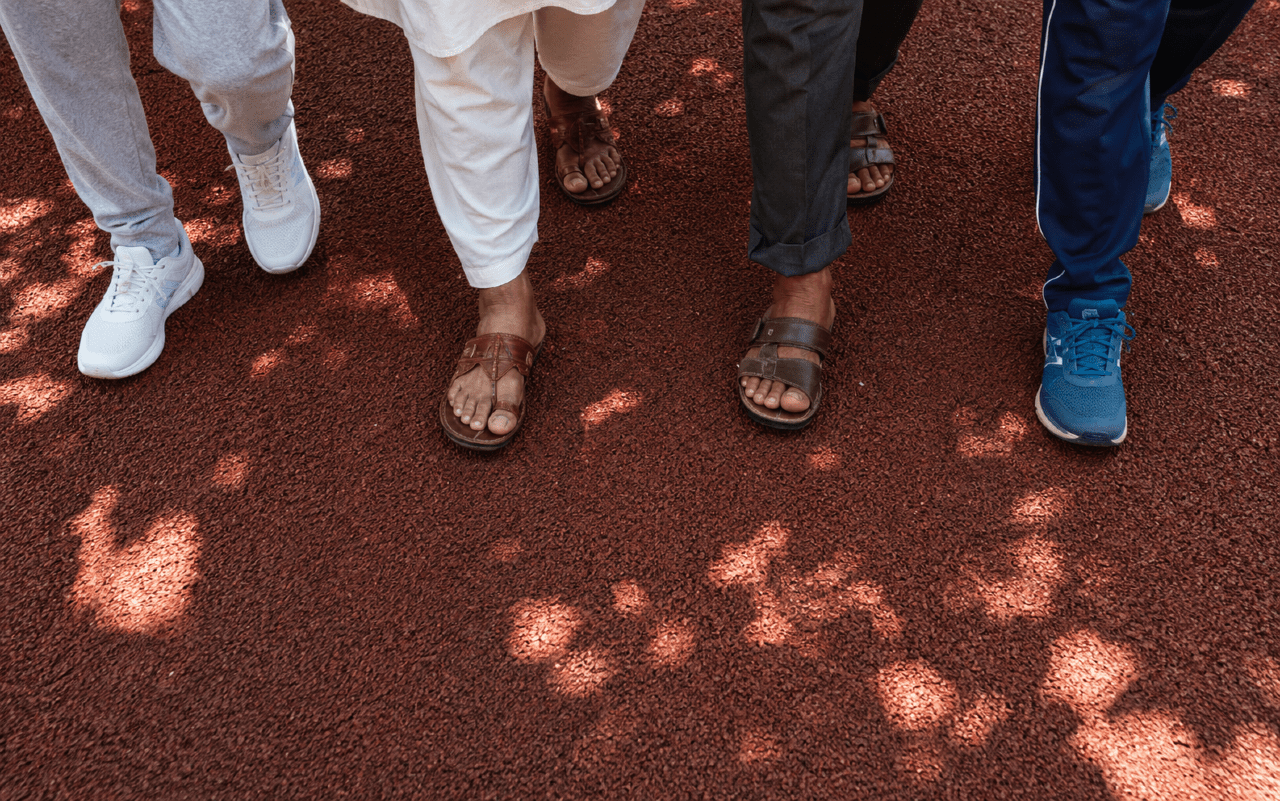
Morning walkers at a Bangalore park, elderly residents in a group

"The societies that protect their elderly don't do it through grand schemes. They do it because someone asked the right question at the right meeting."

Morning walking groups at Cubbon Park and Lalbagh are daily check-in systems disguised as social clubs. If your parent stops showing up, someone notices.

That is the whole point of a care network: not a grand plan, but small, repeatable acts of noticing.

●  The Bangalore Lens    What's happening locally, right now

Your apartment society already has the tools. Here is how to connect them.

Most Bangalore apartments already use ADDA, MyGate, ANACITY, or WhatsApp groups for daily communication. ADDA's "Emergency Help" feature connects residents to security and neighbours instantly. MyGate tracks visitor and staff entries. ANACITY brings community management, maintenance tracking, and resident communication into one place. WhatsApp groups carry the morning chatter. These tools already exist in your parents' building. The step most societies have not taken is connecting them to elderly care: adding a senior residents' group, sharing emergency contacts across shifts with security, or simply flagging which flats have residents living alone.

But apps answer questions. They do not notice that your father has been skipping his morning walk, or that your mother seems less steady this month. That requires someone who was there last week and will be there next week. A Kareverse Care Manager through Active Age fills exactly this gap: regular visits, familiar conversations, and the kind of observation that only comes from knowing someone over time.

The Elders Helpline 1090, run by Bangalore City Police and Nightingales Medical Trust, is a good number for any apartment community to have visible on the notice board or pinned in the residents' WhatsApp group. Sometimes the most useful thing you can do from abroad is make sure the right numbers are in the right places.

20%

of urban elderly in India live alone, according to NSO 2021 data. In Bangalore, where NRI migration is high, the percentage is likely higher. Your parents' apartment society is the closest thing they have to a daily safety net.

●  One Thing To Do    This week

Action

Do this now

Send Your Parents' Building These Five Questions This Week.

You do not need to be in Bangalore to start this. Send a WhatsApp message or email to your parents' building secretary or a trusted neighbour. These five questions plant the seed for a conversation that most apartment communities have never had.

1. Does the society maintain a list of residents aged 65 and above, especially those living alone or with only a spouse?

2. Is there an emergency contact list that includes my phone number and email, with my timezone noted?

3. Has the society connected with a nearby hospital for emergency response, not just an ambulance number, but a simple protocol?

4. Do the security guards across all shifts have my parents' flat number and my contact details?

5. Is there a neighbour or volunteer who checks in on elderly residents who live alone, even informally?

Most of these will not be in place yet. That is fine. The point is not to audit your parents' building. The point is to start the conversation. One question from one NRI child is often all it takes for a neighbour to say, "We should probably look into this." It starts with one name, one number, one person who decides to pay attention.

●  From The Blog    Further reading on kareverse.com
Sleep Problems in Seniors

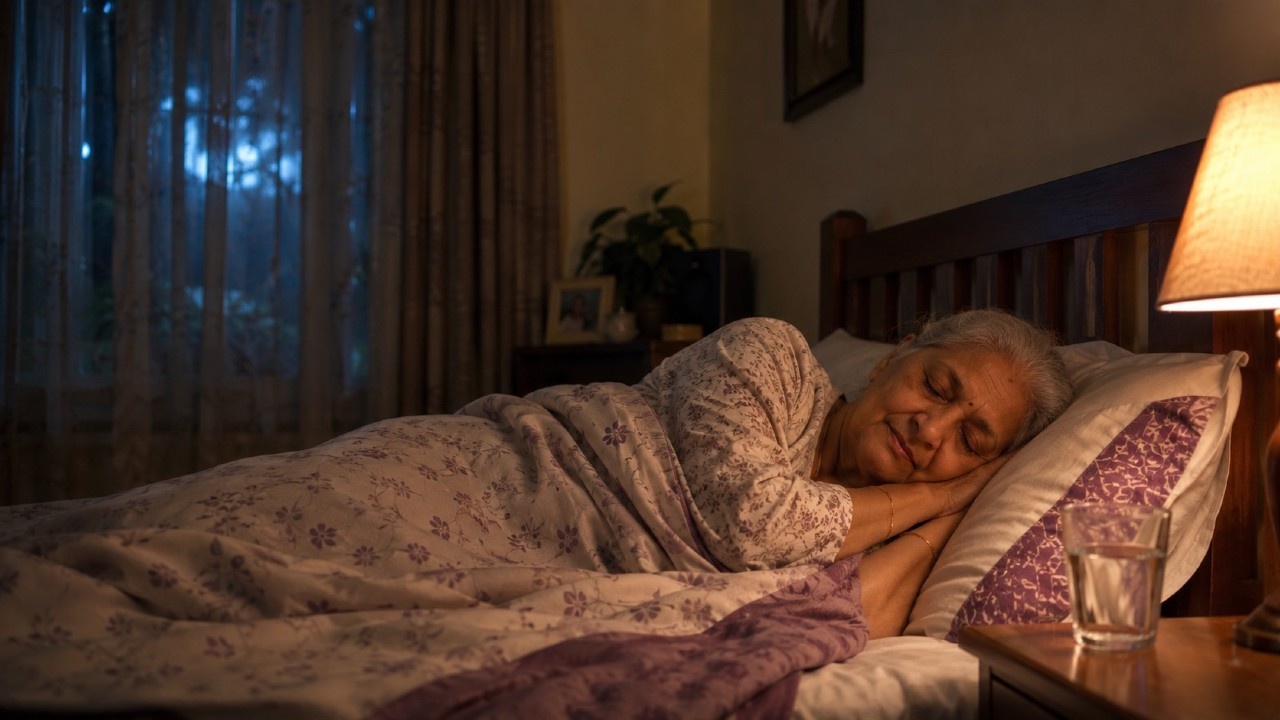
Sleep Problems in Seniors: Why Nights Get Harder and What Actually Helps

Dehydration in Seniors

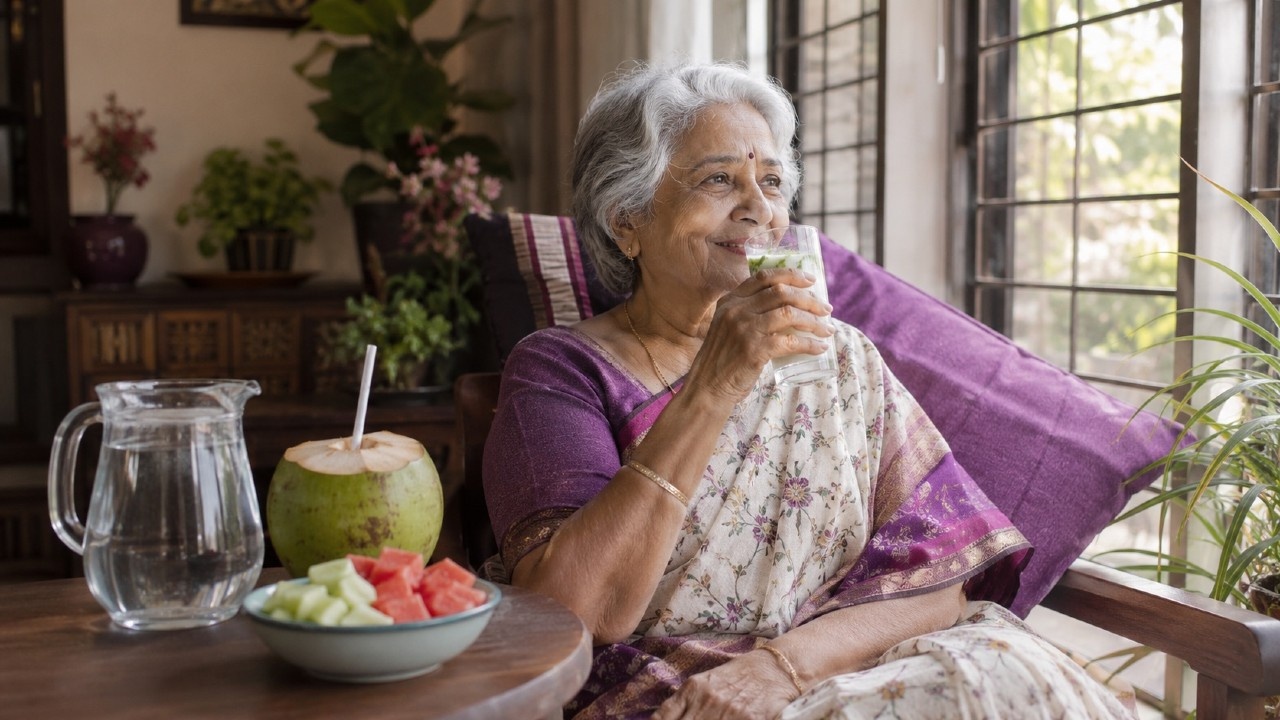
Dehydration in Seniors: Why It Is a Bigger Risk Than You Think, and How to Prevent It

Stroke Recovery at Home

Stroke Recovery at Home: A Practical Guide for Families in Bangalore

A building is just concrete until someone remembers who lives behind each door. Societies that look after their elderly do not do it through grand schemes. They do it because someone asked the right question at the right meeting. That someone can be you, even from ten time zones away. Care is not always a person in the room. Sometimes it is simply a registry that exists, a phone number that works, a neighbour who knows to check.

The Kin Letter, Edition 09  ·  Thursday, 16th July 2026

Know someone whose parents are in Bangalore? Forward this letter, or invite them to subscribe.

Subscribe    Join Active Age Community    Follow on LinkedIn

Sources: Ranka Heights EMR (Business Today, Deccan Herald, April 2021), NSO 2021 elderly living arrangements data, Bangalore Apartments' Federation (baf.org.in), Elders Helpline 1090 / Nightingales Medical Trust, ADDA, MyGate, and ANACITY apartment management platforms.

You're receiving The Kin Letter because you're part of our community. Unsubscribe

Get The Kin.Letter
in your inbox

Elder care intelligence for families with parents in Bangalore.

  • A short essay every Thursday
  • One practical thing to do
  • 5-minute read, no spam

You can unsubscribe at any time — every edition has a one-click unsubscribe link.

Get in touch