Kareverse
WhatsApp
All editionsNo. 10 · 23 July 2026

The Kin Letter · No. 10 · 23 July 2026

Nobody Cooks for One

No. 10  ·  Thursday, 23rd July 2026 For those who care from a distance Kareverse, Bangalore

Newsletter

The Kin.Letter

Elder care intelligence for NRI families with parents in Bangalore

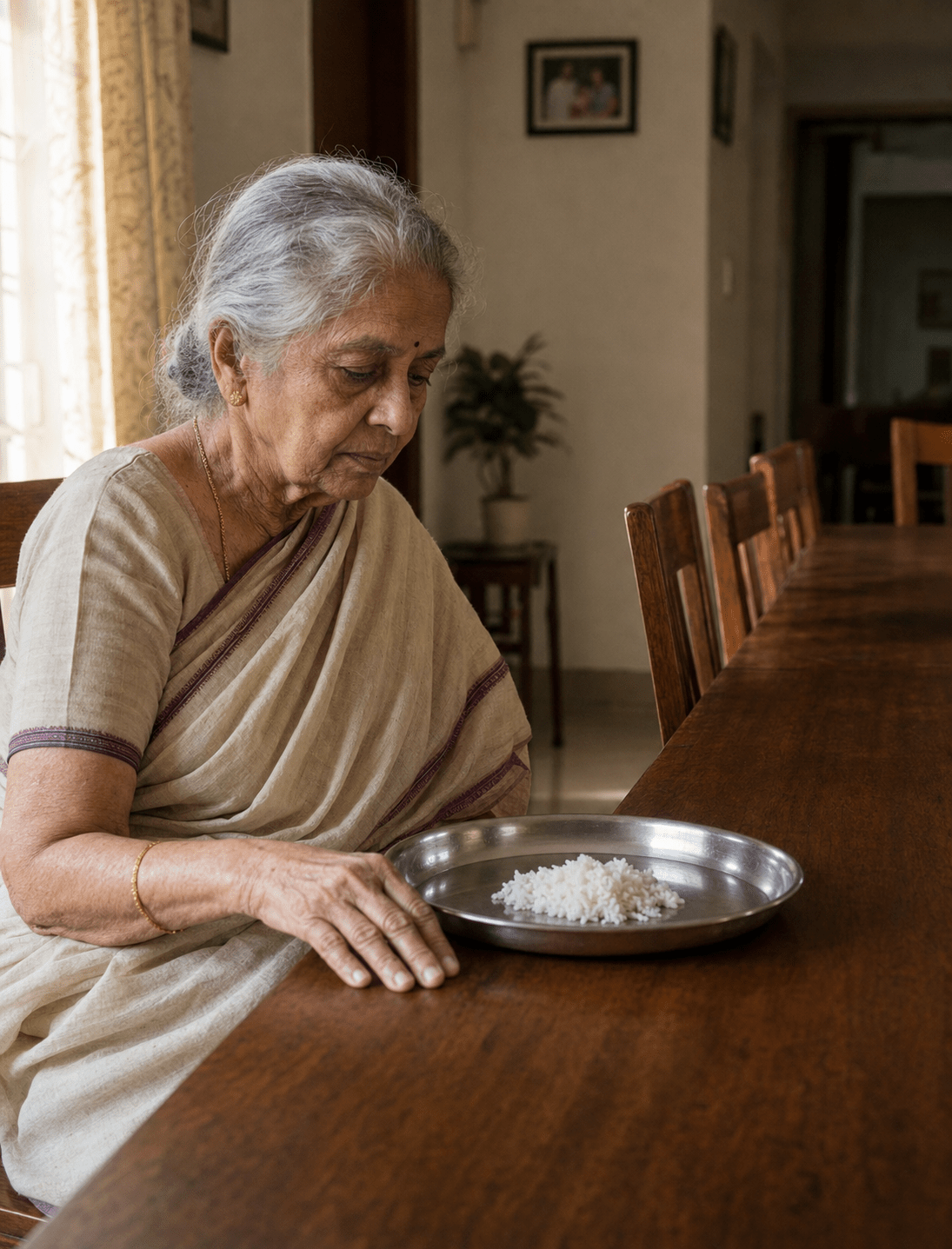
An elderly parent sits alone at a large dining table in a Bangalore home, a single plate in front of them

Feature Essay

Nobody Cooks for One

Your mother cooked for a full table for forty years. Now she stands in the same kitchen holding one cup of rice and thinks, why bother. The quietest way an elderly parent slips is not a fall or a diagnosis. It is a plate that has been half-empty for months, and a Sunday call that always ends in "yes, I ate."

1 in 6

older Indians living in the community are already malnourished, and close to half are malnourished or at risk of it. The missing ingredient is rarely money. It is a reason to make the meal.

"A parent who cooked for a full table for forty years does not know how to cook for one. So they stop cooking, and start grazing. Tea and toast. Yesterday's dal. Whatever needs no effort and no company."
Edition 10

Your mother used to cook for a household. A husband who wanted his rasam a particular way. Children who came home hungry from school. Grandchildren over the weekend, guests on festival days, a kitchen that ran from six in the morning. Cooking was not a chore. It was how she held the family together, three times a day. Now the husband is gone, or unwell. The children are in Toronto and Dubai and Whitefield-but-busy. And one afternoon she stands in a kitchen built for eight, holding a single cup of rice, and thinks: why bother.

There is a name for this in geriatric medicine: the anorexia of aging. Appetite genuinely declines with age. The stomach empties slower, taste and smell dull, medicines suppress hunger, and the body simply asks for less. That much is biology. But the sharpest drop in eating almost never comes from biology. It comes from the empty chair across the table. Widowhood, living alone, and low mood are the three biggest reasons an elderly parent quietly eats less. A parent who cooked for a full table for forty years does not know how to cook for one. So they stop cooking, and start grazing.

The tragedy is that the weight loss is invisible for months. It hides inside a loose sari, a belt pulled one notch tighter, a face you only see on a six-inch screen. By the time someone says "Amma looks thin," a lot of muscle is already gone, and in the elderly, lost muscle is very hard to rebuild. This isn't rare, and it isn't a poverty problem. It happens in comfortable apartments with a full fridge, because the missing ingredient was never money. It was a reason to make the meal.

Food is the one thing an NRI child feels sure about. There's a cook. There's money. The fridge is stocked. Of everything to worry about from abroad, meals feel handled. They often aren't. A cook who comes for one hour makes what's asked, and a parent with no appetite asks for less and less. Stocked shelves say nothing about what actually got eaten. And on the call, "Did you have lunch?" gets a "yes" every single time, because the alternative is a conversation your parent doesn't want to have and doesn't want to worry you with.

So the signal doesn't come through words. It comes through weight, energy, and small changes: clothes hanging loose, tiredness that wasn't there last visit, a fall that shouldn't have happened, a wound that won't heal, an infection that lingers. All of these can trace back to a plate that's been half-empty for months. Poor nutrition is not a separate problem from falls and slow recovery. It is often the thing underneath them.

Also in this edition

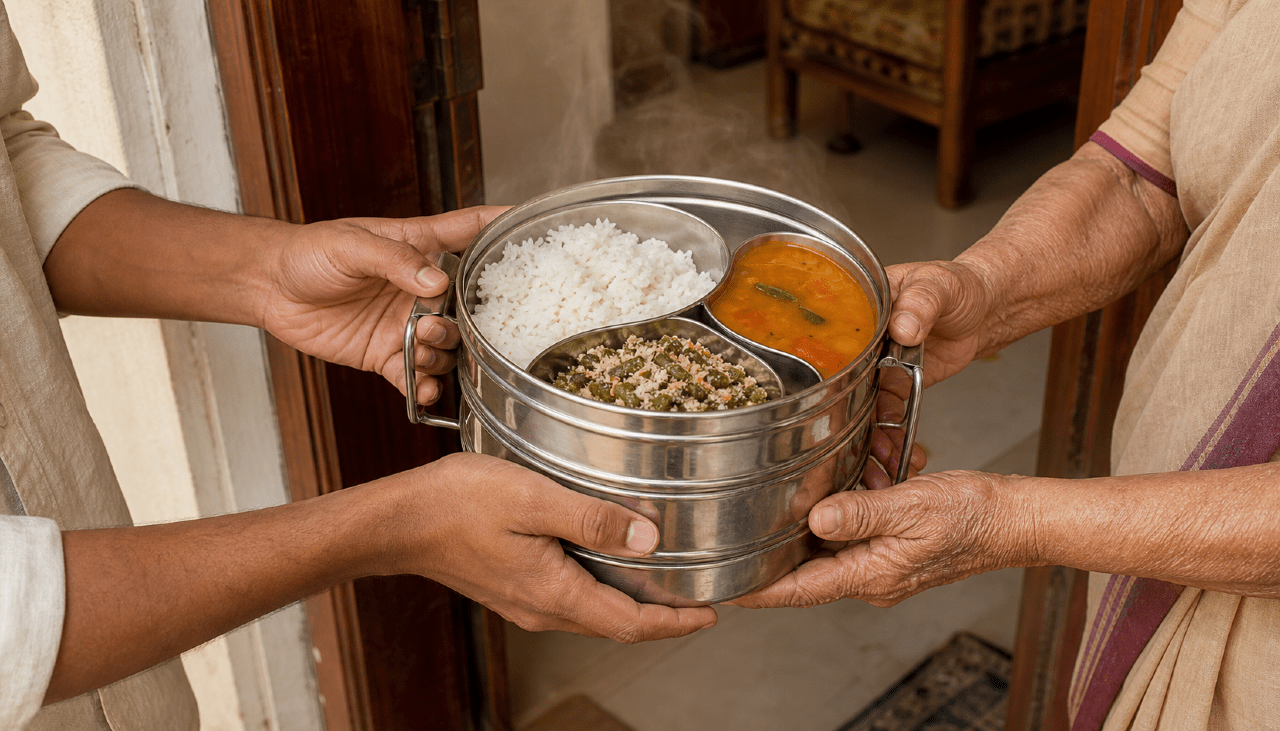
A hot home-style meal delivered to the door of a Bangalore senior's home

"A hot dabba at the door does two things at once. It puts real food on the table, and it puts a person there every day who will notice if your parent doesn't answer."

Weight loss in an elderly parent is the single most important number most families never track from abroad. A ₹500 weighing scale at home changes that overnight.

The plate half-empty for months is trying to tell you something, long before the fall or the hospital.

●  The Bangalore Lens    What's happening locally, right now

A city that can actually fix the food problem.

If there is one care problem Bangalore is unusually good at solving, it's this one, because the infrastructure already exists. Tiffin and daily-meal services built for seniors now deliver soft, home-style, low-oil South Indian food to the door across most of the city. For a parent who has stopped cooking, a hot dabba arriving at noon does two things at once: it puts real food on the table, and it puts a person at the door every single day who will notice if your parent doesn't answer. The meal is nutrition. The delivery is a check-in.

For a parent recovering from illness, diabetic, or simply frail, it's worth doing properly. A nutrition consult turns "she should eat more" into an actual plan: how much protein a 78-year-old recovering from a fracture needs, how to make a diabetic-safe meal that still tastes like home, how to add calories to food a poor appetite will still accept. Kareverse offers a Nutrition Counselling session (₹800) for exactly this, an Indian-kitchen meal plan a parent will actually eat, not a printout they'll ignore.

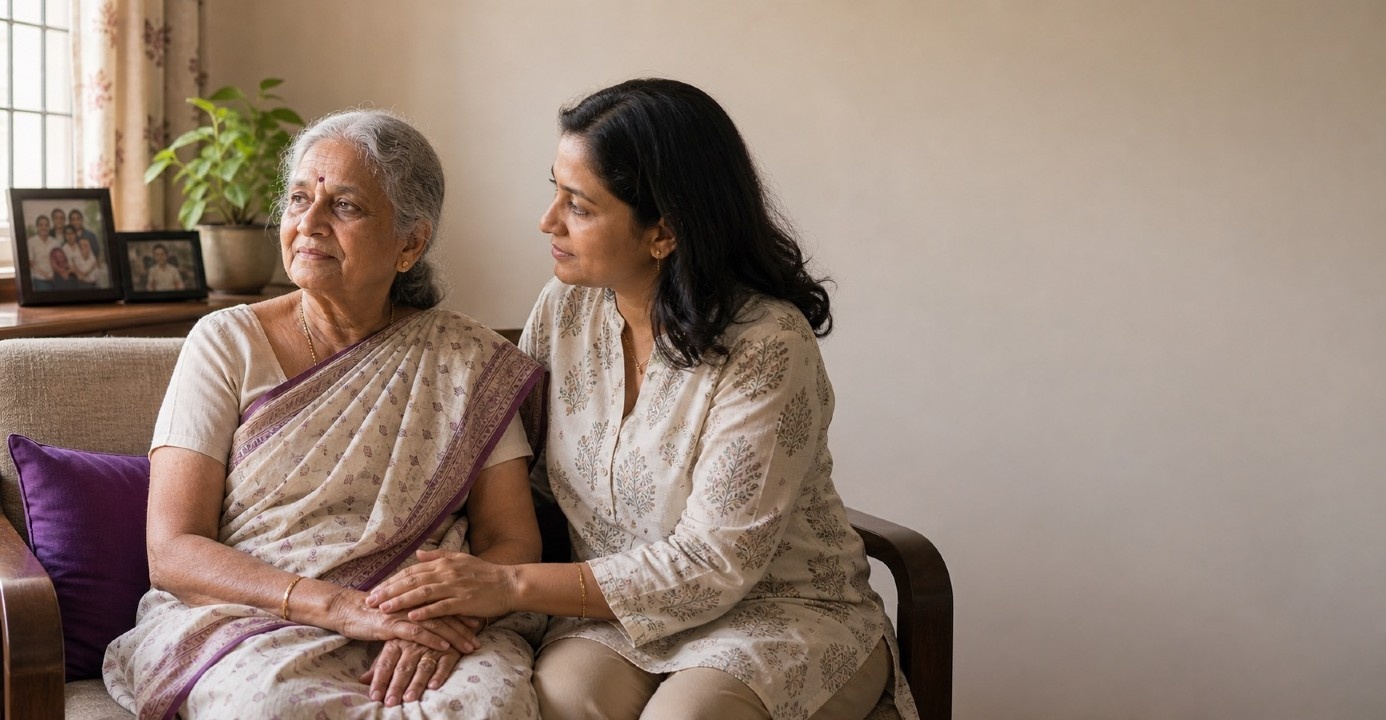
And when the deeper issue is that no one is at the table, the meal is only half the fix. The other half is company, which is where a Kareverse Care Manager through Active Age does what a delivered dabba can't: sit with your parent, notice the appetite fading, and tell you before it becomes a hospital visit.

₹800

is the cost of a Kareverse Nutrition Counselling session: a realistic meal plan built around your parent's appetite, medical needs, and the food they actually like. Cheaper than a single hospital day that poor nutrition can lead to.

●  One Thing To Do    This week

Action

Do this now

Stop Asking "Did You Eat?" Ask a Different Question.

"Did you eat?" will always get a yes. This week, ask three specific questions instead, gently, not as a test.

1. "What did you actually make for lunch today?" Vague answers ("something", "curd rice") repeated day after day are the signal. A real meal has a real name.

2. "Can you send me a photo of your plate?" Do it for a few days as a small ritual. A photo doesn't lie the way "yes" does.

3. "When did you last step on a weighing scale?" If there isn't one at home, have one delivered this week, then ask for the number every fortnight. Unexplained weight loss is the most important number you're not tracking from abroad.

If two of those three come back wrong, don't wait for your next trip. Set up a daily senior meal delivery now, and book a nutrition consult so someone builds a plan around what your parent will genuinely eat, not what they should eat in theory.

●  From The Blog    Further reading on kareverse.com
The Sandwich Generation

The Sandwich Generation: Caring for Kids and Aging Parents in Bangalore

Is It Just Forgetfulness, or Something More?

Is It Just Forgetfulness, or Something More? A Family's Guide to Memory Changes in Aging Parents

Brain Fitness After 65

Brain Fitness After 65: Keeping the Mind Sharp in Later Life

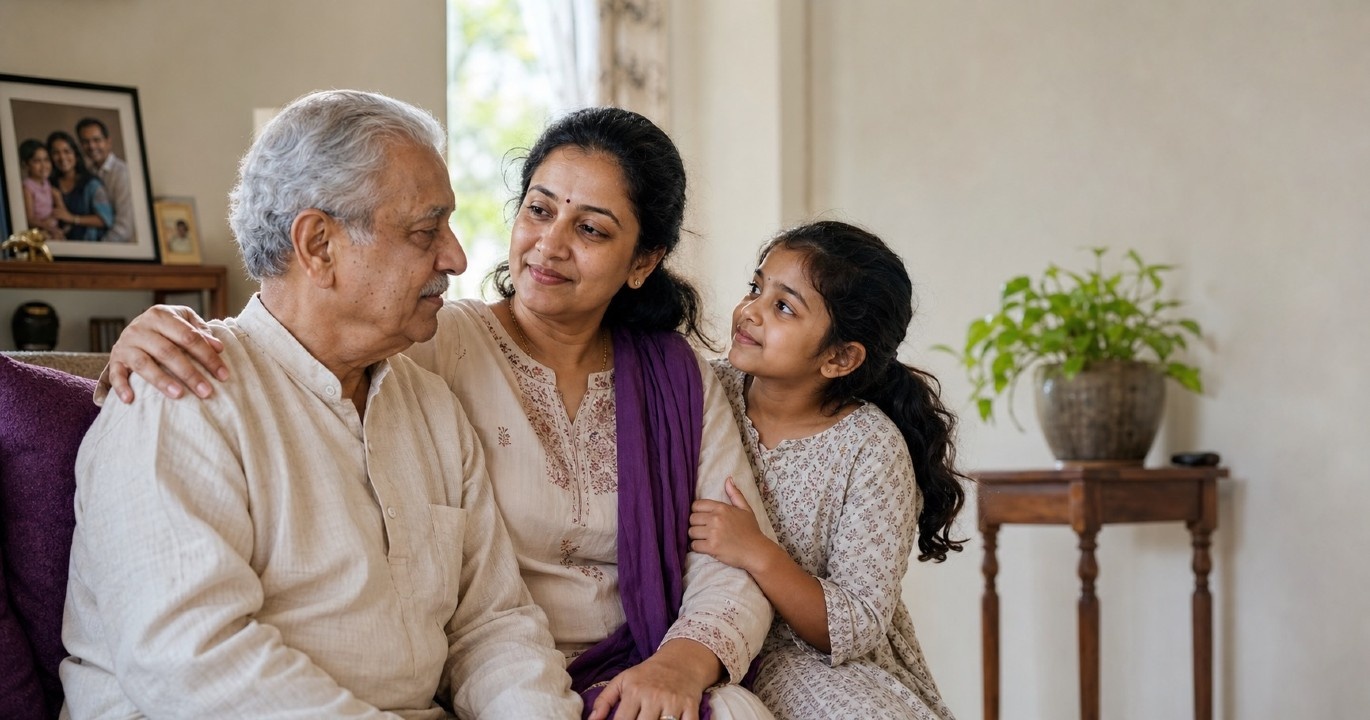
Your mother fed everyone for forty years. She measured love in how much you ate, and worried when your plate was full but your appetite wasn't. The quietest way a parent slips is when that instinct turns inward and finds no one there: no table to set, no hunger to answer, no reason to cook. You can't be at that table every night from another continent. But you can make sure the table is still set, the food still arrives, and someone still notices whether it gets eaten.

The Kin Letter, Edition 10  ·  Thursday, 23rd July 2026

Know someone whose parents are in Bangalore? Forward this letter, or invite them to subscribe.

Subscribe    Join Active Age Community    Follow on LinkedIn

Sources: "Estimates of malnutrition and risk of malnutrition among the elderly (≥60 years) in India: A systematic review and meta-analysis" (Ageing Research Reviews, 2021), which found 16.3% malnourished by MNA among community-dwelling elderly; LASI Wave 1 (2017-18) food insecurity and social isolation data; and the "anorexia of aging" concept in geriatric medicine.

You're receiving The Kin Letter because you're part of our community. Unsubscribe

Get The Kin.Letter
in your inbox

Elder care intelligence for families with parents in Bangalore.

  • A short essay every Thursday
  • One practical thing to do
  • 5-minute read, no spam

You can unsubscribe at any time — every edition has a one-click unsubscribe link.

Get in touch