| No. 15 · Thursday, 27th August 2026 |
For those who care from a distance |
Kareverse, Bangalore |
|
|
Newsletter
Elder care intelligence for NRI families with parents in Bangalore
|

|
Feature Essay
The Weight That's Quietly Dropping
On a video call you would notice a cough, a limp, a slur. You will almost never notice four kilos gone. Weight loss is the one major warning sign a screen hides perfectly, and in an older parent it is often the body's first quiet signal that something has changed.
5%
of body weight lost in 6 to 12 months, without trying, is the line doctors treat as significant. For a 70 kg parent that is just 3.5 kg, a trouser size, easy to miss and worth taking seriously.
|
|
"A weekly call gives you their voice, their mood, their face. It will never give you the number. And weight is one of the most honest things an ageing body has to say."
Edition 15
|
|
Every week the call connects and your father's face fills the frame. Same spectacles, same kurta, same slightly impatient way of holding the phone too close. He is sitting, so you cannot see him stand. He is framed from the chest up, so you cannot see the belt pulled to a tighter notch, or the trousers that now need a fold at the waist. He says he is eating fine. And you hang up reassured, because he looked exactly like himself. This is the strange blind spot of loving a parent through a screen: you would instantly catch a cough, a tremor, a struggle to find a word, but weight, one of the body's most reliable signals, is almost invisible on a video call. A person can lose four or five kilograms and still look, from the shoulders up, entirely unchanged.
And that matters more than most families realise. Doctors have a clear line for this: an unplanned loss of about 5% of body weight over six to twelve months, weight the person did not set out to lose, is considered clinically significant and worth investigating. For a 70 kg parent, that threshold is just 3.5 kg. It is not the dramatic wasting we picture. It is a slightly looser blouse, a ring that spins, a face that has quietly narrowed. It is precisely because the change is so undramatic, so easy to explain away as "he was always slim" or "she eats less now that she's older," that it slips past a family for months.
Unexplained weight loss is not a diagnosis; it is the body raising a hand to say something has changed. Very often the cause is ordinary and fixable. A new tablet that flattened their appetite or altered taste. A sore tooth or an ill-fitting denture that makes chewing a chore, so they quietly stop eating anything that needs effort. A swallowing problem, a sluggish thyroid, a low mood that has taken the interest out of food, or the slow drift into cooking for one after a spouse is gone, the pattern we wrote about in an earlier letter. Occasionally, and this is exactly why it deserves a look rather than a shrug, steady weight loss is the first and only sign of something that is very treatable when caught early and far harder later. The point is never to frighten yourself. It is that a falling weight is a question worth asking a doctor, not a detail worth ignoring.
There is a second danger, too, one that exists even when the underlying cause turns out to be completely benign: the weight loss itself is hard on an older body. What an ageing parent loses first is muscle, and lost muscle means less strength, poorer balance, more falls, slower recovery from any illness, a weaker response to infection. Frailty feeds on itself, each kilogram gone making the next easier to lose. Catching a 3.5 kg drop early and reversing it is a small, manageable task. Trying to rebuild a parent after ten kilograms have melted away, along with the muscle and confidence that went with them, is a long and uphill one.
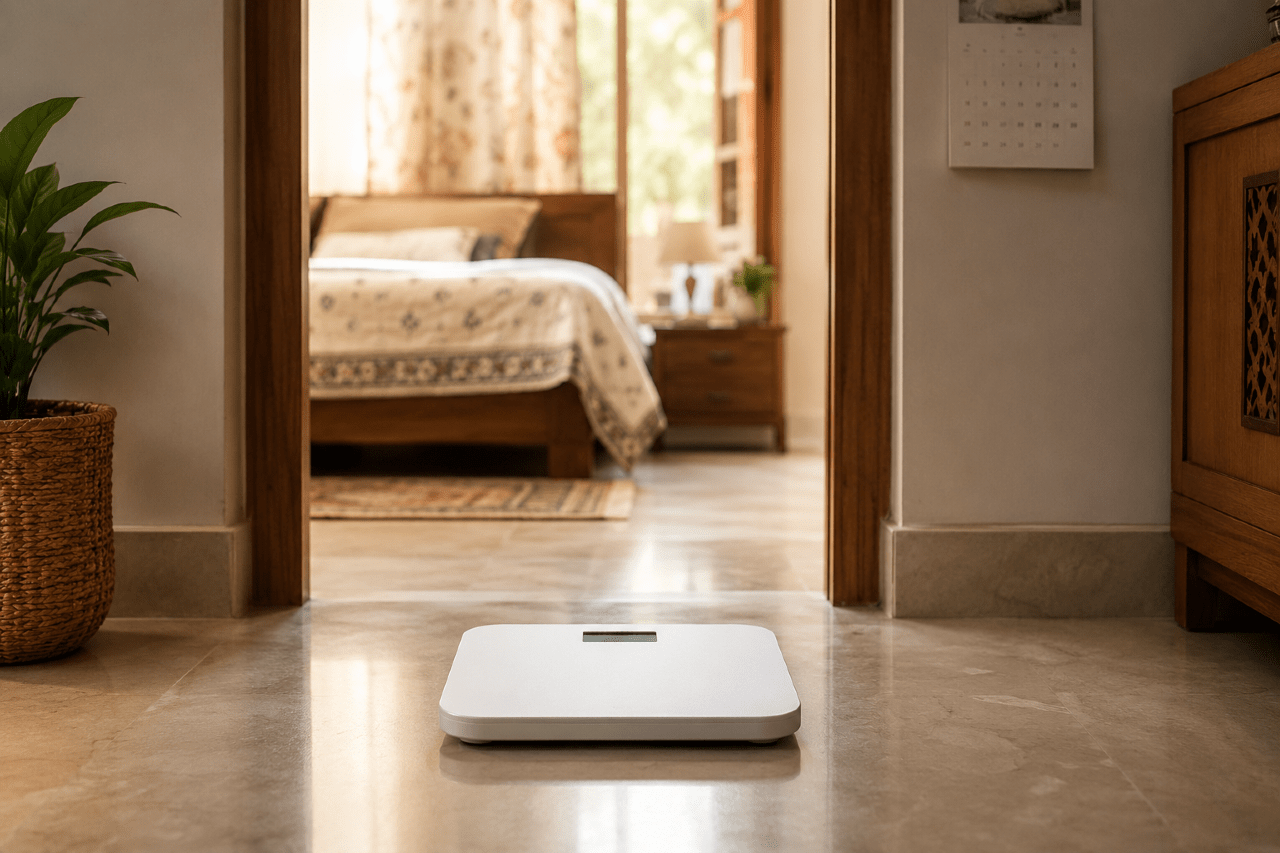
So the answer to a signal you cannot see on a call is simple: make it something you can measure. You do not need to be in the room to watch a number. A basic weighing scale by the bathroom door, a weight noted on the wall calendar on the first of every month, a photo of the display sent to you, and suddenly the invisible becomes a line you can track from anywhere on earth. And between the weigh-ins, listen for the proxies your parent mentions without thinking, the belt moved in a notch, the watch strap that now sits loose, the blouse taken to the tailor to be taken in, the offhand "all my clothes have become big." Those are not small talk. They are data, arriving disguised as conversation.
|
Also in this edition
"A person can lose four or five kilos and still look, from the shoulders up, exactly like themselves."
Turn the invisible into a number. A simple digital scale, a weigh-in on the 1st of each month at the same time (morning, before breakfast), and the figure sent to you. One reading tells you little. A trend tells you everything.
Ask whoever cooks. The maid or cook sees the plate, not just the face, and knows if the food is coming back half-eaten long before the weight shows it.
|
|
|
● The Bangalore Lens
What's happening locally, right now
|
The number a video call can't show you. And someone who can put it on a scale.
On this one signal, distance leaves you flying blind. Your weekly call carries their mood and their voice beautifully; it carries their weight not at all. A parent who eats alone, moves less, and sees fewer people is often a parent quietly losing ground, and steady weight is one of the clearest signs they are still eating well and staying active, the very things our Active Age community is built around.
The fix is to have a real person turn that blind spot into a measured, reported fact. That is what Genie is for.

Genie's Be There at Home puts a calm, background-verified person beside your parent to share a proper meal, log a monthly weigh-in, and quietly notice whether the plate is coming back full, then tell you what the screen never could. If the trend is falling, Go With Them takes your parent to the doctor for a check and any basic tests, so a worrying number becomes an answer instead of an anxiety.
A Genie never touches your parent's money, never asks for a PIN, never transacts. It is simply the attentive presence you would be yourself, if you were here. The things you'd do for your parents, if you were here.
You cannot weigh your parent from another continent. But you can make sure someone does, every month, and tells you the truth.
|
1 in 5
older adults experiences meaningful unintentional weight loss. It is common enough that a monthly weigh-in deserves to be as routine as a blood-pressure check, and important enough that a steady fall should send your parent to their doctor, where the cause is usually found and, more often than not, easily treated.
|
|
|
● One Thing To Do
This week
|
|
Action
Do this now
Get a Number on the Board.
You cannot see weight on a call, so make it measurable. Turning one invisible signal into a monthly number is among the highest-value five minutes you can spend on your parent's health from abroad.
1. This week, have a simple digital weighing scale delivered to their home. It costs a few hundred rupees and does more for your peace of mind than almost anything else you can send.
2. Set the ritual: weigh on the 1st of every month, same time, in the morning after the toilet and before breakfast. Have them write it on the wall calendar and send you a photo of the display.
3. Get a baseline on your next call: "Roughly what do you weigh now, and what did you weigh a year ago?" Even an approximate answer tells you the direction of travel.
4. Between weigh-ins, watch the proxies, looser clothes, a tighter belt notch, a ring that spins, and ask whoever cooks whether the plate is coming back full. Those are your early warnings.
5. Know the trigger: an unplanned drop of about 5%, roughly 3 to 4 kg for most parents, over a few months means a doctor's visit, not wait-and-watch. It is usually something simple and fixable, which is exactly why you want it found early.
A scale by the door is a strange little gift. It is also one of the most useful things you can put in a parent's home from ten thousand miles away.
|
|
● From The Blog
Further reading on kareverse.com
|
|
|
|
Loving a parent from a distance means making peace with everything you cannot see, and then quietly building ways to see it anyway. You cannot be at their table to notice the plate coming back full. You cannot catch them on the stairs to feel how light they have become. But you can put a scale by their door and a number on their calendar, and turn one of the body's most honest signals into something you can watch from anywhere in the world. It is not the grand gesture we imagine care to be. It is smaller, and steadier, and far more useful: a single number, once a month, that lets you catch the quiet drop while it is still just a trouser size, and not a year too late.
The Kin Letter, Edition 15 · Thursday, 27th August 2026
|
|
Know someone whose parents are in Bangalore? Forward this letter, or invite them to subscribe.
Subscribe
Join Active Age Community
Follow on LinkedIn
|
|
Sources: "Unintentional Weight Loss in Older Adults," American Family Physician (AAFP), 2021, defining a loss of ≥5% of body weight over 6–12 months as clinically significant, present in roughly 15–20% of older adults, and associated with increased morbidity and mortality; guidance on common causes (medication effects, dental and swallowing problems, thyroid disease, depression, social isolation) and the fact that a serious cause such as malignancy underlies a minority of cases, most being treatable when found early; Mayo Clinic Proceedings, "Rational Approach to Patients With Unintentional Weight Loss"; and Genie by Kareverse (kareverse.com/genie). This letter is general information, not medical advice; any unexplained weight loss should be assessed by your parent's own doctor.
You're receiving The Kin Letter because you're part of our community. Unsubscribe
|
|