| No. 13 · Thursday, 13th August 2026 |
For those who care from a distance |
Kareverse, Bangalore |
|
|
Newsletter
Elder care intelligence for NRI families with parents in Bangalore
|
|
Feature Essay
The Hearing Loss That Everyone Mistakes for Something Else
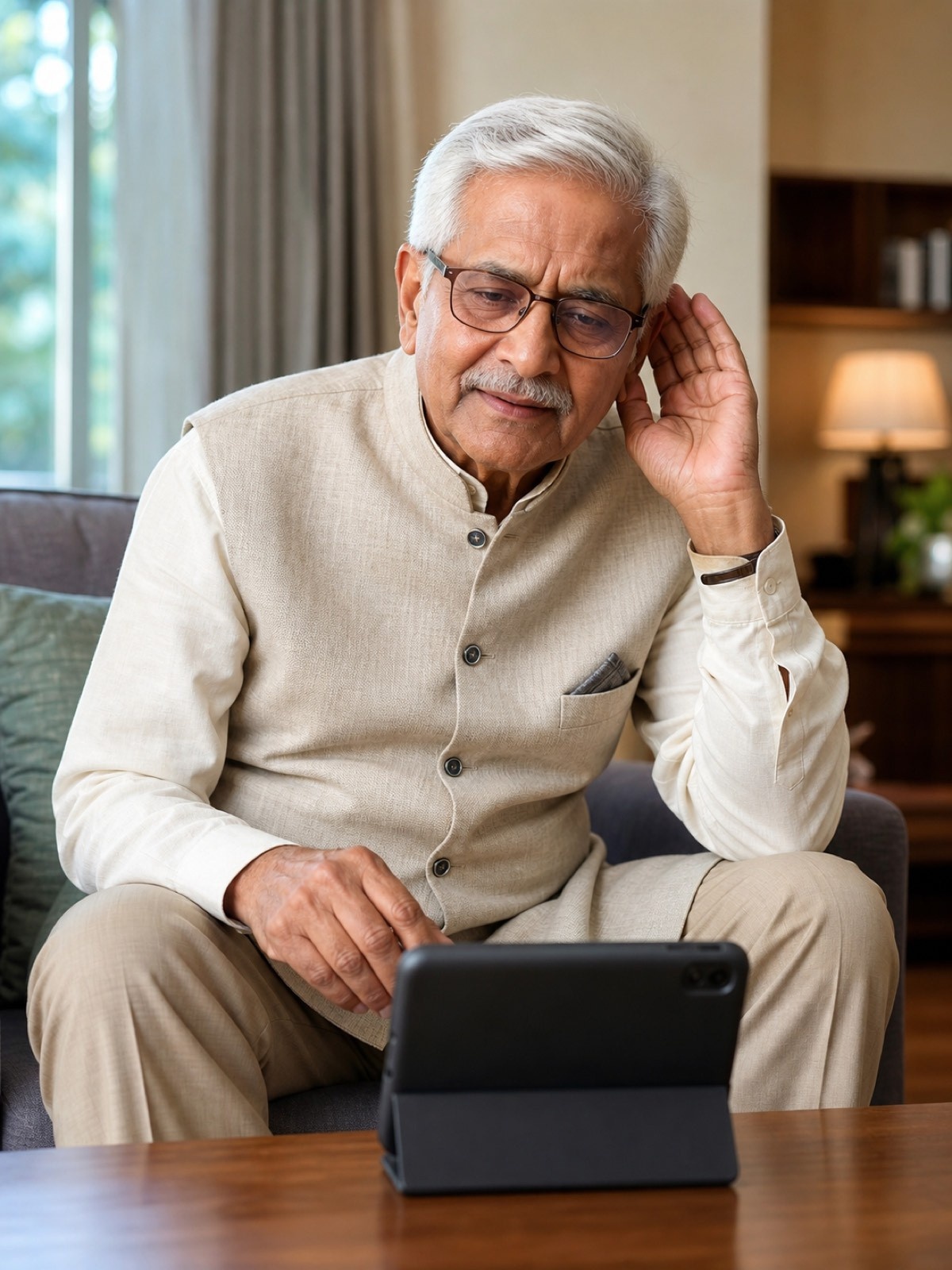
On the Sunday call she answers a beat late, or answers the wrong question, and you start to worry about her memory. Long before it is memory, it is almost always something quieter, far more common, and far easier to fix: she cannot hear you.
7 yrs
On average, a person lives with hearing loss for the better part of a decade before acting on it. Seven years of being misread as forgetful, distant, or difficult, when the fix was a test away.
|
|
"Long before you should worry about her memory, ask whether she can actually hear the question. The two look identical from 5,000 miles away, and only one of them is easily fixed."
Edition 13
|
|
It starts as a small thing on the weekly call. Your father answers a beat too late. Your mother says "haan, haan" to a question she clearly did not catch. She has quietly stopped joining the noisy family group call, says it is "too much." At the last visit she seemed to have pulled inward, quieter at the dinner table, no longer the one steering the conversation. From a distance, every one of these reads as something ominous: her memory, her mood, "getting old." But the most likely explanation is also the most ordinary, and almost nobody checks it first. She cannot hear clearly anymore, and she has learned to hide it.
Age-related hearing loss is a master of disguise. It looks like early dementia, because a parent who mishears a question and answers the wrong thing seems confused. It looks like stubbornness, or "selective hearing," because they catch you fine in a quiet room but seem to tune out at a crowded lunch. It looks like depression, because the person who can no longer follow the temple bhajan, the rummy game, or the grandchildren talking over each other simply stops going, and folds inward. Families misread all of it. So do busy doctors, who see a parent for ten minutes in a silent consulting room and never notice. Meanwhile the real thing goes untreated for years, wearing every label except its own.
This is not a rare problem you can assume away. Indian studies put some degree of hearing loss in more than half of people over sixty, and closer to two in three past seventy; the elderly carry the overwhelming majority of the country's disabling hearing loss. And yet the average person waits the better part of a decade before doing anything about it. The reason is rarely cost or access. It is denial and stigma. In India a hearing aid still reads as a public admission of being old and infirm, something to be hidden away, while spectacles are worn without a second thought. So parents cope. They turn the television up, nod along, ask you to repeat "just once more," and slowly build an entire life around not quite hearing it.
Here is the part that should change how seriously you take a misheard question. In 2024 the Lancet Commission on dementia named hearing loss the single largest modifiable risk factor for dementia, ahead of smoking, ahead of inactivity. The mechanism is unsettlingly simple: a brain starved of sound has less to work with, strains harder to fill the gaps, and pulls back from the social contact that keeps it sharp. Untreated hearing loss is also one of the straightest roads to isolation and depression in older people. And so the cruelty completes a loop: hearing loss looks like cognitive decline, gets mistaken for it, goes untreated for years, and then genuinely raises the risk of the very thing everyone feared in the first place.
And here, at last, is the good news, which is the real reason for this letter. Of all the things that worry you about an aging parent, this is among the most fixable. A hearing test takes about twenty minutes and costs very little. Modern hearing aids are small, discreet, and nothing like the whistling beige devices your grandparents refused to wear. Treating hearing loss is one of the very few levers we have that measurably protects the aging brain, lifts mood, and pulls a parent back into the middle of the room. The hard part was never the treatment. It is noticing, past all the wrong labels, that hearing is what needed treating at all.
|
Also in this edition
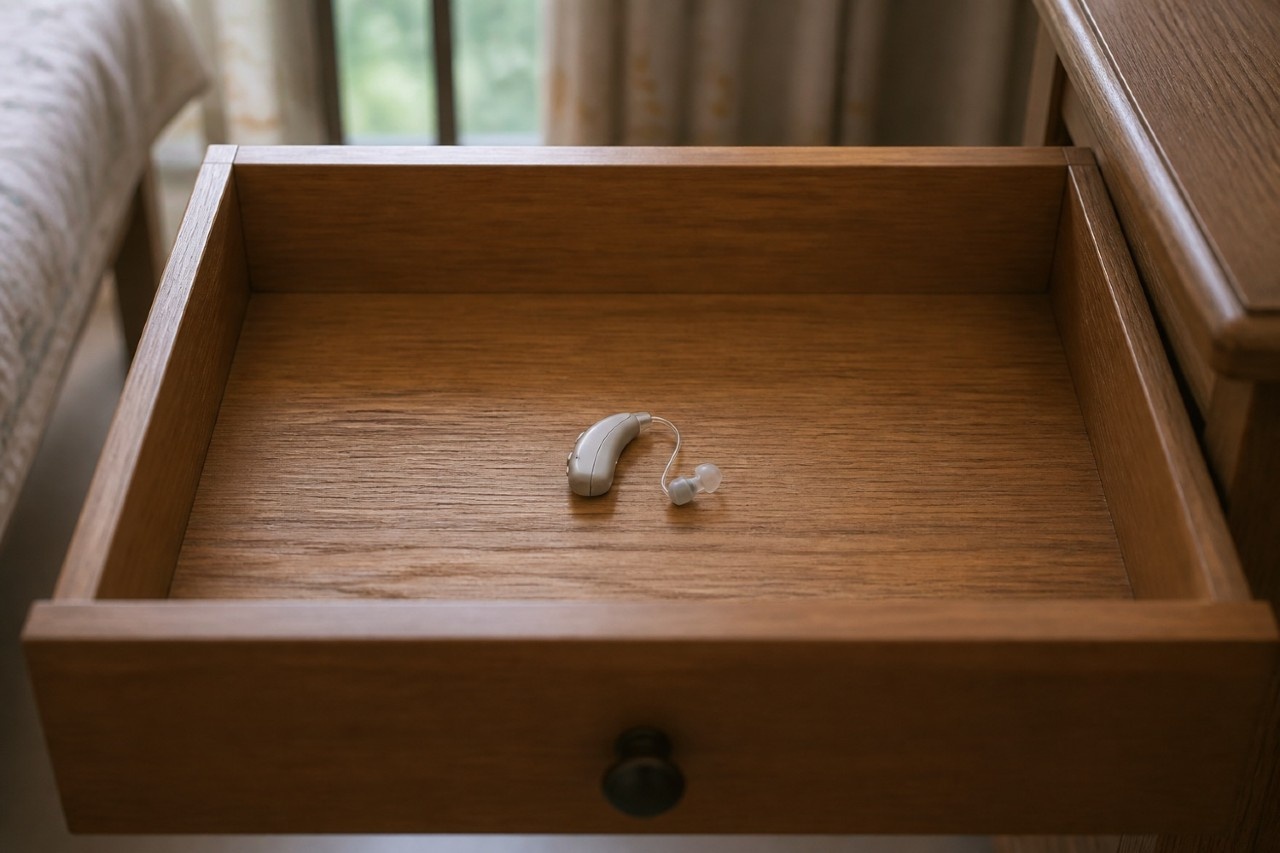
"A hearing aid still reads as an admission of being old. Spectacles never did. So the aid goes in a drawer, and the withdrawal gets blamed on age."
Age-related loss takes the high frequencies first. That is why a parent hears that you are speaking but cannot make out the words, and does far worse on the phone than face to face.
It is usually gradual and even in both ears, so there is no single day it "starts." That is exactly why families, and parents themselves, adapt to it without ever noticing.
|
|
|
● The Bangalore Lens
What's happening locally, right now
|
The test she'll finally agree to, if someone goes with her.
You can suspect hearing loss from 5,000 miles away. What you cannot do from there is get your mother to an audiologist, sit with her while she chooses a device she will actually wear, and make sure it does not end up in a drawer by the following week. That last part is where most families quietly lose the fight: the aid is bought, worn for a few days, and abandoned because nobody was beside her while she got used to it.
This is a problem best solved by someone in the room. That is exactly the gap Kareverse built Genie to fill.

Genie's Go With Them service sends a background-verified, elder-care-trained companion to take your parent to the audiologist or ENT for the hearing test and fitting, wait through it, and bring them safely home, so a test they have been avoiding for years finally happens. For the weeks after, Be There at Home puts a patient, familiar person beside them while they learn a new device, so it stays in the ear and not in the drawer.
As always, a Genie never touches your parent's money, never asks for a PIN, never transacts. They handle the trip, the appointment, and the patient company, while your parent stays in full control. The things you'd do for your parents, if you were here.
And once your parent can hear the room again, the harder work, staying connected, gets easier. That is the whole idea behind Kareverse's Active Age community.
|
No. 1
Hearing loss is the single largest modifiable risk factor for dementia identified by the 2024 Lancet Commission, ahead of smoking and inactivity. Treating it is one of the very few things shown to lower that risk, and a Genie can get your parent to the test that starts it, booked on WhatsApp.
|
|
|
● One Thing To Do
This week
|
|
Action
Do this now
This Sunday, Find Out If It's Really Hearing, Then Book the Test.
On your next call, spend five minutes separating "hearing" from "memory," then turn it into an actual appointment.
1. Look for the pattern, not one moment. Is your parent fine one-on-one in a quiet room but lost at a family gathering or on a bad line? Do they favour one ear, push the TV volume up, or say "haan" without really answering? Fine in quiet, lost in noise is the signature of hearing loss, not memory.
2. Rule out the simplest cause first: earwax. It is astonishingly common in older ears and can be cleared by a doctor in a single visit. Ask when their ears were last actually looked into.
3. Say it kindly, and about connection, not decline. Not "you're going deaf." Try "I want to hear you better on our calls, let's just get your ears checked, like we do your eyes." Frame it as the eye test's twin.
4. Book the test, don't leave it as a suggestion. A hearing test at an audiologist or ENT takes about twenty minutes. If you cannot be there, arrange for someone to take them and put a real date on the calendar this week.
5. If there is already an aid gathering dust, that is the easiest win of all. Find out why it is not being worn, comfort, fit, or nobody helped them learn it, and solve that one thing. An aid in a drawer helps no one.
The goal this week is small and specific: turn a vague worry about "her memory" into one booked, twenty-minute test.
|
|
● From The Blog
Further reading on kareverse.com
|
|
|
|
The strange thing about hearing loss is that it disguises itself as the thing we fear most. We watch for the memory to go, and we miss the far more likely, far more fixable reason a parent has gone quiet: the world has simply gotten harder to hear. So before you let yourself worry that your mother is slipping away, make sure she can actually hear you ask how she is. It is a smaller question than it sounds, and for once the answer is something you can fix, a twenty-minute test, a small device, and a parent pulled back into the middle of the conversation, where she belongs.
The Kin Letter, Edition 13 · Thursday, 13th August 2026
|
|
Know someone whose parents are in Bangalore? Forward this letter, or invite them to subscribe.
Subscribe
Join Active Age Community
Follow on LinkedIn
|
|
Sources: 2024 Lancet Commission on dementia prevention, intervention and care (hearing loss identified as the single largest modifiable risk factor for dementia; up to 45% of dementia potentially preventable across 14 factors); The National Medical Journal of India review of hearing-loss prevalence in India (majority of adults over 60 affected; the geriatric population carries most of the country's disabling hearing loss); National Programme for Prevention and Control of Deafness, Government of India (over 6% of Indians live with disabling hearing loss); peer-reviewed data on the roughly 7-to-10-year delay between the onset of hearing loss and treatment; and Genie by Kareverse (kareverse.com/genie).
You're receiving The Kin Letter because you're part of our community. Unsubscribe
|
|