| No. 14 · Thursday, 20th August 2026 |
For those who care from a distance |
Kareverse, Bangalore |
|
|
Newsletter
Elder care intelligence for NRI families with parents in Bangalore
|

|
Feature Essay
The Scam Call That Comes While You're Asleep
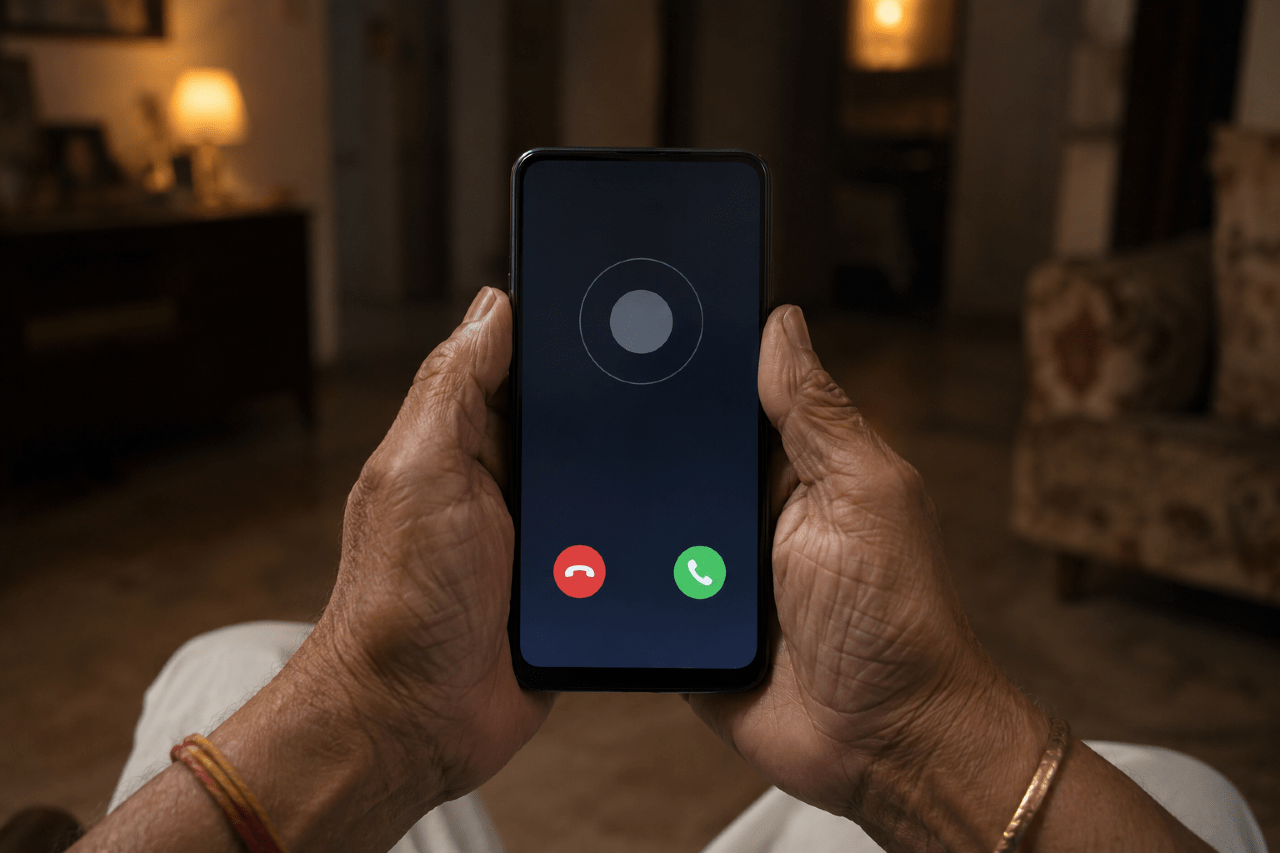
A stern voice tells your mother she is under "digital arrest," that a parcel in her name held drugs, that she must stay on the video call and tell no one. It arrives at 11am in Bangalore, which is the middle of your night. By the time you wake, the money can already be gone.
₹22,000 Cr
was lost to cyber fraud in India in a single year, and "digital arrest" is its fastest-growing form, with the elderly targeted on purpose. Cybercrime against seniors rose about 86% in just two years.
|
|
"There is no such thing as a digital arrest. No real police officer, CBI agent, or RBI official has ever arrested anyone, or collected a single rupee, over a phone or a video call. If your parent hears those words, it is a scam. Every time."
Edition 14
|
|
The call comes mid-morning in Bangalore, which is the middle of the night for you. A calm, authoritative voice says he is calling from the Mumbai Crime Branch, or the CBI, or the courier company. A parcel sent in your mother's name has been intercepted with drugs inside. Or her Aadhaar has been linked to a money-laundering case. Her bank account will be frozen within the hour. There is a warrant. And then the crucial instruction, delivered gently but firmly: stay on this video call, do not hang up, and do not tell anyone, not even your children, because the case is confidential. For the next several hours your mother sits frozen in front of a phone, being interrogated by a man in what looks like a police uniform, in a room made to look like a police station, while her savings are moved out one transfer at a time.
This is not a rare horror story. In a single year, Indians lost more than twenty-two thousand crore rupees to cyber fraud of every kind, and "digital arrest" is its fastest-growing form, with the people running it targeting the elderly on purpose. Cybercrime against senior citizens rose by roughly 86% in just two years. In one city alone, Hyderabad, police recorded over a hundred crore rupees swindled from senior citizens in eighteen months. Individual cases are staggering: elderly victims have been conned out of twenty crore rupees and more in a single scam. And these are not amounts lost by careless people. They are lost by dignified, intelligent parents, often retired officers, doctors, and teachers, who did exactly what a lifetime told them to do: cooperate with the police.
And that is precisely why it works on our parents. Their generation carries a deep, reflexive respect for authority. A caller claiming to be from the CBI, invoking the courts, the police, jail, and family shame, is pressing on exactly the fears they were raised with. Add the isolation of living alone, the unfamiliarity with how these technologies can be faked, and the terror of a scandal that might embarrass their children, and the trap is complete. The scammer's most powerful weapon is not technology. It is your parent's decency, turned against them.
So here is the single most liberating fact you can give your parent, and it is worth saying out loud on your next call: there is no such thing as a digital arrest. No real police officer, no CBI or Enforcement Directorate agent, no RBI or TRAI official, no courier company, has ever arrested a person, interrogated them, or collected money over a phone or video call. It does not exist as a legal procedure. A genuine arrest requires a physical presence and paperwork, never a Skype window. The government has said this plainly. If a caller ever uses the words "digital arrest," or keeps your parent on a video call, or demands secrecy and money, it is a scam, one hundred percent of the time, and the correct response is simply to hang up.
Digital arrest is only the most dramatic version. The same machinery drives the quieter frauds: the "your KYC has expired, share this OTP" call, the fake electricity-bill message threatening to cut power tonight, the courier who needs a small fee to release a parcel, the too-good investment tip in a WhatsApp group. The pattern is always the same three ingredients, sudden fear, extreme urgency, and a demand for secrecy or money right now. Any call that combines those three is the call to hang up on. Real problems, real banks, and real police can always wait for your parent to put the phone down and check.
|
Also in this edition
"The scammer's most powerful weapon is not technology. It is your parent's decency, their respect for the police, turned against them."
Fear, urgency, secrecy. Any call with all three is a scam. Real banks and real police never mind if your parent hangs up and calls back.
No genuine official will ever ask for an OTP, PIN, CVV, or full bank details on a call. Sharing those is the one irreversible step. Teach the reflex: never share, ever.
|
|
|
● The Bangalore Lens
What's happening locally, right now
|
Bengaluru is a favourite hunting ground. And the trusted person who never asks for money.
Bengaluru's large population of retired, well-off, digitally-connected seniors makes the city a prime target. One elderly Bengaluru woman was held in a fake "digital arrest" and lost over three crore rupees. The gangs work in time zones: they call when they know the family abroad is asleep, precisely so no one can say "hang up, this is fake."
The antidote to a scammer who wants your parent's money is a helper who will never touch it. That principle is built into Genie.

If a scam has already happened, or your parent is shaken by a call, Genie's Get It Sorted puts a calm, background-verified person beside them to report the fraud on the national helpline 1930 and at cybercrime.gov.in, alert the bank, and handle the paperwork, fast, while the trail is still warm. Be There at Home simply sits with a rattled parent so a frightening afternoon is not faced alone.
Crucially, a Genie never touches your parent's money, never asks for a PIN, never transacts. That is not just our promise, it is the rule you want your parent to apply to everyone: anyone who asks for money or an OTP is not to be trusted. The things you'd do for your parents, if you were here.
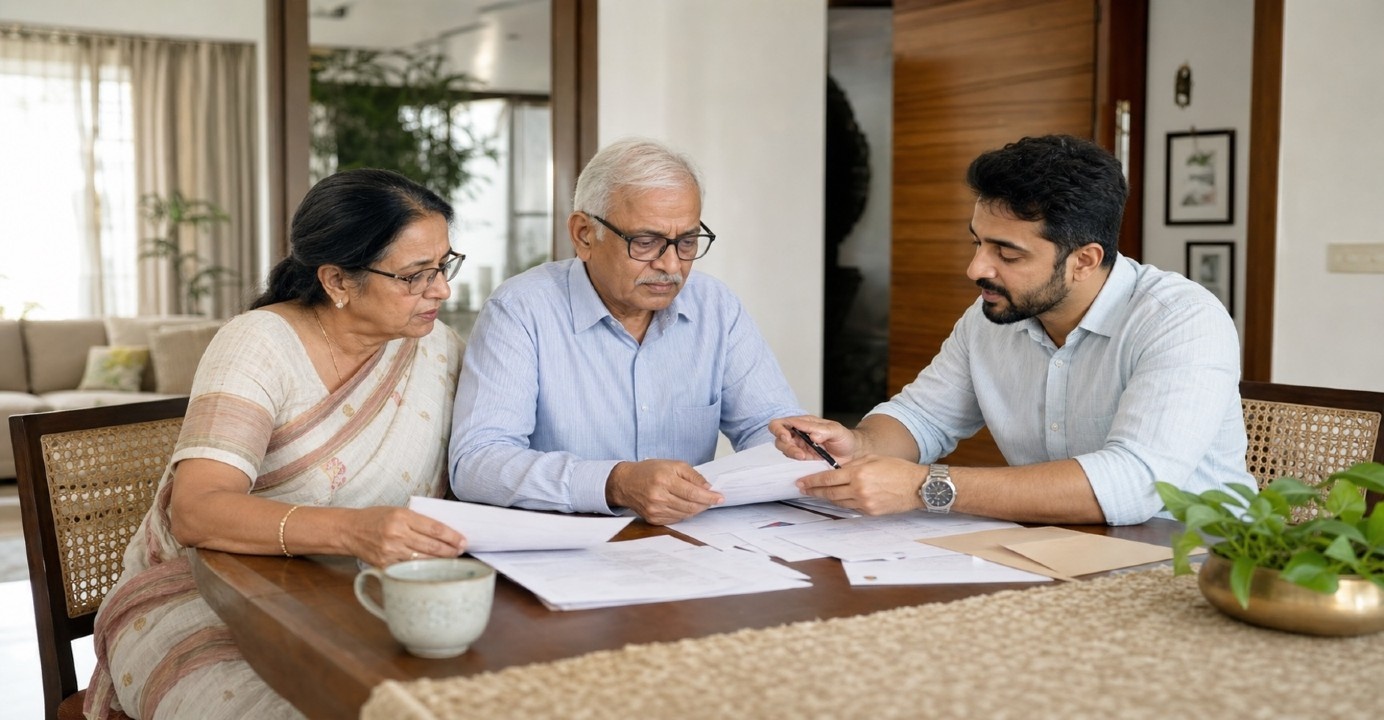
The scammer counts on your parent being alone and unreachable. The simplest defence is a trusted person they can turn to before they act.
|
1930
is the national cybercrime helpline, paired with cybercrime.gov.in. If money has been sent, reporting within the first hour, the "golden hour," gives the best chance of freezing and recovering it. Save both in your parent's phone today. A Genie can make the report with them, but never handles the money itself.
|
|
|
● One Thing To Do
This week
|
|
Action
Do this now
This Sunday, Give Your Parent the Four Rules and One Permission.
Do not lecture them about being careful. Hand them a few clear, memorable rules, and the explicit permission to hang up on anyone, even a "policeman."
1. Say the one sentence: "No real police, CBI, RBI, or court will ever arrest you or ask for money on a phone or video call. There is no such thing as a digital arrest." Have them repeat it back.
2. The never-share rule: an OTP, PIN, CVV, or full bank or Aadhaar detail is never to be given on a call. No genuine bank or official ever asks. This is the one irreversible step, so make it a hard reflex.
3. The pause rule: any call that brings fear, urgency, and secrecy together is a scam. The response is always the same, hang up, breathe, and call you or a neighbour before doing anything at all.
4. Save 1930 and cybercrime.gov.in in their phone now, together on the call. If money is ever sent, report within the hour, speed is what recovers it.
5. Give the permission out loud: "You will never be in trouble with me for hanging up on someone, even if they claim to be the police. I would rather you hang up on a real officer than stay on with a fake one." That sentence is the wall the scammer cannot climb.
One conversation now inoculates a parent for good. It costs you five minutes and can save them their life's savings.
|
|
● From The Blog
Further reading on kareverse.com
|
|
|
|
The cruelty of these scams is that they cannot work without your parent's own hands. No thief breaks a lock; the money is only ever moved by a frightened parent, doing what they believe is right. But that is also the hope. Unlike a fall or a fever, this is a harm you can prevent entirely with words, from anywhere in the world. So call your parent this week, not to warn them that they are gullible, but to hand them one liberating sentence and the permission to use it: no one who is really the police will ever arrest you through a phone, so you are always, always allowed to hang up.
The Kin Letter, Edition 14 · Thursday, 20th August 2026
|
|
Know someone whose parents are in Bangalore? Forward this letter, or invite them to subscribe.
Subscribe
Join Active Age Community
Follow on LinkedIn
|
|
Sources: Ministry of Home Affairs / Indian Cybercrime Coordination Centre (I4C) advisories on "digital arrest" fraud and the National Cyber Crime Reporting Portal (cybercrime.gov.in, helpline 1930); reported national losses of over ₹22,000 crore to cyber fraud of all kinds in a single year (with "digital arrest" cited as its fastest-growing form) and an ~86% rise in cybercrime against senior citizens (2020–2022); Hyderabad City Police (over ₹102 crore swindled from senior citizens) and Deccan Herald (Bengaluru elderly digital-arrest case); Reserve Bank of India proposal on "trusted person" approval for account-holders aged 70+; and Genie by Kareverse (kareverse.com/genie). Figures are indicative of scale and change over time.
You're receiving The Kin Letter because you're part of our community. Unsubscribe
|
|